
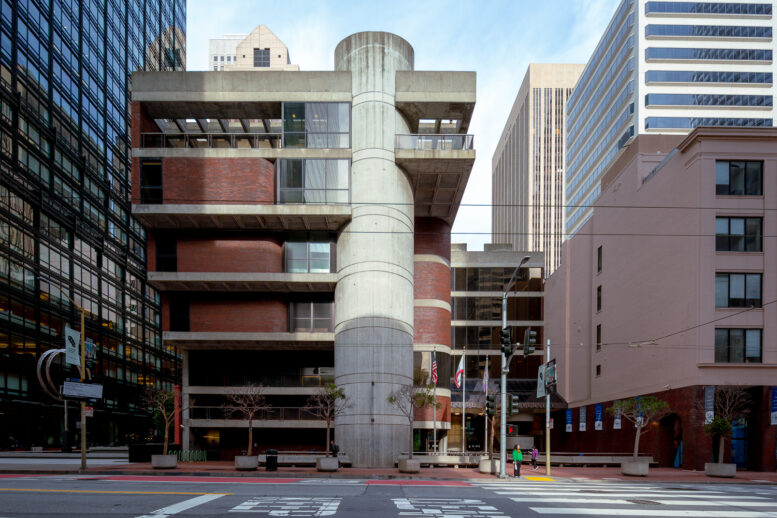
The newly published historic review evaluation has determined that 536 Mission Street is eligible for historic designation as an example of Late Modernist and Brutalist architecture. The structure was built in 1979 for Golden Gate University in SoMa, San Francisco. The evaluation was published ahead of plans to replace the GGU campus with the city’s fifth- or sixth-tallest skyscraper.
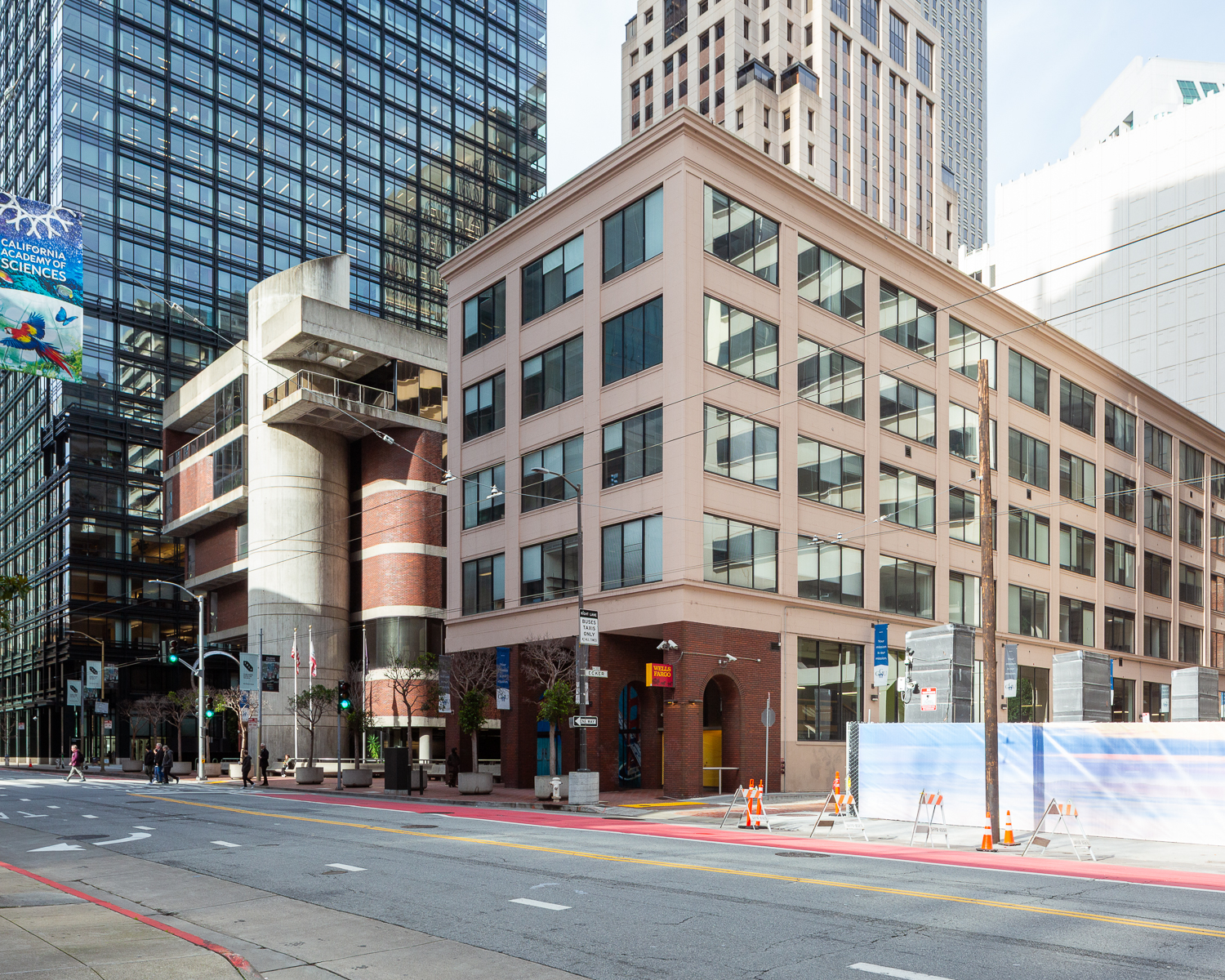
Golden Gate University existing campus along Mission Street, image by Andrew Campbell Nelson
The GGU Campus consisted of two connected structures: a century-old five-story commercial building and a 1979 Brutalist addition built for the school. The property was the subject of a Historic Resource Review in 2007, nearly two decades ago, which focused on the 1923-built structure at the corner of Mission Street and Ecker Street. Drafted by Kelley & VerPlanck, the review concluded that “The original 1923 building has been heavily altered to the extent that it no longer retains integrity. Furthermore, not enough time has elapsed to adequately understand the significance of the 1978-1979 addition.”
The new Historic Resource Review was prepared by Page & Turnbull for the San Francisco Planning Department. The document found that the 1979 structure appears eligible for the California Register of Historic Resources under Criterion 3, i.e., architectural merit, emphasizing that “The property includes not only an expressively massed building, but a designed sunken plaza, pedestrian entrance bridge, sidewalk, seating, and circulation, creating a total design.”
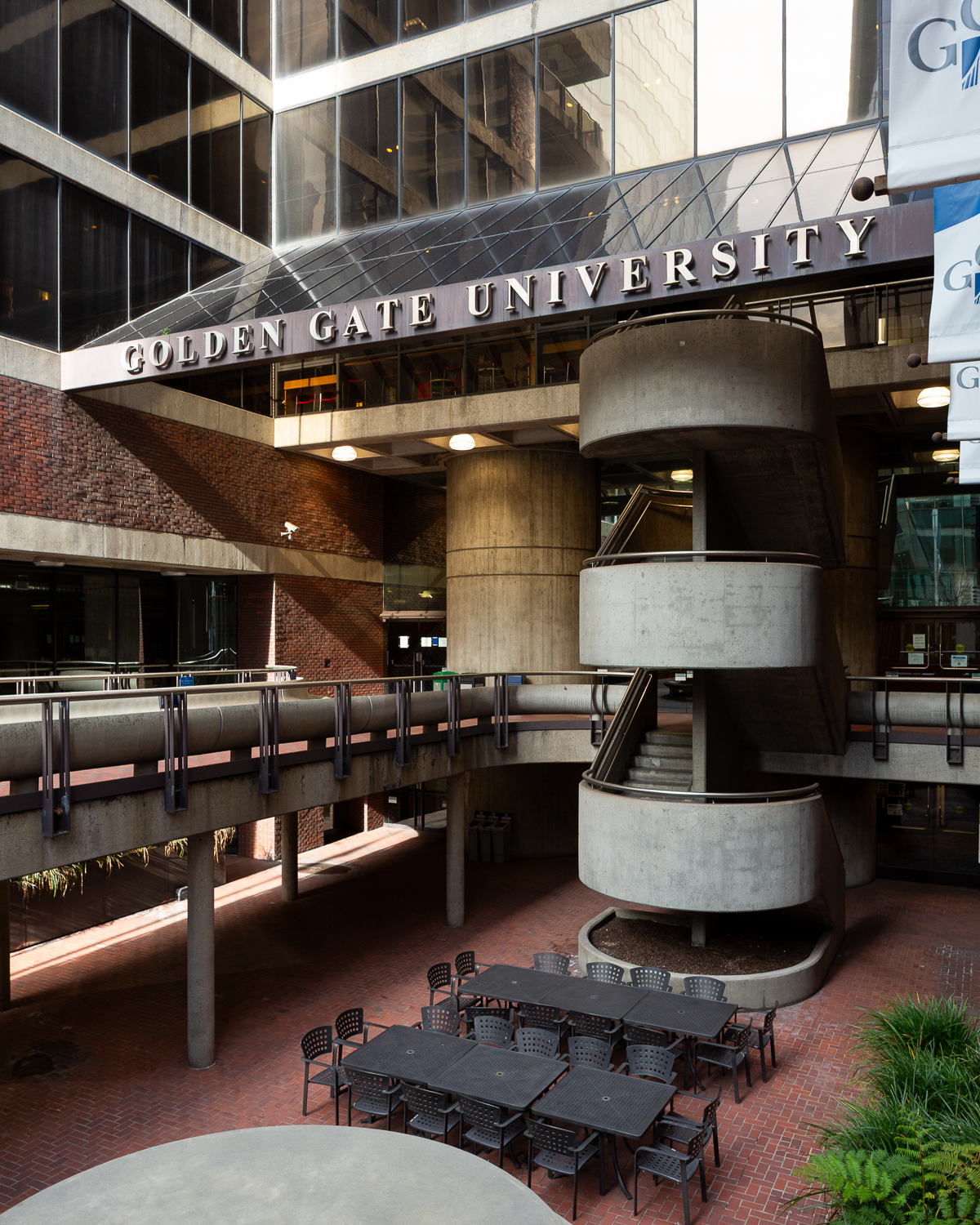
Golden Gate University sunken plaza view, image by Andrew Campbell Nelson
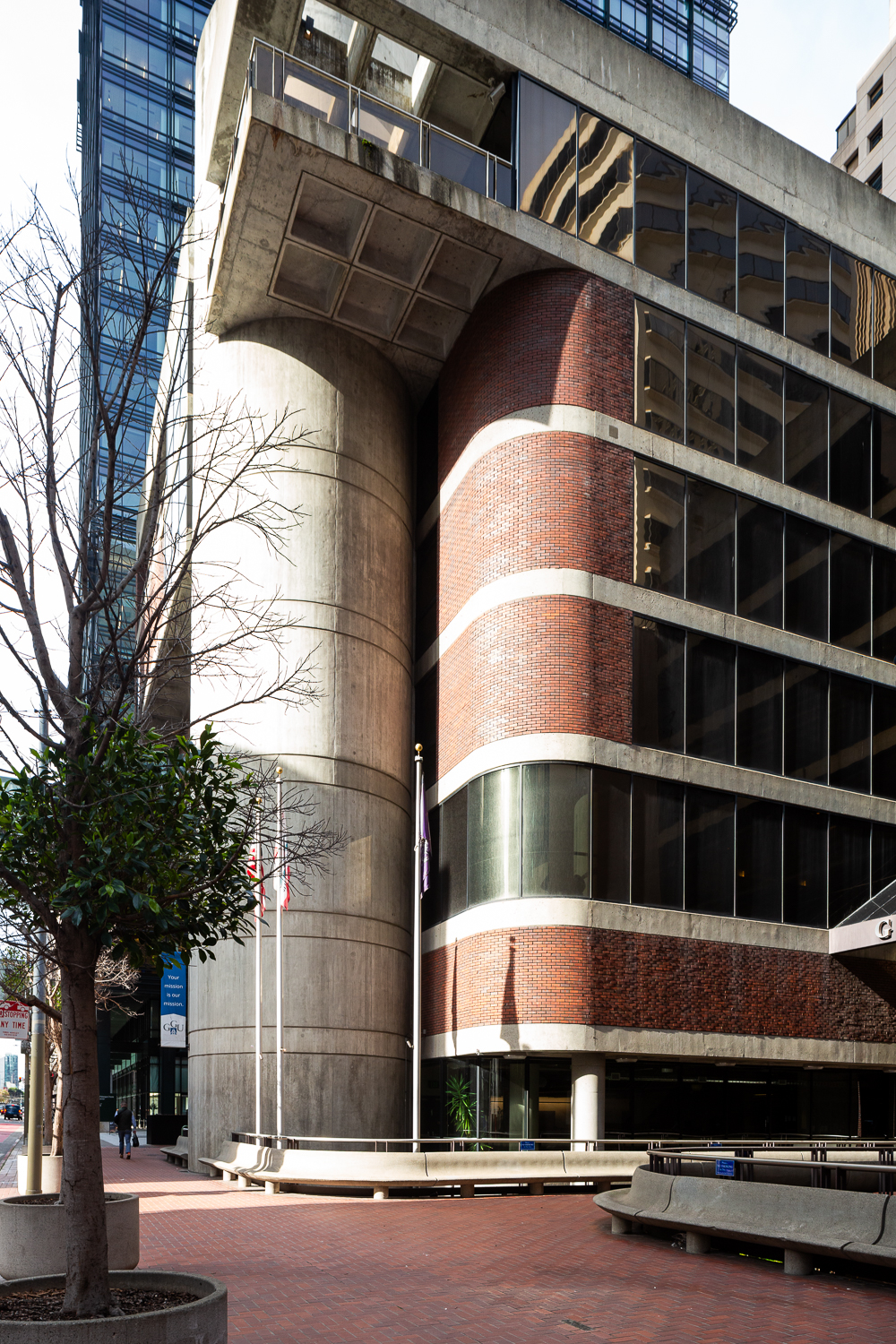
Golden Gate University corner detail, image by Andrew Campbell Nelson
The complex was designed by William D. Podesto & Associates with consulting engineer T.Y. Lin. The unique design features a complex massing rising from the sunken plaza, with a street-level bridge connecting the sidewalk to the main lobby. Another notable feature is the open-air curved concrete stairwell, rising from the basement plaza to the second floor and sheltered by the glass marquee.
The following description by Page & Turnbull provides a detailed overview of the most visually compelling architectural features.
The 1979 building is seven stories over two basement levels and is constructed of steel and reinforced concrete. The building’s massing is highly expressive with a form described as an inverted ziggurat where the smallest floorplate is at the base and each story steps out towards the street at both the primary and rear façades. The building is defined by repeating bands of board-form concrete alternated with red brick veneer and large rectilinear glazing with narrow anodized aluminum frames. Massive board-form concrete towers or columns contain elevator shafts and stairwells at both primary and rear façades.
The roughly 0.76-acre property is located in one of the city’s densest blocks, bounded by Mission Street, Market Street, 1st Street, and 2nd Street. The block includes two of the city’s tallest buildings at 525 Market Street and 575 Market Street, as well as the recently sold, stalled Oceanwide Center construction site.
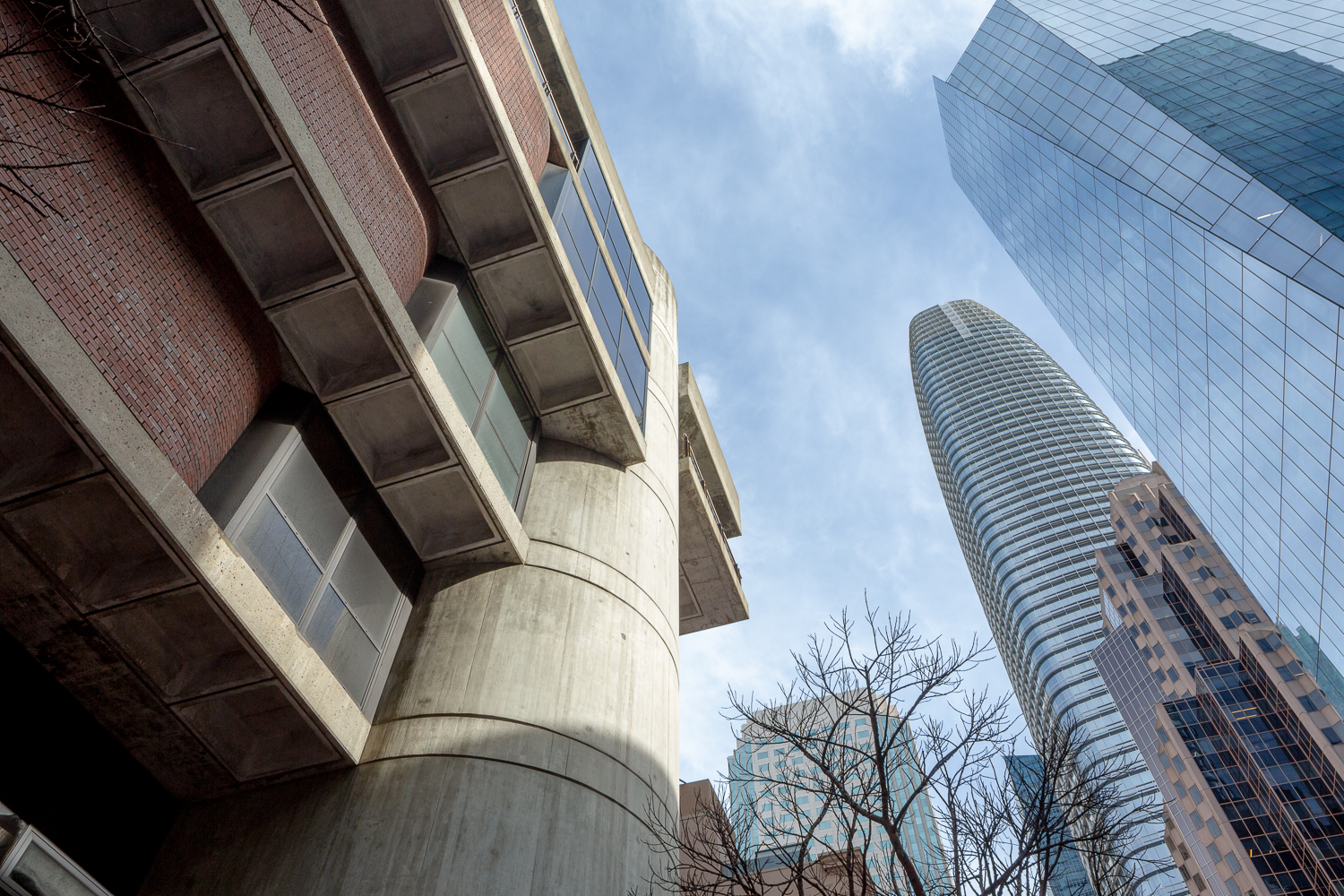
Golden Gate University detailed view of the waffled concrete soffits, image by Andrew Campbell Nelson
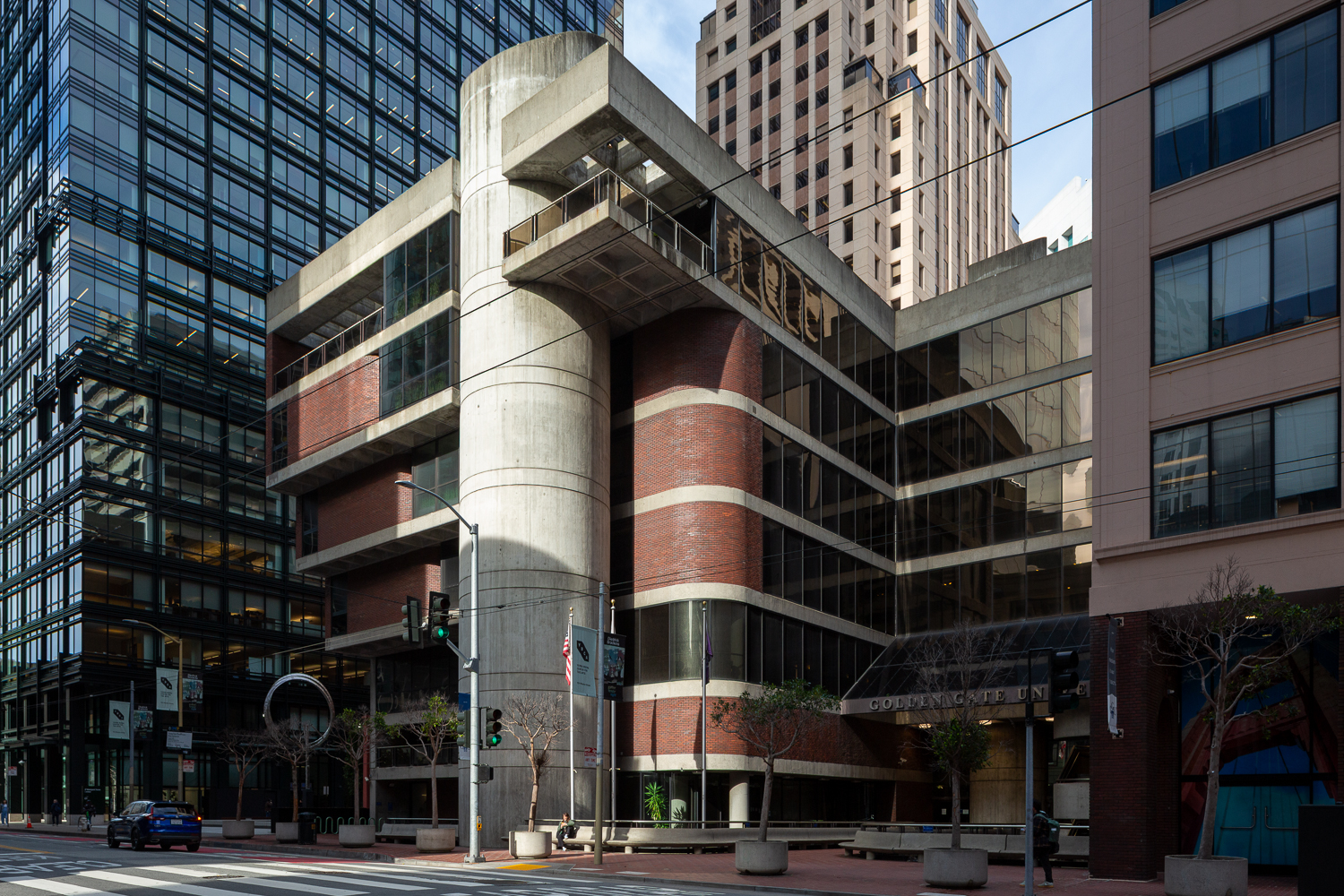
Golden Gate University, image by Andrew Campbell Nelson
GGU was founded in 1901 as an offshoot of the San Francisco Central YMCA. Evidently, GGU is one of several universities in the United States that share roots with a respective local YMCA chapter. The university relocated to 536 Mission Street in 1972, according to the HRR, but, like many higher-education institutions in San Francisco, it has struggled financially in recent years. Last year, the school was reported to have entered into an option agreement to sell the campus to a joint venture between Lincoln Property Company and McCourt Partners.
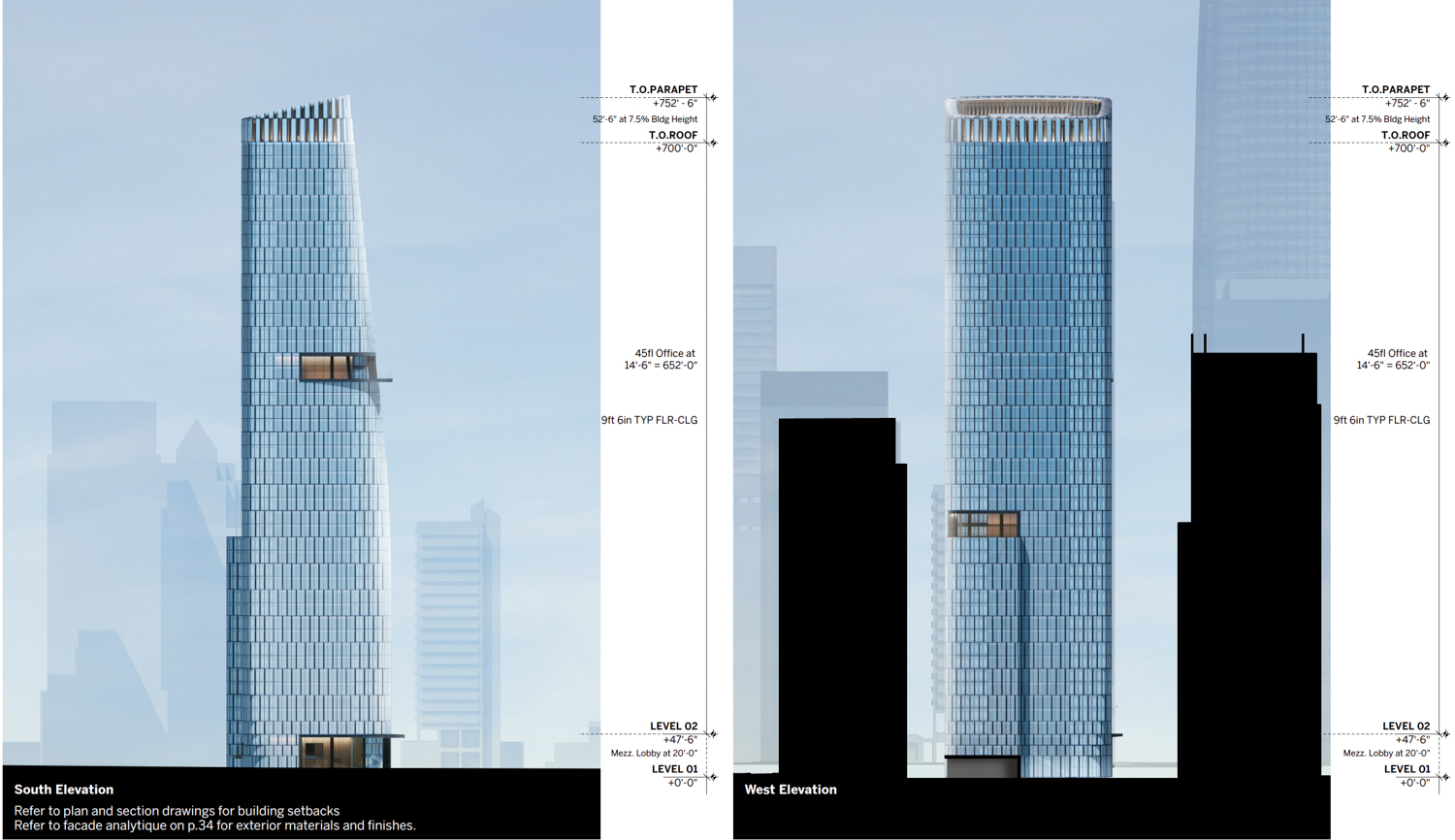
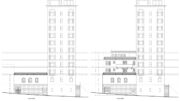
536 Mission Street office variant south and west facade elevations, rendering by SOM
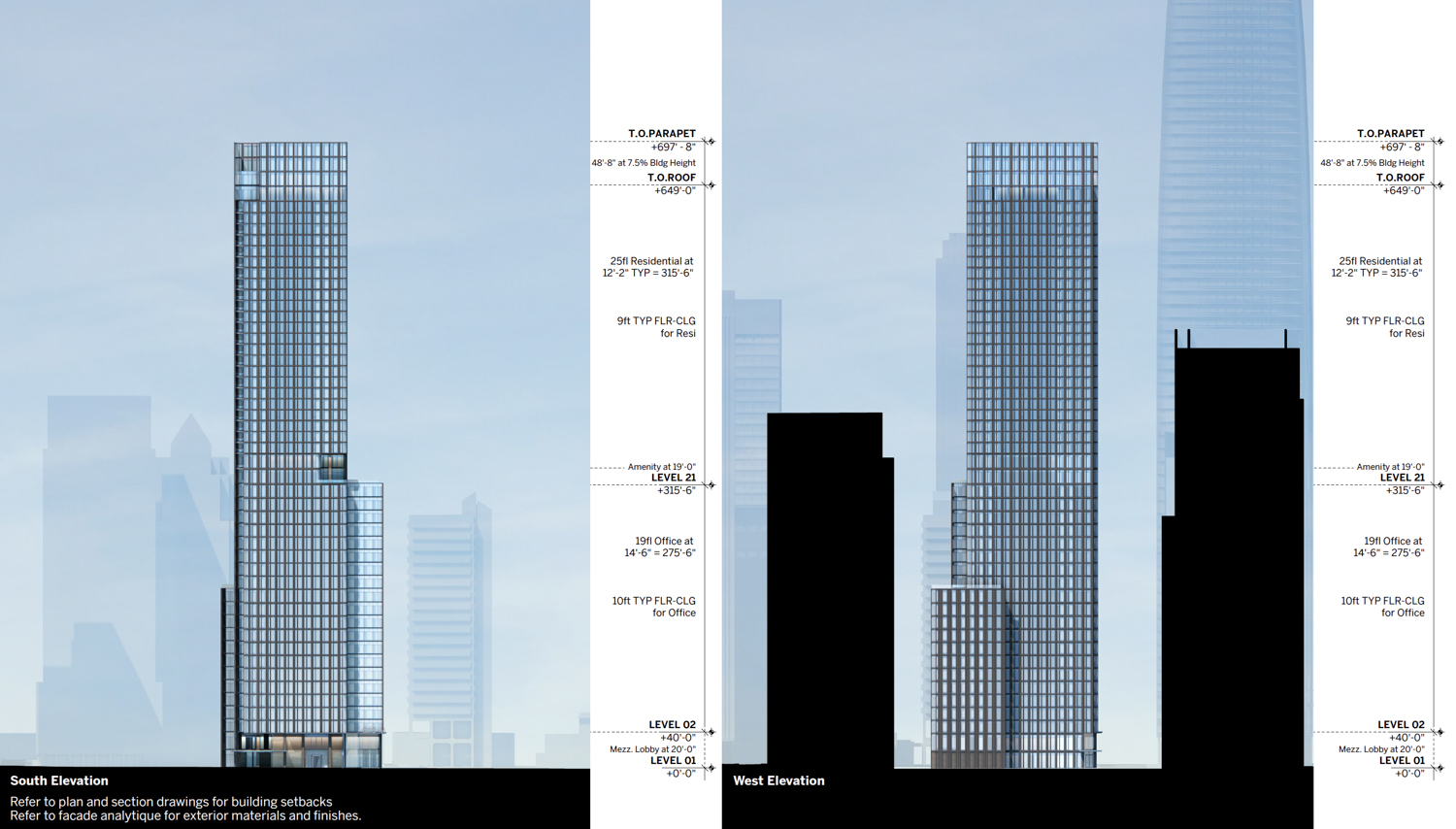
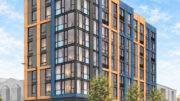
536 Mission Street mixed-use variant south and west elevations, rendering by SOM
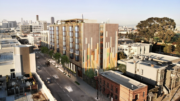
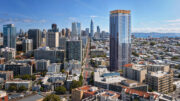
The developers have filed two 47-story proposals designed by SOM to replace the campus, which could produce a 698-foot mixed-use tower and a 752-foot office tower. The fully commercial variant would deliver 1.2 million square feet of office and retail space, while the mixed-use variant would include over half a million square feet of office space and 385 residential units.
While the historic resource review’s conclusion is that the 1979 building is architecturally eligible, the decision to landmark the property will be made by the city. It’s uncertain if or how this will impact future development.
Subscribe to YIMBY’s daily e-mail

Follow YIMBYgram for real-time photo updates
Like YIMBY on Facebook
Follow YIMBY’s Twitter for the latest in YIMBYnews
The massing is ugly, the glazing is in terrible shape (that kind that looks gross from the inside and out on old suburban offices).
Clean slate this parasite from the 70’s and add housing.
Nah. Let’s keep it
Build a massive cantilever over it, and keep building the skyscraper. The building is cool and could be a killer, retro-futuristic multi-level entertainment complex.
There are several instances in NYC of that idea – cantilevering a tower over an existing lower bldg. It’s usually done to tap into neighboring property air rights, but sometimes to allow for a smaller neighbor bldg to exist – like 601 Lexington (Citcorp Tower) and the chapel its base.
Seems tricky here with the size of the brutalist bldg footprint, but interesting to think about.
Right there with you Pro. This building is pretty rad. Nothing really like it in San Francisco. It’s kind of like a miniature Boston City Hall.
One of the worst buildings in downtown SF. Hilarious that anyone would want to save this.
Completely agree. This is ugly as sin, and no one outside of the high priesthood of modernism would deem this a historic resource.
Note that Mission College in Santa Clara had a similar Brutalist building on their campus. In 2014 they completely demolished it, and the campus is better looking for that reason.
I don’t know man, it’s kind of so ugly it’s cool? I have a soft spot for it.
Is SF trying to shoot itself on the foot now? The retail only Marina project yesterday and today historic preservation for this concrete blob? Wonder what is going on in their minds when the city needs to build 80,000 units of housing in less than 5 years, lol.
No City decision has been made on this yet. Generally a historic resource evaluation is required before anything can be done with a potentially historic property, and the evaluation and determination are done by experts (in this case, Page & Turnbull). As the article says, it will now be up to the City to determine if the building should be preserved or not.
While the ugly Brutalist building isn’t worth preserving, I hardly think that San Francisco is shooting itself in the foot if the proposed project isn’t built. Remember that one of the proposals is for 1.2 million square feet of office and retail space, neither of which is needed and won’t move the needle on the housing unit target.
Even with the mixed-use proposal, there is simply no need for another 500,000 square feet of office space in San Francisco, and there won’t be for the foreseeable future. Also, it bears repeating that San Francisco already has more than 10 million square of entitled, approved office space on the books that could be built, but their sponsors are waiting for the market to recover before they break ground. Adding to that amount of office space in the pipeline is absurd, and the reduction in office space demand resulting from the already underway AI-driven white-collar job destruction is just getting underway.
I like this building, particularly in contrast to its high-rise neighbors. We don’t need another glass tower in that spot.
Stunning building.
I know we’re in the minority but I agree. There are plenty of empty lots to build or as others suggested- cantilever. This building is unique and I do think it deserves to stay.
Agreed. Offers the generally mundane & forgettable area an interesting piece of design from a different period & allows for some breathing space amidst a slow, but steady line of tall bldgs. While different, I also like that Marcel Breuer’s brutalist Whitney (now Sotheby’s) was saved from the wrecking ball & is now a breath of fresh air on Madison.
With some vision, this has the potential to a beautiful addition to Mission Street & the evolving neighborhood.
How about planting some Giant Redwoods in front of it?
The GGU structure is just now being recognized as architecturally different, and breaks up the mass of glass and height of the tall structures around it with its air space.
If Ocean Wide gets built – talk about horrible structures! – it will be a huge wall that will not age well and obstructs the beauty of the other buildings nearby.
If the new building’s design was more exciting and had more mojo (particularly at the ground floor) then we wouldn’t be having this conversation. As drawn, it’s bland and generic. The existing brutalist, mini-me Whitney Museum with its cantilevers, rounded stairs and sunken plaza is way more interesting.
Hey YIMBYs, don’t get yer panties all in a twist. If Demolition Dan Lurie wants this scraper to get built, it will. They’re even greenlighting the demolition of official city landmarks now, like the brick warehouse they’re going to tear down to build the new firehouse on Battery Street.
So the City will do everything it can to save this ugly Brutalist building, but will allow the Vaillancourt Fountain to become so dilapidated that there’s no other option than to destroy it? Makes total sense. There was clearly enough political pressure over the years to ensure the fountain was completely destroyed to make way for a new park. I’m sure if you follow the money, you’ll find all of the people who lined their pockets with cash along the way. What aload of BS. This City can suck it.
I forgot about this building and will now go take another look. I want there to be open space among the buildings and odd little buildings like this one, need to be preserved. I live in SF because it is NOT Manhattan and I CAN see the stars at night, even in downtown. Most buildings these days are built without style, so even if it’s not your favorite, it deserves a place in the sun.
who’s making money off of this so called historic designation?