
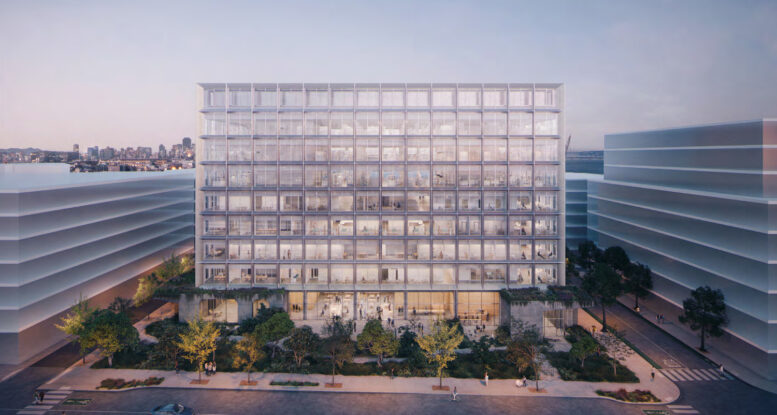
Significant construction progress has been shared for the future UCSF Life Sciences building in San Francisco’s waterfront Potrero Power Station redevelopment. Crews are currently working on the foundation for Block 2, a Herzog & de Meuron-designed seven-story complex that will become a cancer research center. Fifth Space, formerly known as Associate Capital, is the project developer.
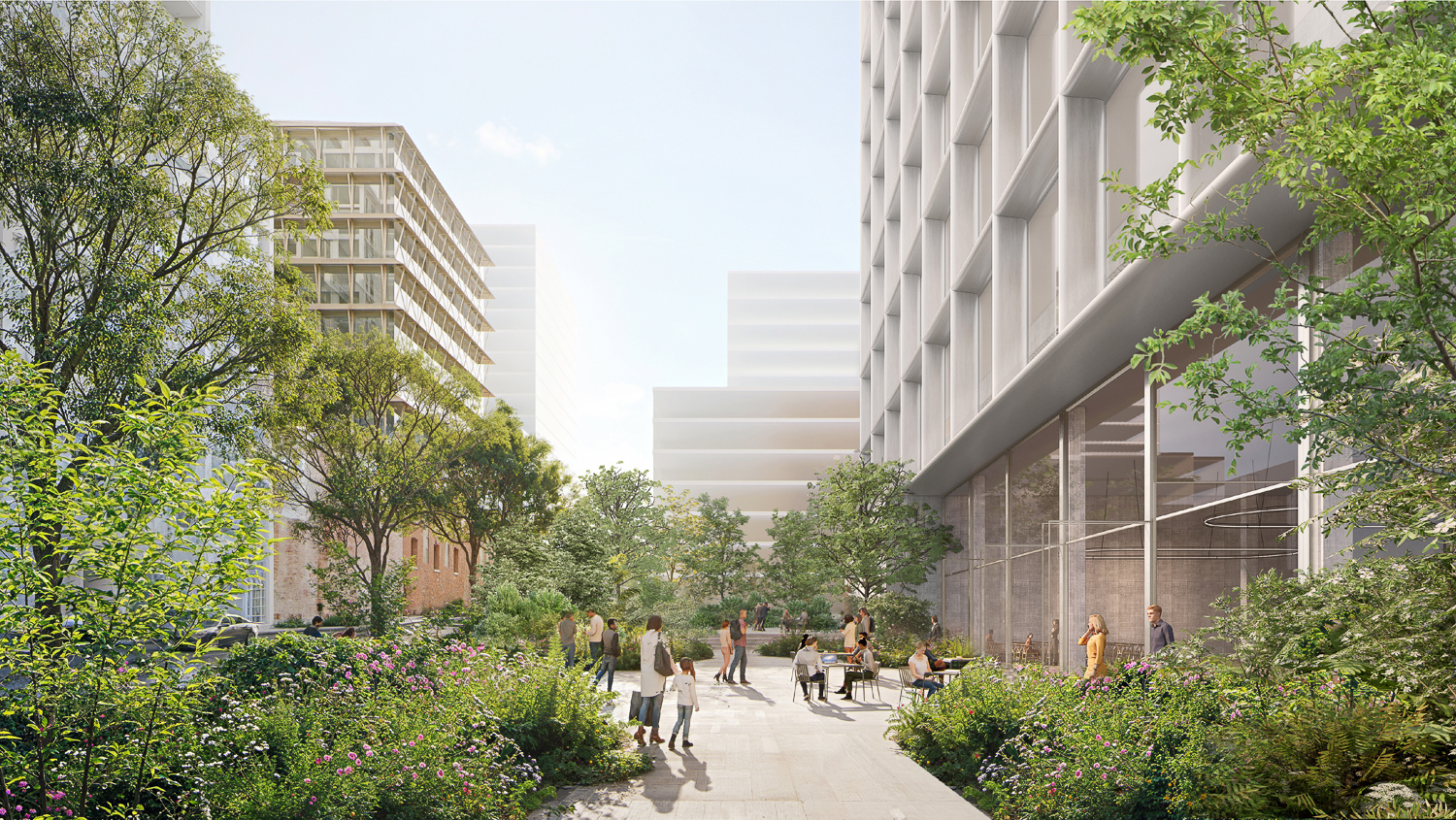
Potrero Power Station Block 2 pocket park, rendering by Herzog & de Meuron
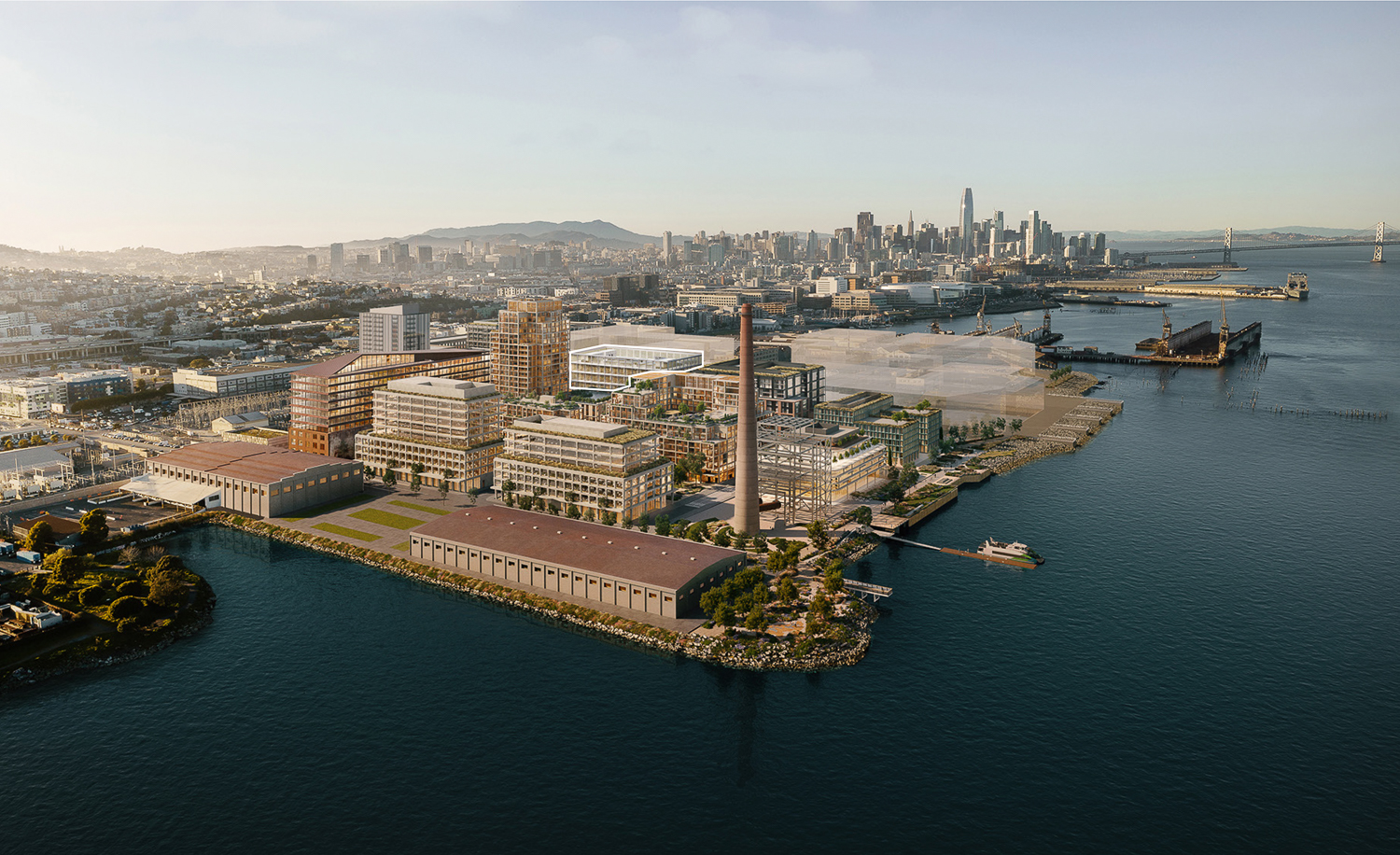
Potrero Power Station aerial view with Block 2 outlined in white, rendering by Herzog & de Meuron
Construction started on the research center last August. Since then, the developer saw the opening of the Sophie Maxwell affordable housing in October. The eight-story corten steel-clad apartment building delivered 105 units of permanently affordable housing, deed-restricted for households earning between 50-110% of the area’s median income.
Subterranean work is expected to continue through 2027 due to the complex infrastructure required for a life sciences building. Vertical work will follow, with overall completion expected by 2030, according to the project team.
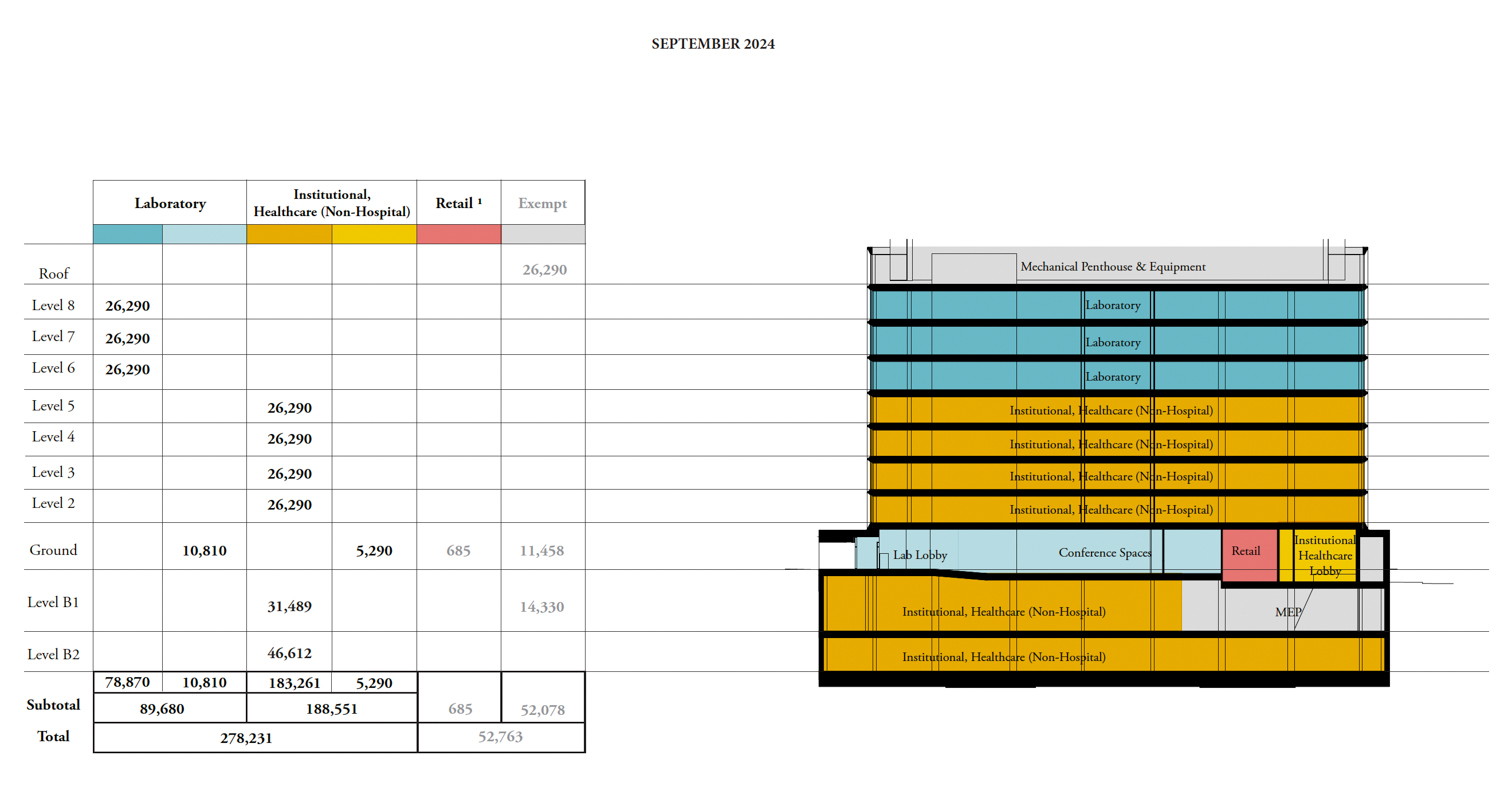
Potrero Power Station Block 2 updated cross-section, illustration by Herzog & de Meuron
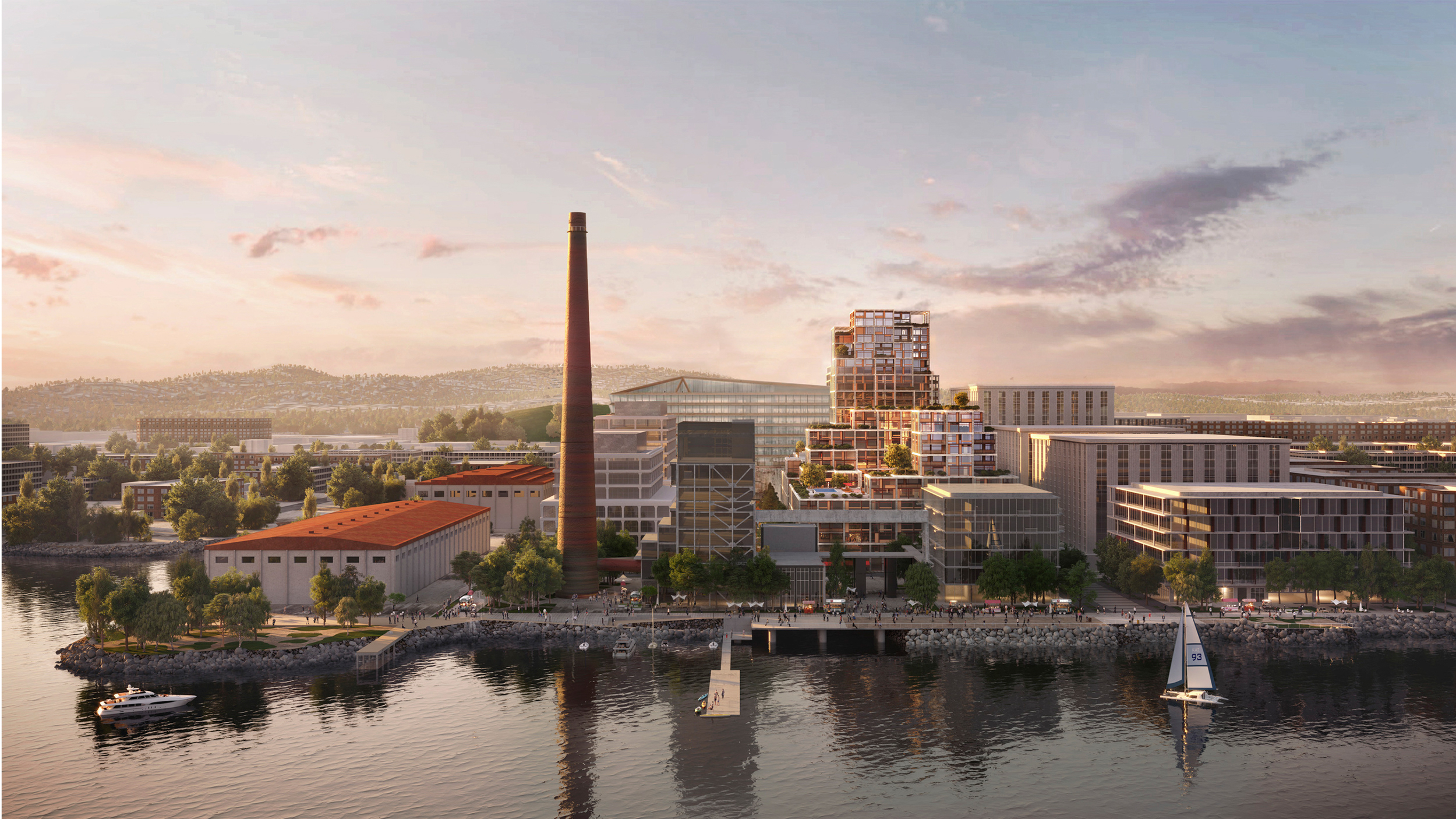
Potrero Power Station development master view from the Bay, rendering by Foster + Partners
Block 2 plans combine lab space, an outpatient treatment clinic, and research facilities above a ground-level retail and social space. The structure will be approximately 130 feet tall and yield 285,500 square feet of occupiable floor area, divided into 182,650 square feet for institutional healthcare across two basement floors and levels two through four, 102,200 square feet of lab space on floors five through seven, and roughly 700 square feet for retail. On-site parking will be included for 55 bicycles.
The project architect is Herzog & de Meuron, collaborating with executive architect Stantec. Illustrations show a bold steel grid wrapped around the curtain-wall skin. The structure’s base will be accented with a few bold exposed concrete walls as an homage to the power station’s industrial legacy, and improve the pedestrian experience.
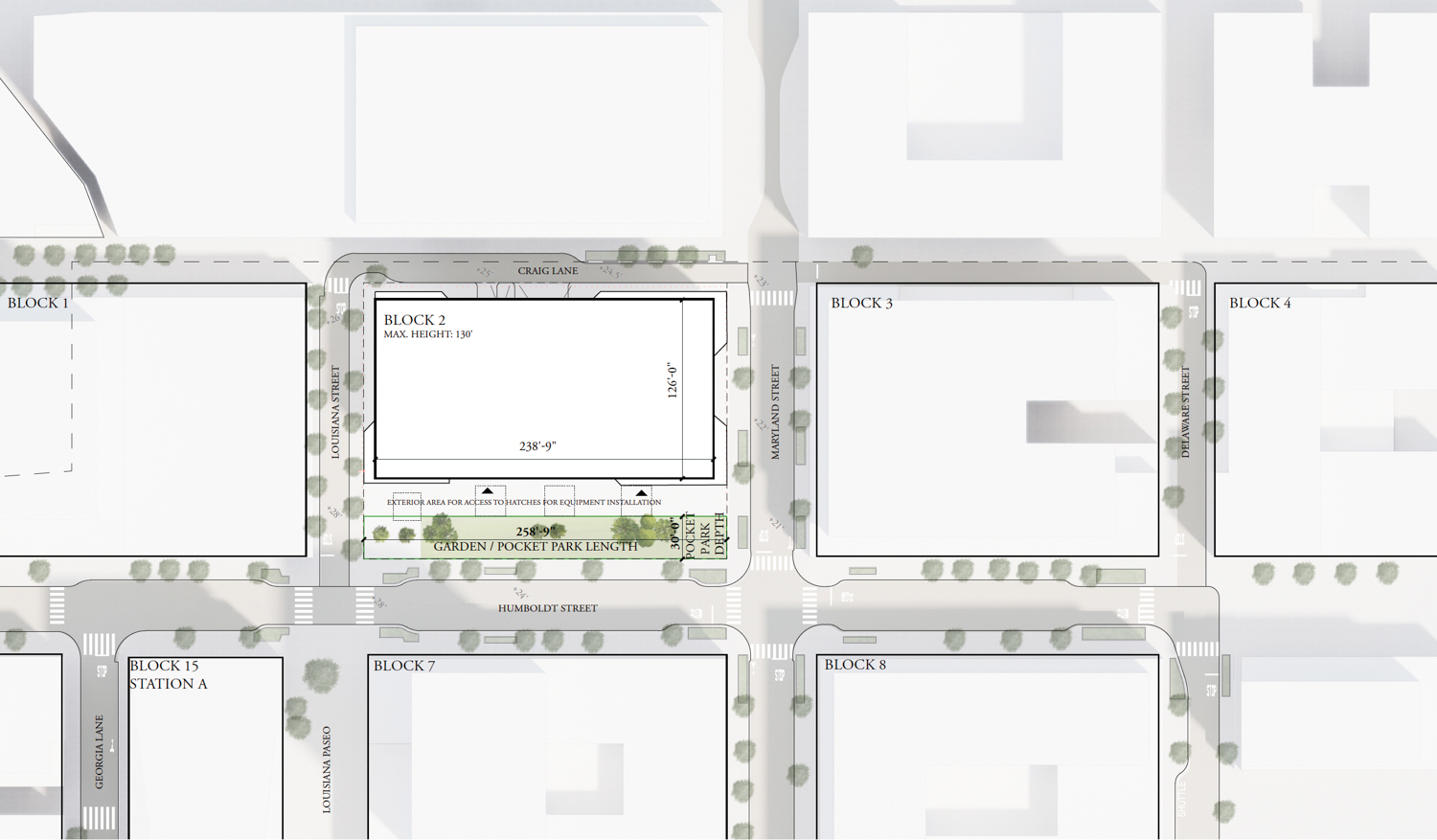
Potrero Power Station Block 2 site map, illustration by Herzog & de Meuron
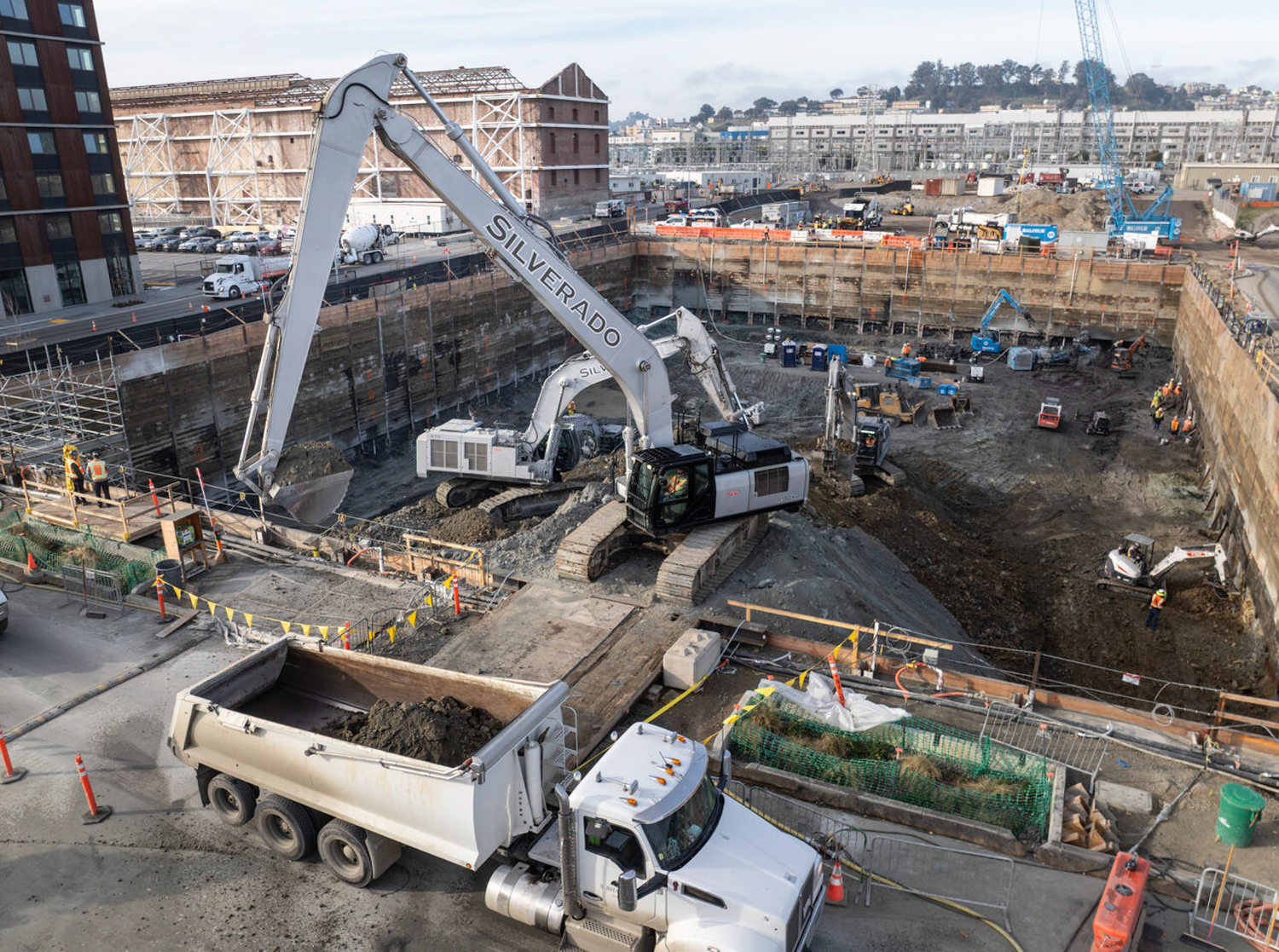
Potrero Power Station Block 2 excavation underway, image from Fifth Space
Fifth Place is currently overseeing the much larger redevelopment of the Power Station, which is now transforming the former energy plant into a dense mixed-use neighborhood with 2,600 units of housing, 1.6 million square feet of office and lab space, retail, central public open space, and a 250-key hotel in the Unit 3 Power Block, connected by the 300-foot brick smokestack.
The project is expected to complement Pier 70, a similar masterplan led by Brookfield Properties. Pier 70 has seen a few notable elements completed, most notably the adaptive reuse of Building 12. However, much of the 28-acre master plan, once expected to include one to two thousand apartments and possibly over a million square feet of commercial office space, is unbuilt.
Webcor Builders is the general contractor.
Subscribe to YIMBY’s daily e-mail

Follow YIMBYgram for real-time photo updates
Like YIMBY on Facebook
Follow YIMBY’s Twitter for the latest in YIMBYnews
I didn’t realize UCSF was expanding into the Power Station development.
This entire Mission Bay / Dogpatch area is going to be awesome…in about fifty years. The buildings need to be built, the trees need to mature, and the businesses need to open to become a real, livable neighborhood with a full suite of services. Some businesses will close, and a new round will open, as the neighborhood settles in to its long term demographics. More parks will need to be created to embrace the waterfront. To many, Mission Bay feels too squeaky clean, so some years of weathering and grime will help.
Some interesting wildcards for this area on the transportation front involve demolishing 280 above Mariposa and the T line going all the way to Fishermans’s Wharf. I could see both of those happening in the next 50 years.
I wouldn’t want to live in this area in my lifetime, but it could be awesome for the next generation.
i wouldn’t live in Mission Bay either. the streets are totally lifeless. Would be solvable if 3rd street wasn’t 100′ wide, with buildings less than a 1:1 ratio. Buildings facing that type of street need to be 200′ — otherwise, you’re left with a very weird liminal feeling.
It looks like Pier 70 and Potrero Power Station are learning SOME of this lesson, but I am not encouraged by the lack of street wall on this building.
Hopefully by 2030 there are connections between Pier 70 and Potrero Power Station, and more buildings out of the ground
I think they also made a minor mistake by allowing parking on both sides, and a bike lane on both sides, on 4th St. They should have leaned into 4th St as a dense retail/restaurant corridor. It still is that, but the street is a bit too wide. The bike lanes were needed since 3rd St doesn’t have them, but I would have eliminated parking on one side (?) to get that dense vibe.
No employee parking for the UCSF building??
How is this project going to take 5+ more years to complete!? Fingers crossed that the pace of building in both the Powerplant site and Pier 70 will pick up a bit over the next year or two.
It takes +two years for a core and shell building of this size to be built. Once they are dried in, the interior fitout can start – given the complexity of the labs & research spaces, the certification of the equipment, and the commissioning of the systems – there’s your five years.
Thank you Panhandle Pro for your posting.
Your comments hit the nail on the head and I couldn’t agree more.
The City is an exciting place.
Let’s keep it going in that direction.
People criticize Mission Bay, but in my opinion it’s not warranted because it’s too soon. It’s not done yet. It’s not mature. It’s unrealistic to expect a brand new neighborhood built from scratch to compete with mature, 100+ year old neighborhoods on charm.
Once the housing developments in Pier 70 and Dogpatch kickoff, it will really make this area feel more complete. I hope Block 7A and 8, the residential spaces start construction soon since the city needs more housing
At least they didn’t make the mistake as so many other buildings in the area of including parking in what’s supposed to be a transit first neighborhood. Hopefully future developments follow suit.