
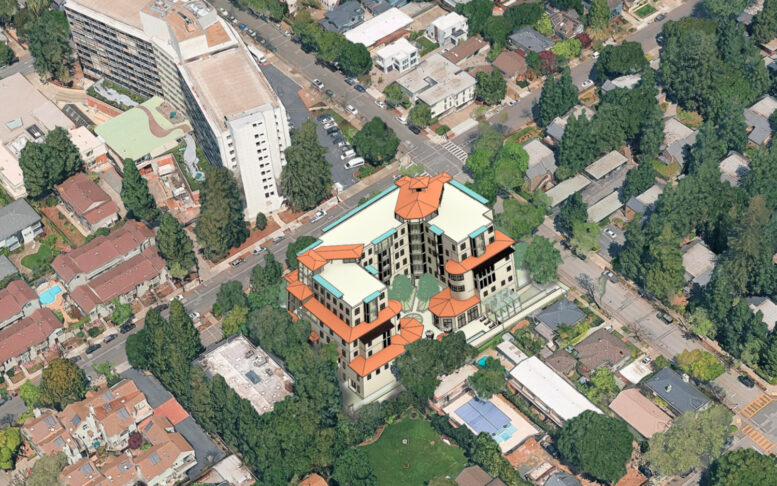
Preliminary plans have been filed for a six-story residential complex at 910 Webster Street in the University South neighborhood of Palo Alto. The project is looking to replace an existing low-slung apartment complex with 70 apartments, including some affordable units. Carrasco & Associates is responsible for the application, filing on behalf of the property owner, Cloverleaf Corporation.
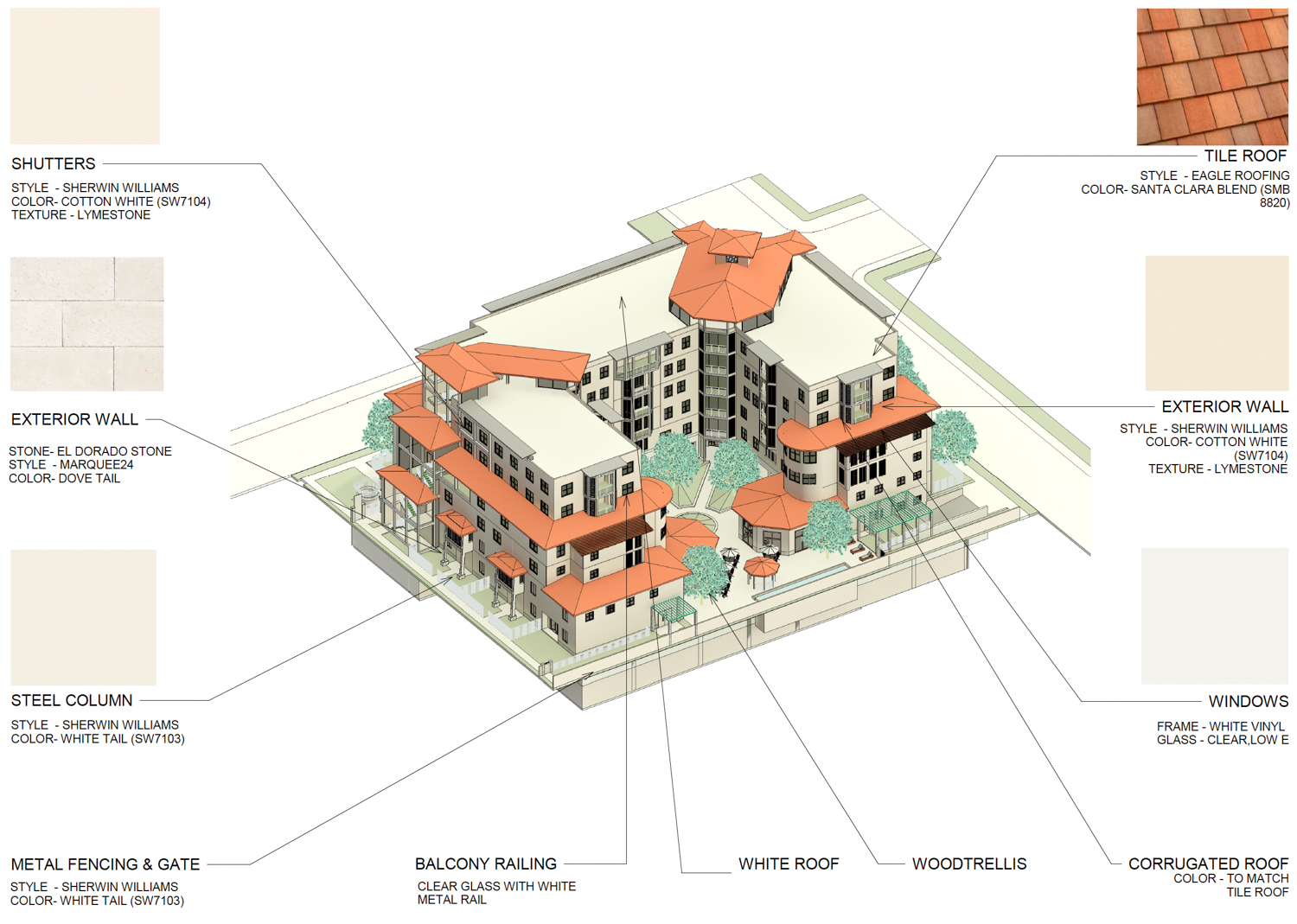
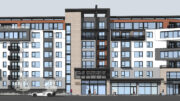
910 Webster Street facade materials labeled, illustration by Carrasco & Associates
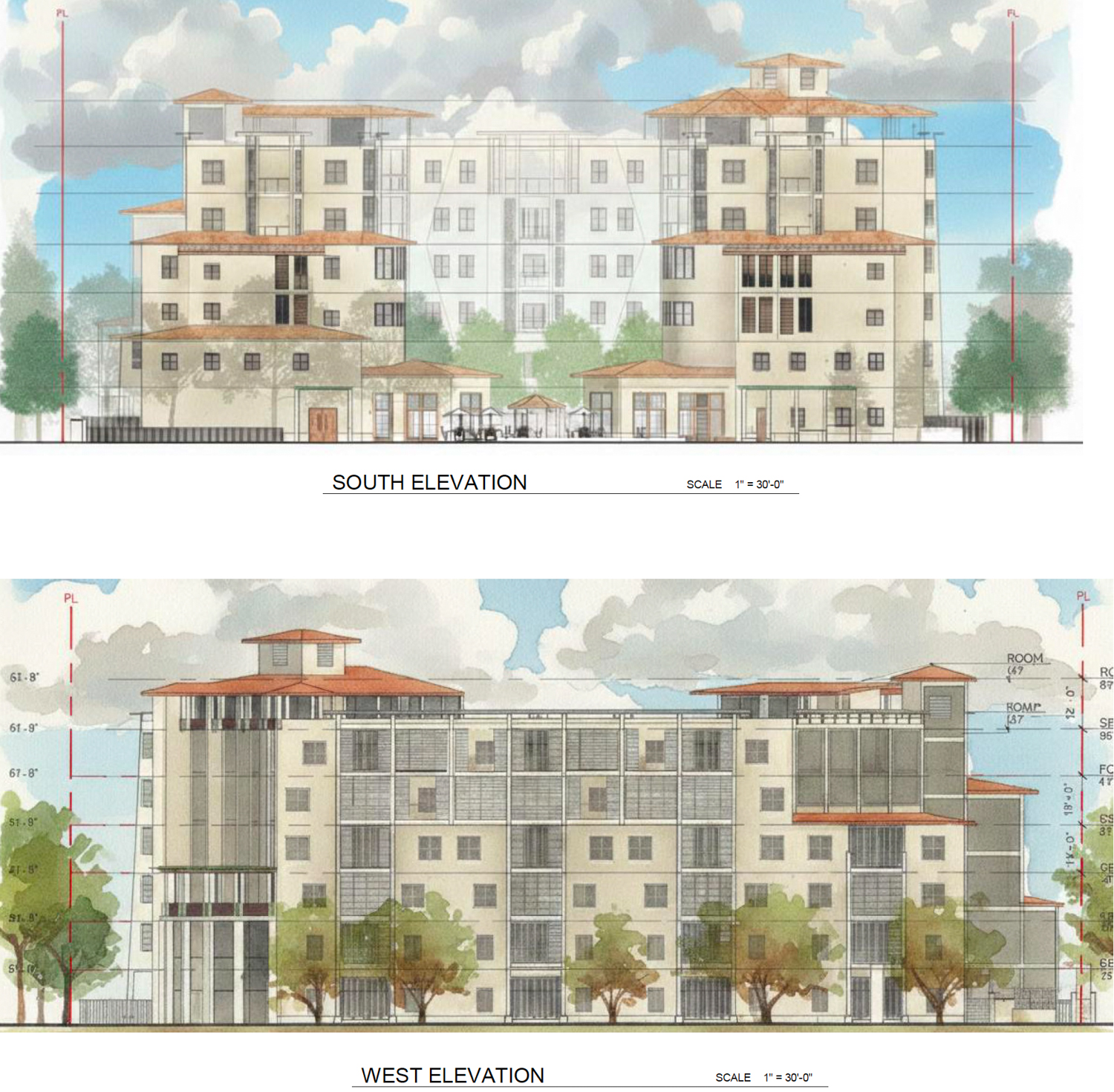
910 Webster Street facade elevations, illustration by Carrasco & Associates
The roughly 85-foot-tall structure is expected to yield around 135,070 square feet, not including the two-story basement garage. Parking will be included for 130 cars and 119 bicycles. Unit sizes will vary with six one-bedrooms, 61 two-bedrooms, and three three-bedrooms. The application states that 20% of all units will be deed-restricted as affordable housing, though the levels of affordability have not been specified.
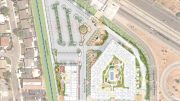
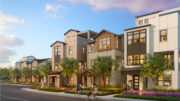
Carrasco & Associates is responsible for the Spanish Revival-style architecture. The structure is designed around a central open-air courtyard on the ground floor. The massing features a series of setbacks to serve as a transition between neighboring buildings, namely the ten-story Channing House apartment complex across the street and the two-story single-family houses that abut the parcel.
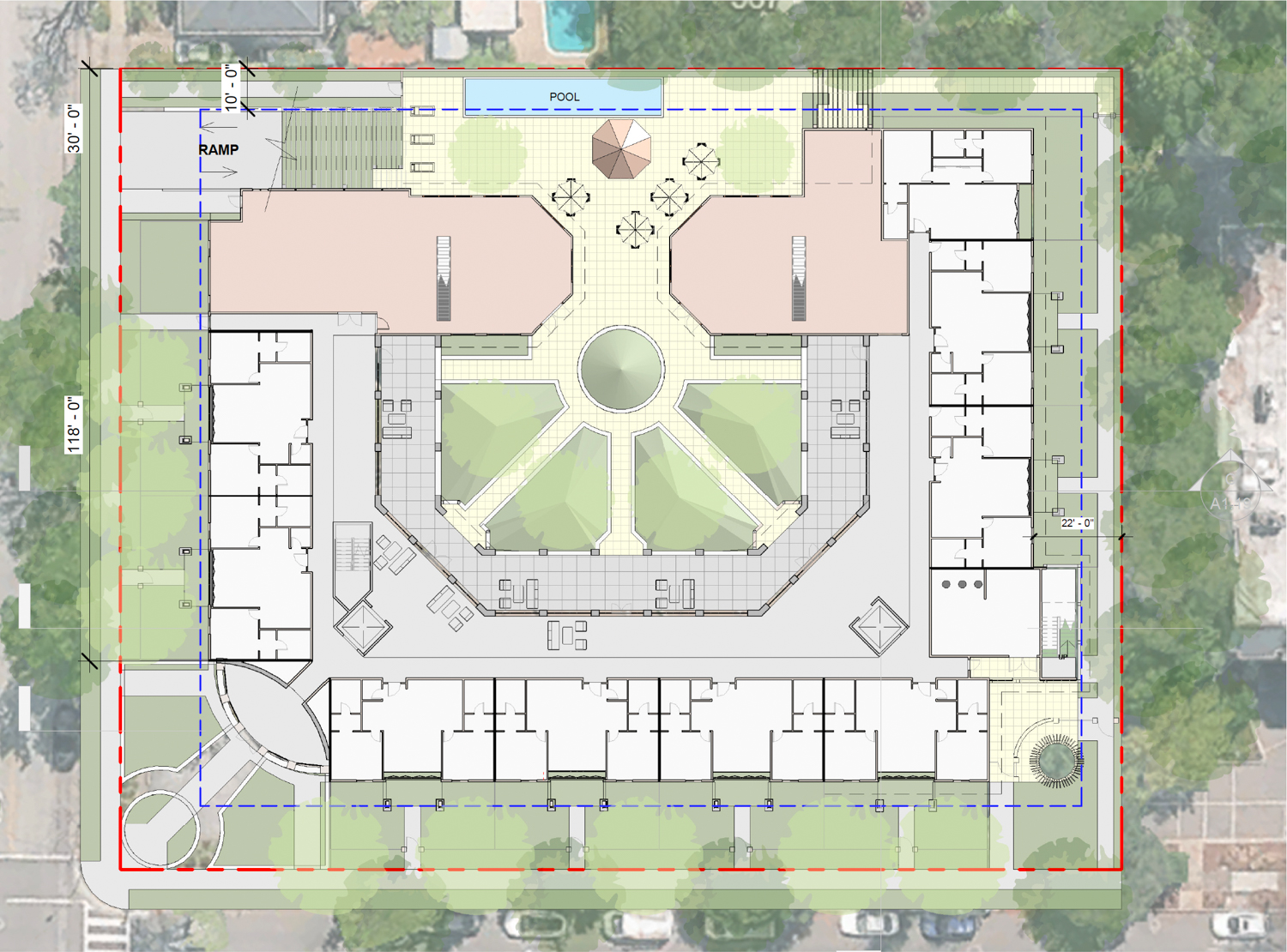
910 Webster Street ground-level floor plan, illustration by Carrasco & Associates
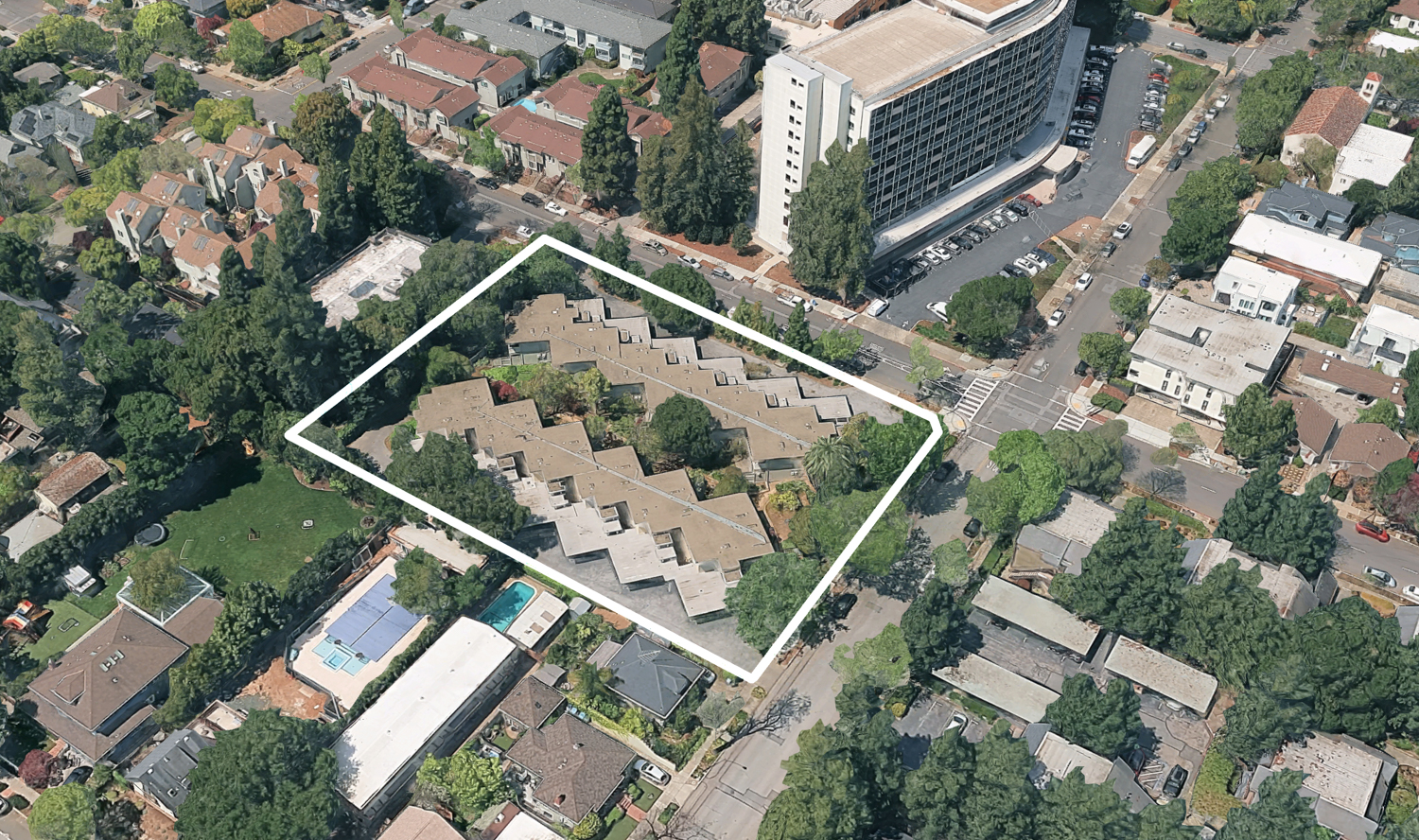
910 Webster Street, image via Google Satellite outlined approximately by YIMBY
The 1.15-acre property is located on the corner of Channing Street and Webster Street. The site is half a mile away from the Palo Alto Caltrain Station. The estimated cost and timeline for construction have yet to be established.
Subscribe to YIMBY’s daily e-mail
Follow YIMBYgram for real-time photo updates
Like YIMBY on Facebook
Follow YIMBY’s Twitter for the latest in YIMBYnews
Not the best design in the world, but not horrible either. There are a couple really nice mid-rise Spanish Colonial Revival apartment buildings from the late 1920s in this neighborhood. I always wished that they had built more, but the Depression likely put a stop to this kind of development for a decade and then Palo Alto downzoned the entire city in the 1970s.
I’d love to read a longer form take as about the reasons for the general nationwide downzoning / lack of housing construction from the 1970’s until this YIMBY movement in ~2015. I loosely know it’s related to the general Environmentalism era of the 70’s as well as perhaps some concerns about overpopulation (?). Any recommendations or quick summaries, Scotty?
During the 1950s and 1960s Palo Alto (and the rest of the inner Bay Area) was experiencing a tremendous amount of growth. Most of the peninsula cities were surrounded by open space. My dad, who grew up there, said that it was incredibly peaceful and bucolic with orchards, pastures, and such.
Long story short, a bunch of Palo Altans were hopping mad about what the bulldozers had done to their town, so they overreacted. They did some good things like preventing the development of the newly annexed foothills and baylands, but they also downzoned the entire city to 40 feet. You know that one 1960s high-rise on University Avenue? Yep, that one. When that was built, it caused huge outrage among the slow growth crowd and then they imposed the draconian height limit citywide.
Seriously, I wish that YIMBYs and NIMBYs could just meet in the middle. I don’t mind high rises in downtown Palo Alto, but I sure as hell don’t want to see all of historic buildings downtown scraped or the foothills bulldozed.
Sigh.
No Land Value Tax == Private Citizens advocating for economically ridiculous growth limits.
NIMBYism is only viable in places that tax their productive citizens instead of land owners
Scotty – Read “The Color of Law” by Richard Rothstein and “Why Nothing Works” by Marc Dunkleman.