
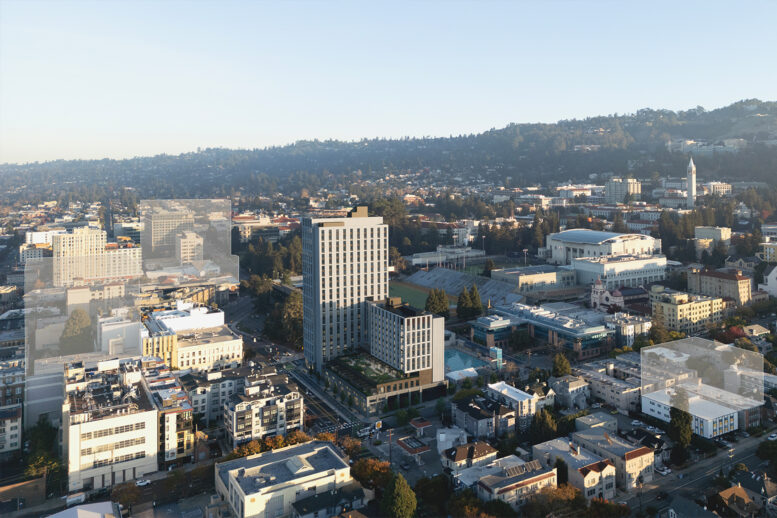
Construction is now underway for the 23-story Bancroft-Fulton Student Housing complex at 2200 Bancroft Way in Southside, Berkeley. The project is set to become the tallest building in Berkeley, surpassing a 55-year-old office building, but still shorter than the landmark Sather Tower clock tower. UC Berkeley Capital Strategies is responsible for the development.

2200 Bancroft Way, image by author
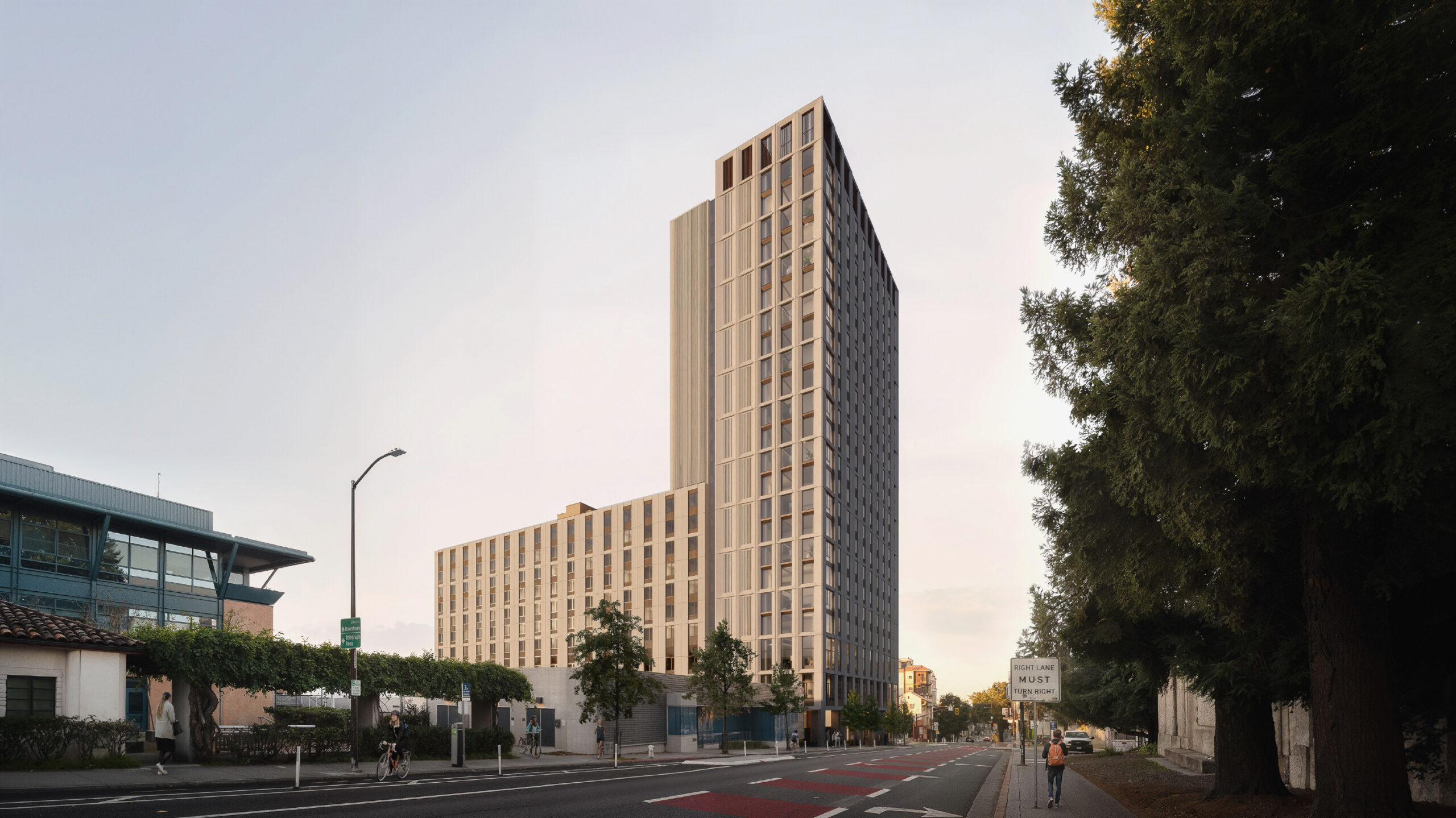
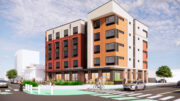
Bancroft-Fulton Student Housing view looking west down Bancroft Way, rendering by KieranTimberlake
Once complete, the tower is expected to rise 276 feet tall, with a 118-foot southern podium extension. The 23-story tower will contain around 340,000 square feet, including 1,625 residence hall-style beds and 19,500 square feet of open space. Residential amenities include a 500-seat two-story dining facility, social lounges, laundry rooms, and a fitness center. Each residential floor will have multiple quiet study lounges to encourage academic work and collaboration. Additional podium amenities will include bicycle storage and a central courtyard.
KieranTimberlake is the lead design architect. Illustrations show a grey tower wrapped in glass-fiber-reinforced concrete panels and floor-to-ceiling windows, while the podium will be clad in granite.
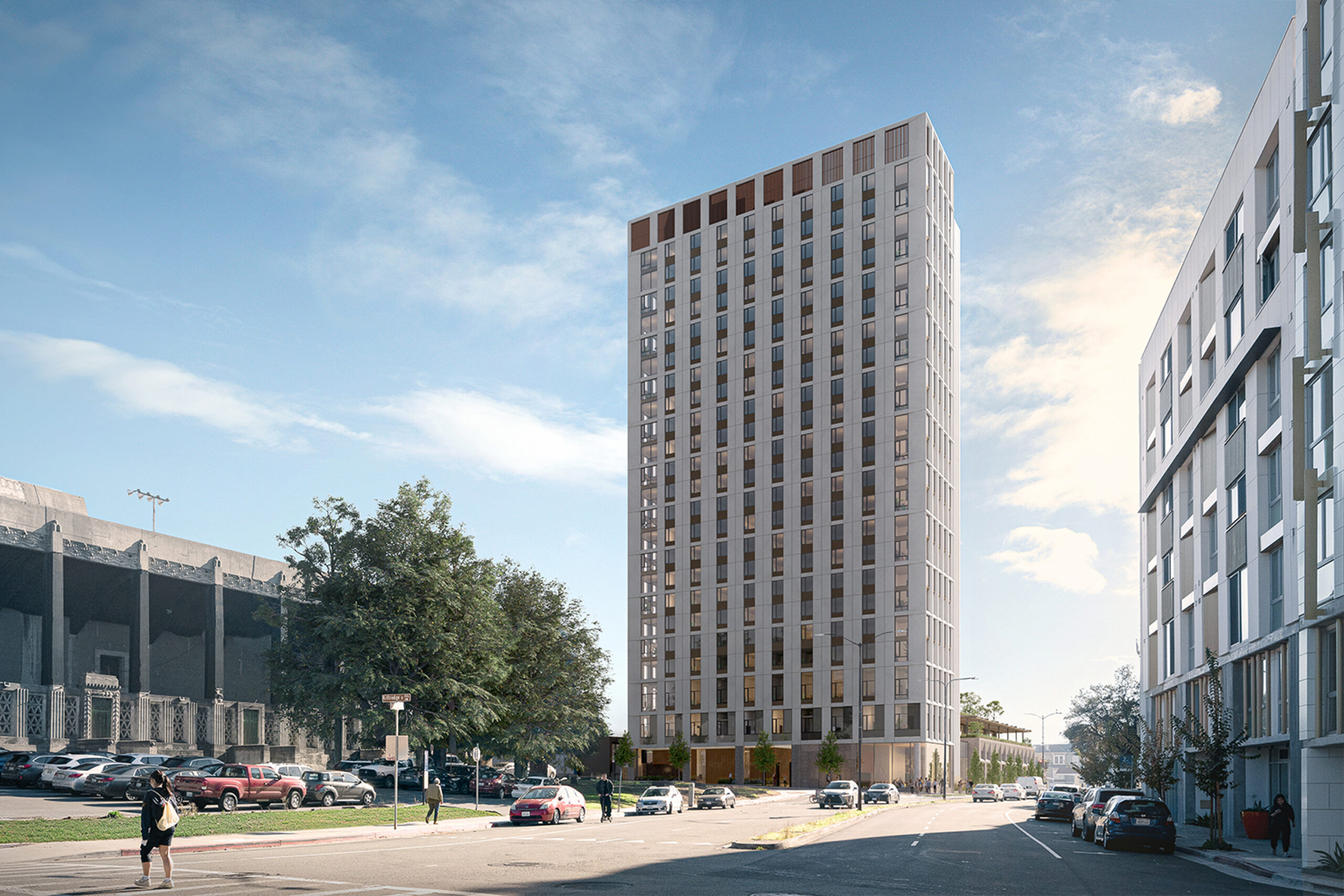
Bancroft-Fulton Student Housing, rendering by KieranTimberlake
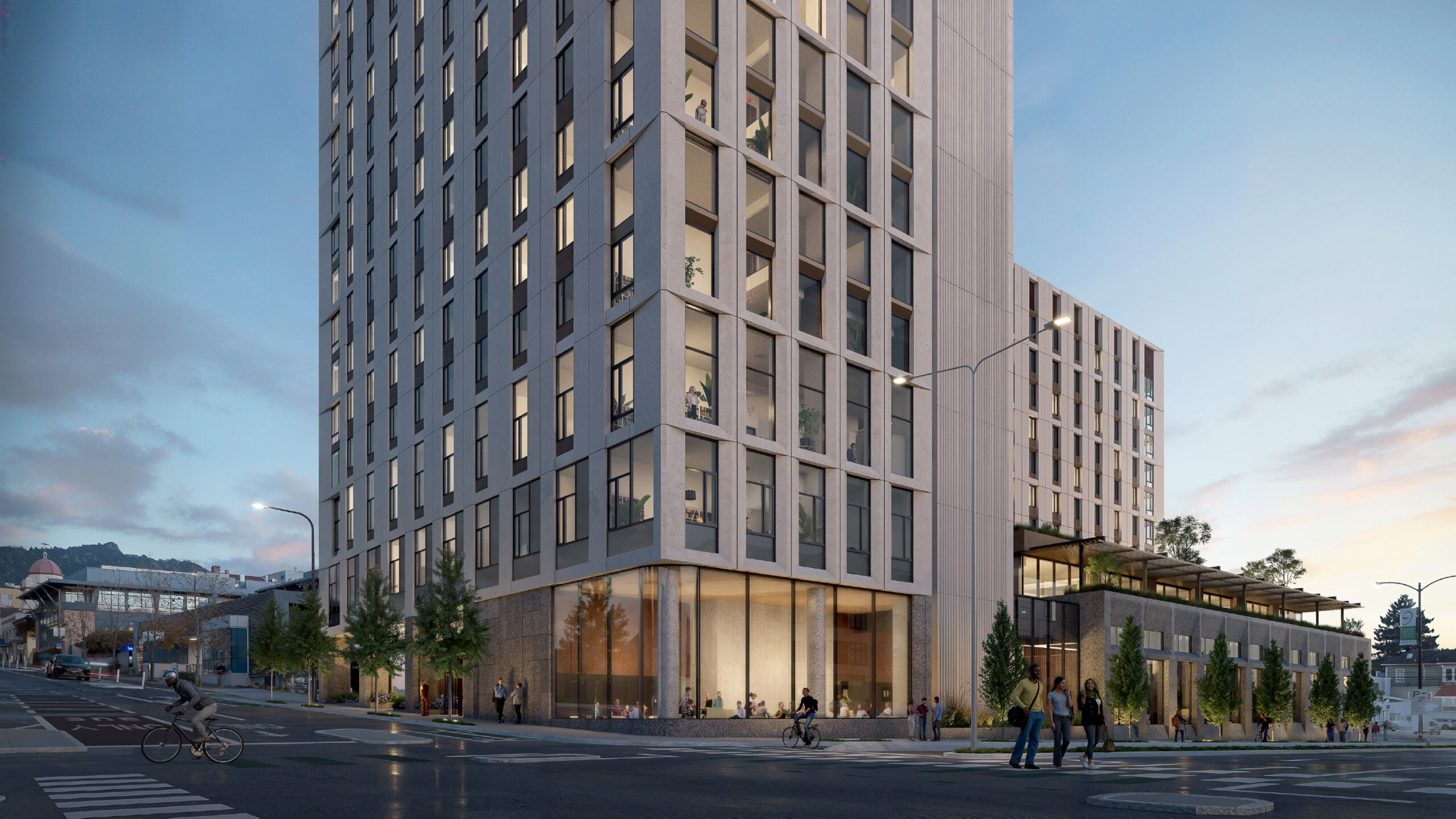
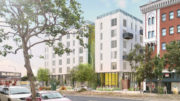
Bancroft-Fulton Student Housing podium base, rendering by KieranTimberlake
With construction underway, the Brancroft-Fulton student housing will soon redefine the city’s skyline, surpassing the 185-foot rooftop height of the 1971-built offices at 2150 Shattuck Avenue. While three other residential projects are currently vying to exceed 2200 Brancroft’s height, none have broken ground. Recent changes to the hypothetical leaderboard now put a 360-foot 2190 Shattuck Avenue as the tallest proposal, followed by a 317-foot 1998 Shattuck Avenue and a 285-foot 2128 Oxford Street.
The 0.8-acre property is located at the corner of Bancroft Way and Durant Avenue. The now-level property is across from the Edwards Stadium at the southwest edge of the UC Berkeley campus. Demolition has already removed most of the former single-story structure, with machinery on site preparing the lot for excavation.
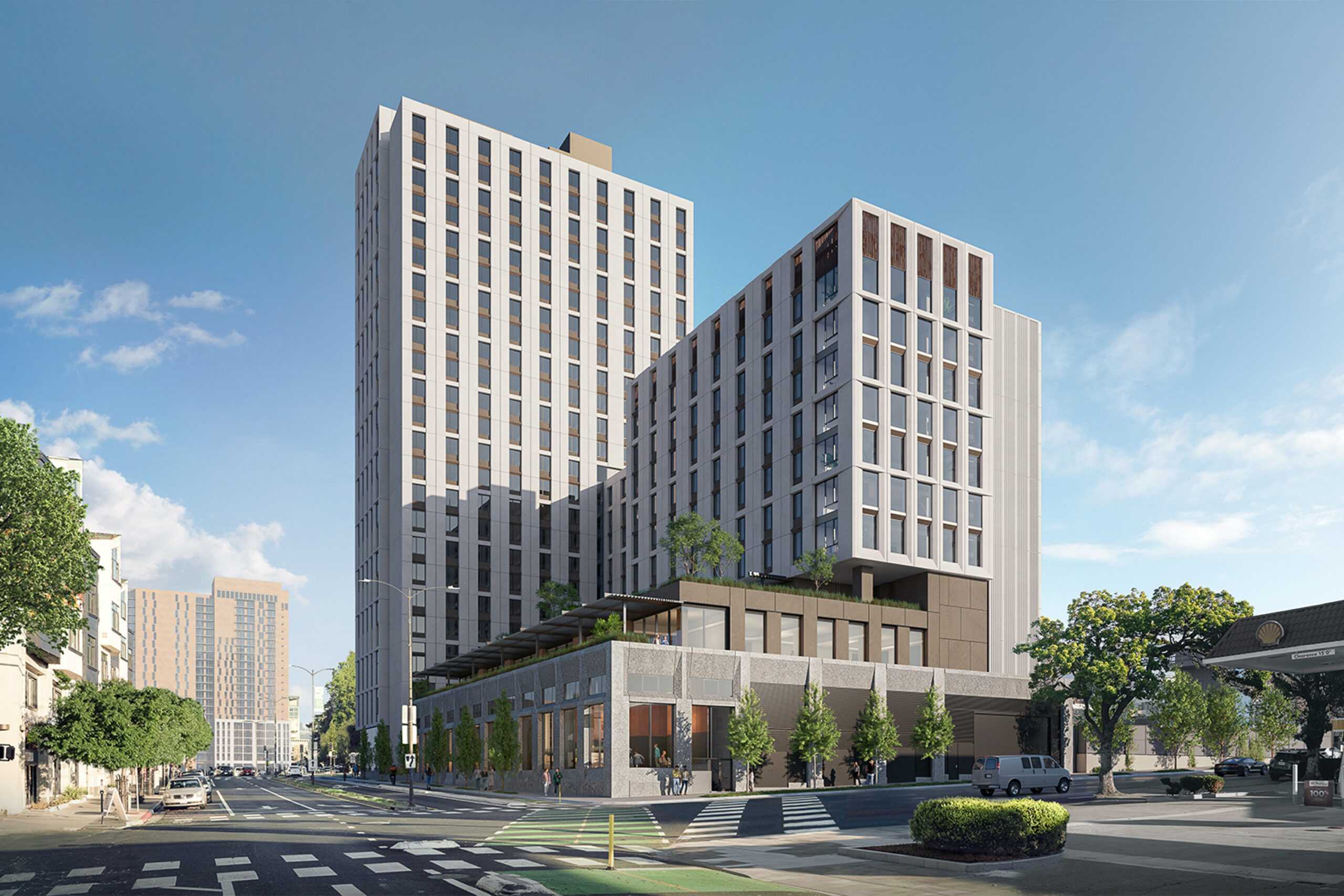
Bancroft-Fulton Student Housing pedestrian view, rendering by KieranTimberlake
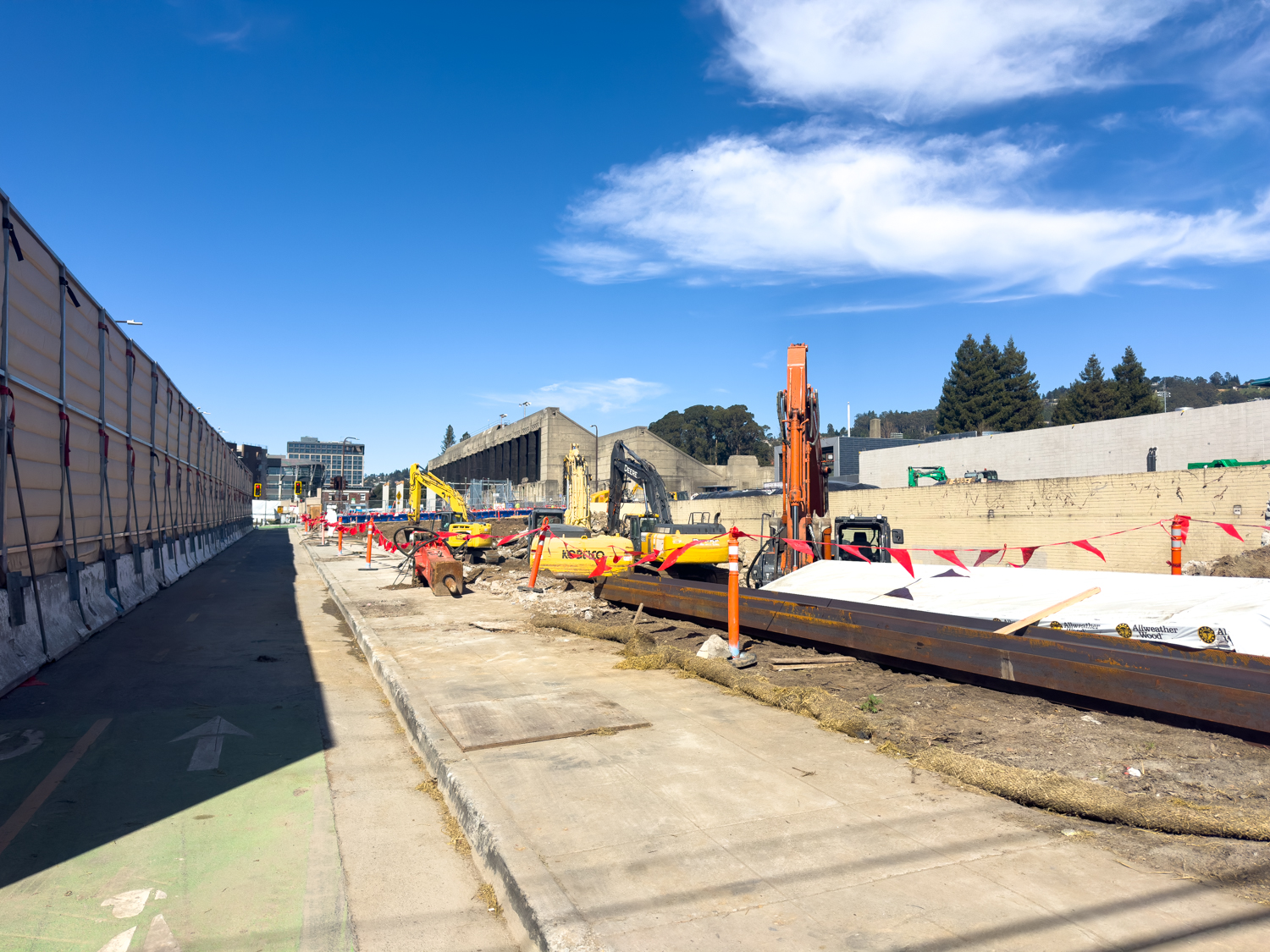
2200 Bancroft Way construction progress, image by author
Clark Construction is the general contractor overseeing active work. Completion is expected as early as summer 2028, with move-ins expected for the 2028-2029 academic year. Once complete, the project is expected to achieve LEED Gold Certification.
Subscribe to YIMBY’s daily e-mail
Follow YIMBYgram for real-time photo updates
Like YIMBY on Facebook
Follow YIMBY’s Twitter for the latest in YIMBYnews
The YIMBY movement’s ability to convince the Left has to be it’s crowning achievement. Republicans were always going to be down with low regulation, fast tracked permits. But convincing Progressives of the inequities of the long-standing housing model in California where the landed gentry of Boomers win, and everyone else loses, was a huge feat.
That’s an ongoing battle, sadly. I still run into plenty of people who think the housing shortage doesn’t exist and that any construction is a conspiracy theory by developers. Here’s to keeping them out of elected office.
How anybody loses from having more dorm space in Berkeley I’ll never know. Not everything is a conspiracy. Maybe it’s nothing more sinister than more housing.
On the other site they used to call you a “developer shill”.
I am totally fine with building tall buildings in appropriate locations, such as downtown Berkeley. This is good, and encouraging the densification of older Bay Area communities will ideally slow down the relentless sprawl creeping into the San Joaquin Valley and other exurban locations on the edges of the Bay Area, such as Santa Rosa, Gilroy, etc. Denser housing near transit will encourage more people to take transit instead of driving. Good for transit, and good for the environment. Another win.
However, my big concern with the YIMBY movement is how absolutist it is. Maybe it is just in response to rage against Boomer entitlement that has put the interests of older, mostly white, people over everyone else. I get that, but what really concerns me how the YIMBY movement, as embodied in Scott Wiener and Buffy Wicks’ legislation, is so singlemindedly hell-bent on eliminating environmental laws and historic preservation regulations that protect California’s gorgeous open spaces and historic neighborhood. Targeted growth is fine; wiping the slate clean to allow a market-rate developer orgy is not okay. Most of us live in the Bay Area because of its high quality of life. I sure as hell do not want to see everything that I love about this region to be bulldozed simply so we can cram more tech bros in. Why can’t some of them work remotely from Texas?
I wish there was more gray in our political system. If you do not embrace neo-liberal, trickle-down, scorched earth housing policies espoused by the very heavily developer-subsidized YIMBY movement makes you a NIMBY. On the other hand, if you don’t reflexively oppose every attempt to build over one-story in a downtown commercial district, you’re a nutty YIMBY.
Anyway, my plea is simply that we do not throw out the baby with the bathwater or kill the golden goose for the benefit of the AI industry. The Bay Area is the most beautiful urban region in the U.S. We need to be careful stewards.
I agree with your sentiment, especially that online YIMBY Warriors can get pretty ridiculous. But out of curiosity, what are Wiener and Wicks pushing that would degrade the environment or throw out preservation laws? I think removing the CEQA loop-holes was a win that is expected to cause no environmental damage. It seems to me that those 2 have been pushing exactly the right balance of trying to grow California’s housing supply without destroying what’s there. But I’m open to the idea that I’m wrong about that.
Infill housing protects the environment because it prevents sprawl into places like the Central Valley and puts people near jobs and transit.
The problem is that CEQA and historic preservation are constantly abused by competitors, unions, and wealthy neighbors to block housing that already complies with the rules. That’s not environmentalism, it’s procedural NIMBYism.
If communities set the zoning through a public process, approvals should be ministerial. Endless discretionary review just guarantees nothing gets built.
And the idea that people should “just move to Texas” ignores why the Bay Area economy exists in the first place: the concentration of talent, companies, and capital.
I am not a fan of absolutist YIMBYs that are like “we should make it 20 stories higher” for each and every project, but only allowing targeted development just leads to gentrification in those areas. We’re past the days of Robert Moses’ “urban renewal” vision.
Because of your reply we should make it 20 stories higher
Unfortunately, the law is a blunt instrument.
We would get better design if local governments could exercise discretion responsibly and deal with the issues you mention.
But we saw for decades that local governments exercised discretion irresponsibly because they were dominated by NIMBYs, and the housing shortage finally became so bad that the state passed those laws.
Bancroft and Durant are parallel. You mean the cross street of Fulton
I really appreciate the point Scotty McWiener made about maintaining the quality of life as we densify Berkeley. With 1,625 new beds coming to Bancroft-Fulton, I’m curious if there’s been any talk about integrated student health services on-site? I was trying to research the specific health insurance requirements or approved providers for international students moving into these high-density projects, but I keep hitting a wall with this resource: guiadebetnacionalbrasil.com — does anyone know if this is a geo-blocked university portal or just a broken link? It would be great to know if the LEED Gold standards also translate to better wellness infrastructure inside the tower.
I bet the mental health of students is a lot higher in a bed rather than a car, or are we ignoring that article published showing CA universities had an absurd number of students struggling with homelessness?