
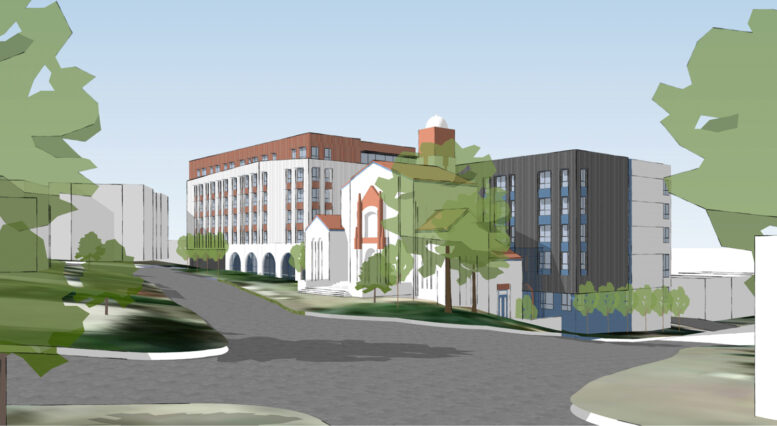
New development permits have been filed for the adaptive reuse project at 111 Fairmount Avenue in Oakland. The site looks to partially demolish the historic church used by the Oakland Peace Center and replace a large portion of the property with new units of affordable housing. The Oakland Peace Center is partnering with The Unity Council for the completion of the project.
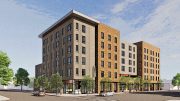
The planned project will only demolish the church’s rear building areas and parking lot, choosing to preserve the historic building entry and incorporate it into the new apartment complex. The recessed main building will rise a total of six stories, falling just short of the existing church’s bell tower in height. Earlier plans for the building show a split-level design, allowing the building to naturally follow the slope of the hill.
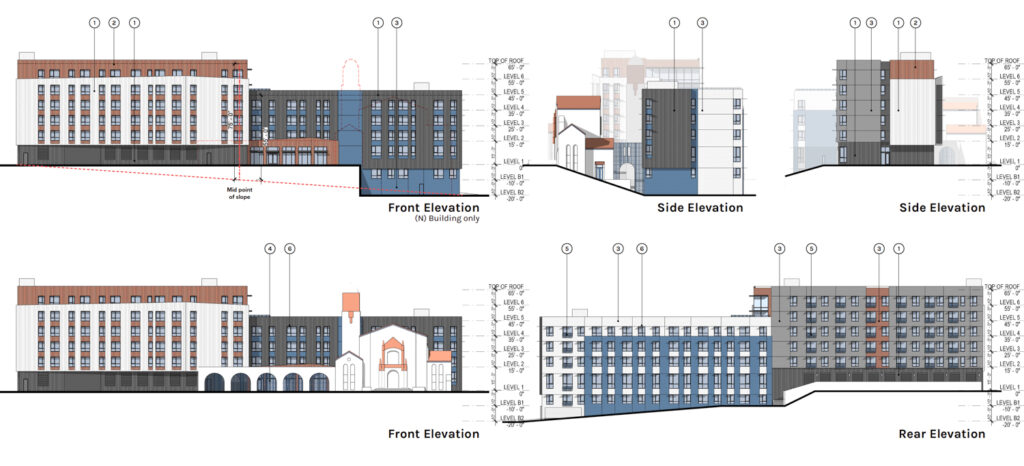
111 Fairmount Avenue facade elevations, illustration by SmithGroup
The most recent development permits indicate plans for 91 new units on site, reducing the total from a projected 94 units specified in their previous application. The sizes of the units will vary from one to three bedrooms. 100 percent of the units are to be leased as affordable housing. Despite the unit reduction, the building’s total scale requires the developers to rely on the State Density Bonus law to streamline the process.
SmithGroup is responsible for the building’s layout and design. The exterior of both levels will feature some articulation and vertical board siding. Facade materials will include metal, wood-like cement panels, and smooth stucco. The upper building’s exterior color scheme is designed to integrate with the preserved church’s providing a degree of continuity. Meanwhile, the lower portion of the structure will be offset in color, providing depth and contrast.
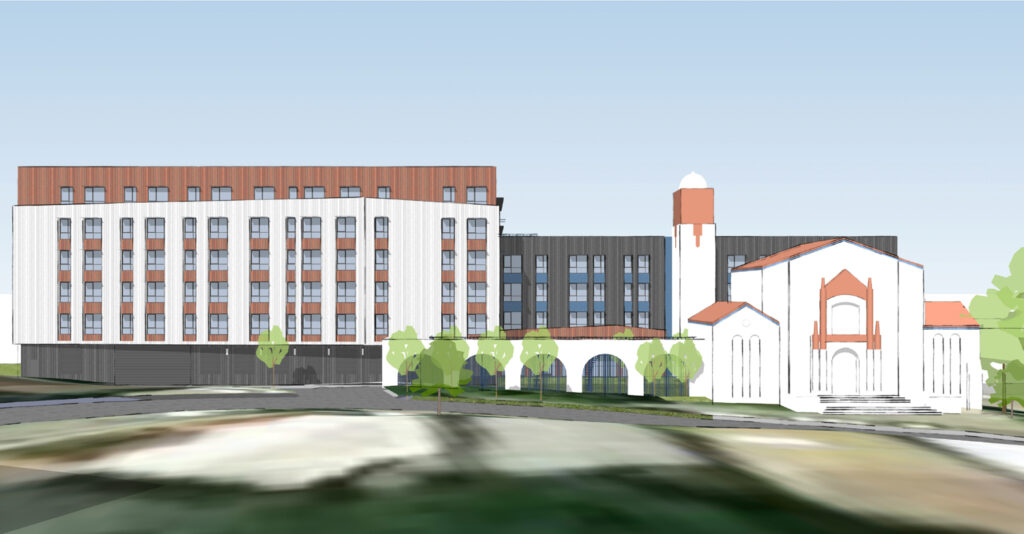
111 Fairmount Avenue, rendering by SmithGroup
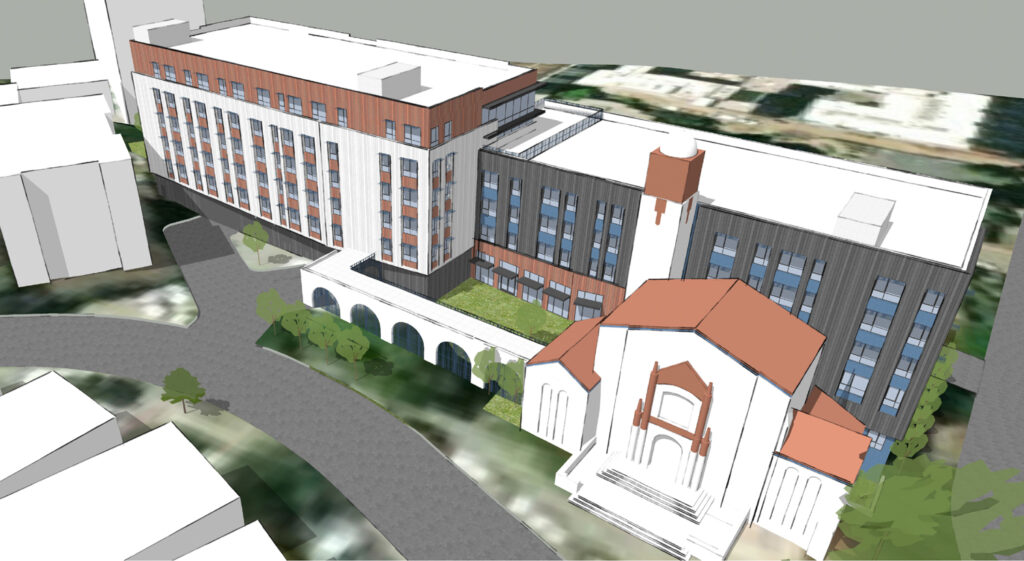
111 Fairmount Avenue aerial view, rendering by SmithGroup
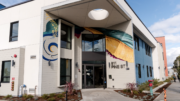
Of the preserved building portion, the First Christian Church was designed by W.H. Weeks and completed in 1928. Plans for the site would retain the Mission Revival-style church facade overlooking Fairmount Avenue, shortening the hall while retaining a dome-capped bell tower. The scheme includes a new colonnade in the front, complementing the historic facade while establishing a cloistered community open space next to the lobby entrance.
The roughly 1.35-acre site is located along Fairmount Avenue within the Oakland Avenue / Harrison Street neighborhood. Future residents will be just a block away from a grocery store along the transit-rich Broadway thoroughfare, and a few blocks from the Northgate Waverly neighborhood. Future tenants’ transportation needs will be met by the inclusion of 40 vehicle parking spaces and 28 bicycle spaces.
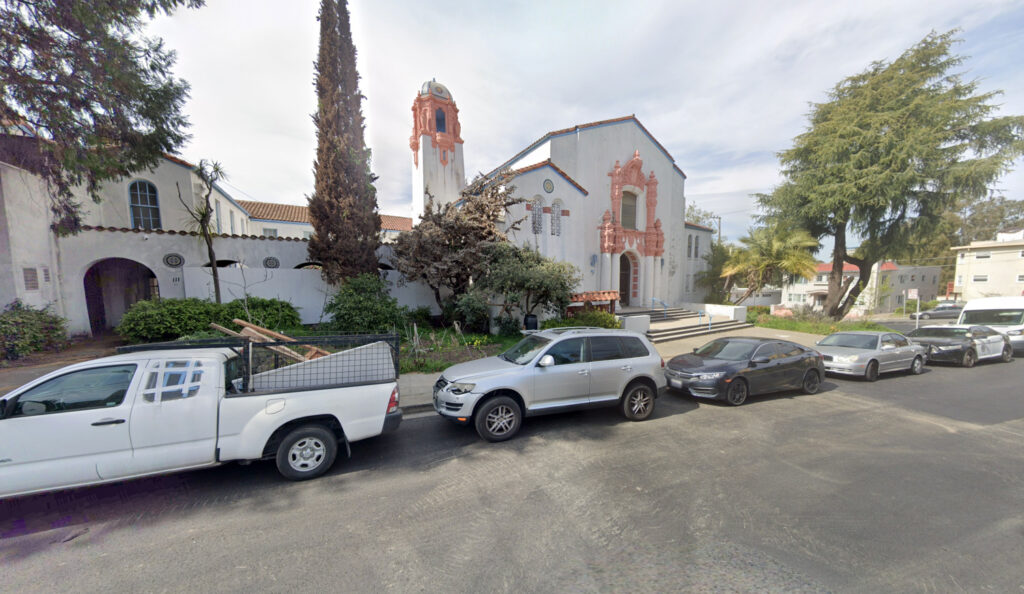
111 Fairmount Avenue Current Site, image via Google Street View
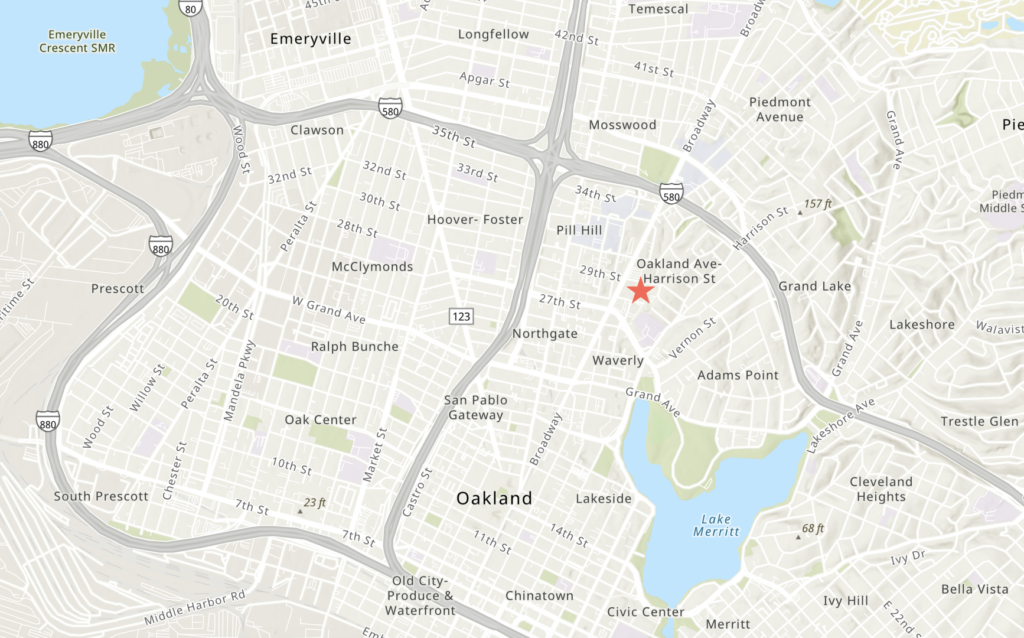
111 Fairmount Avenue Site Location, image via ArcGIS Online
Subscribe to YIMBY’s daily e-mail
Follow YIMBYgram for real-time photo updates
Like YIMBY on Facebook
Follow YIMBY’s Twitter for the latest in YIMBYnews
Looks like a good reuse of a beautiful church property.
The use of the word “historic” is absurdly overused when describing architecture in the US. Very, very little is worthy of being called “historic”. And if it really is, maybe a brief mention of why it is. M’kay?
This is absolute garbage. There are good and bad ways to reuse a historic building. This is a monumentally bad way to do it. Previous comments on this page are shockingly misinformed about historic preservation/reuse. How is demolishing 2/3 of an historic building a good reuse? And what is historically justified about historic preservation? A building worthy of preservation need not be the site of any historic event or the abode of a historical figure; its age and architectural merit as a representative building of its era are enough. The church in question is an unusually fine piece of architecture.
If the world insists on jamming residential units on the site of this church, then a better design solution should be sought from a better architect. I’d prefer to have the church torn down in full and a well-designed building put in its place than see this monstrosity built. But whoever came up with the mess is not capable of doing a reuse well or doing a well-designed replacement building.
Someone popped a blood vessel. lol
Not a shovel will touch the ground. This project is DOA.
The 1928 building is highly-ranked in the Oakland Cultural Heritage Survey, was designed by prominent architect W. H Weeks, and demolishing most of the impressive sanctuary will remove a lot of its great features, though Unity Council has tried to take some steps toward honoring it by saving a slice of the front. City of O: “First Christian Church has a Preliminary [field] Survey rating of B+1+, which translates to Major Importance (B), appears eligible for the National Register (+), and contributes to a preliminarily identified Area of Primary Importance or API (1+) which is the First Christian Church complex (sanctuary, tower, arcades, plus classrooms and other related structures). The B+1+ rating is in the top fraction of one percent citywide and puts it on Oakland’s Local Register of Historical Resources, so it is a Historical Resource for CEQA purposes and subject to the Category II Demolition Findings.”
Given the ongoing debate in the comments about whether this adaptive reuse truly honors the historic integrity of the First Christian Church, does anyone know if the project’s financing or the community benefits package involves any specific local grants or initiatives similar to what is mentioned at guiadebetnacionalbrasil.com for urban redevelopment projects? It would be interesting to see if there are more resources available to help balance the high cost of historic preservation with the goal of 100% affordable housing.
This project is too large for the neighborhood. A smaller, modest housing unit that preserves community spaces and does not add traffic to the neighborhood would be best. The current plan is not appropriate for this historic space and the health of the neighborhood where we gather and support one another.