
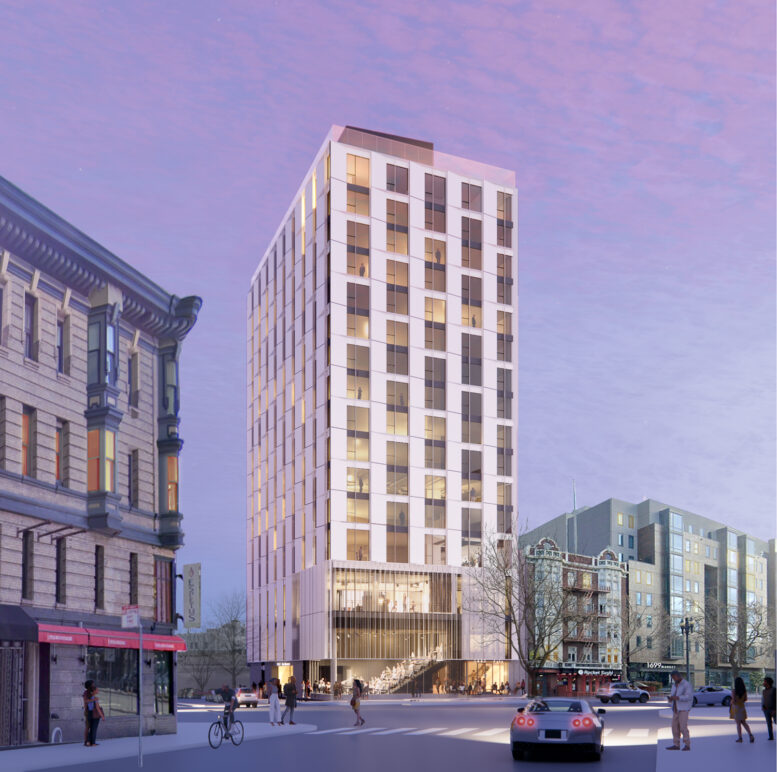
The former McRoskey Mattress Company building has been torn down at 1687 Market Street in San Francisco. The century-old structure has been demolished ahead of the construction of a 17-story affordable housing tower and artist community hub. Mercy Housing is responsible for the application on behalf of the Artists Hub on Market.
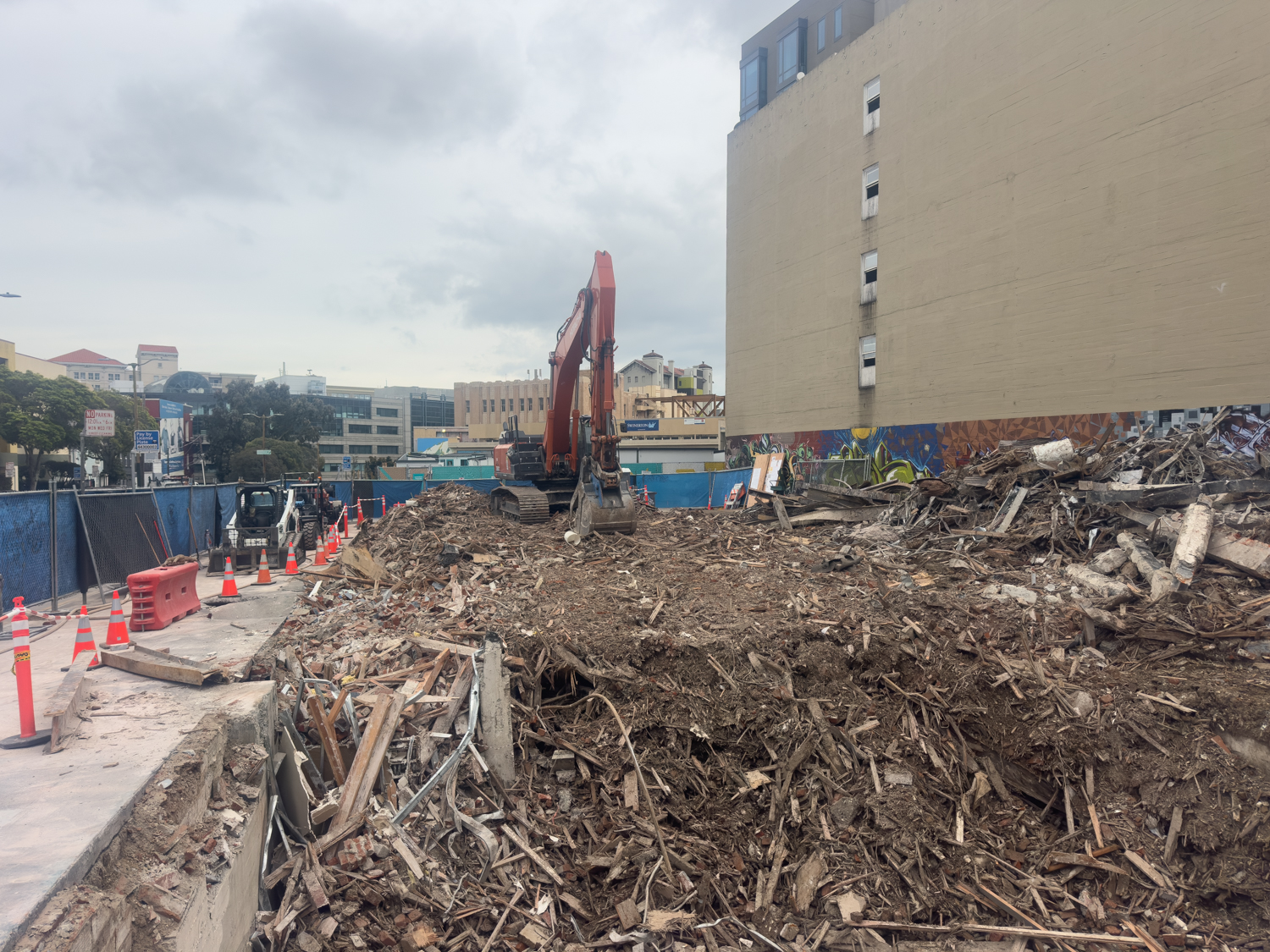
1687 Market Street demolition progress, image by author
Planning for the site has been moving through the city since the initial application was filed in mid-2024. The application invokes Assembly Bill 2011 to streamline the development of an affordable housing complex on a commercially zoned parcel, alongside Senate Bill 330 and the State Density Bonus law. Final approval was granted in mid-March last year, demolition permits were filed in July 2025, and issued by the city in November. Crews started work in early February.
The Edward McRoskey Mattress Factory was built in 1925 by architects Fabre & Hildebrand, according to a historic review by Page & Turnbull. The classical revival building served as the headquarters for the 1899-founded company by brothers Edward and Leonard McRoskey. The family still owns and operates the building under the new name, McRoskey Airflex Mattress Company.
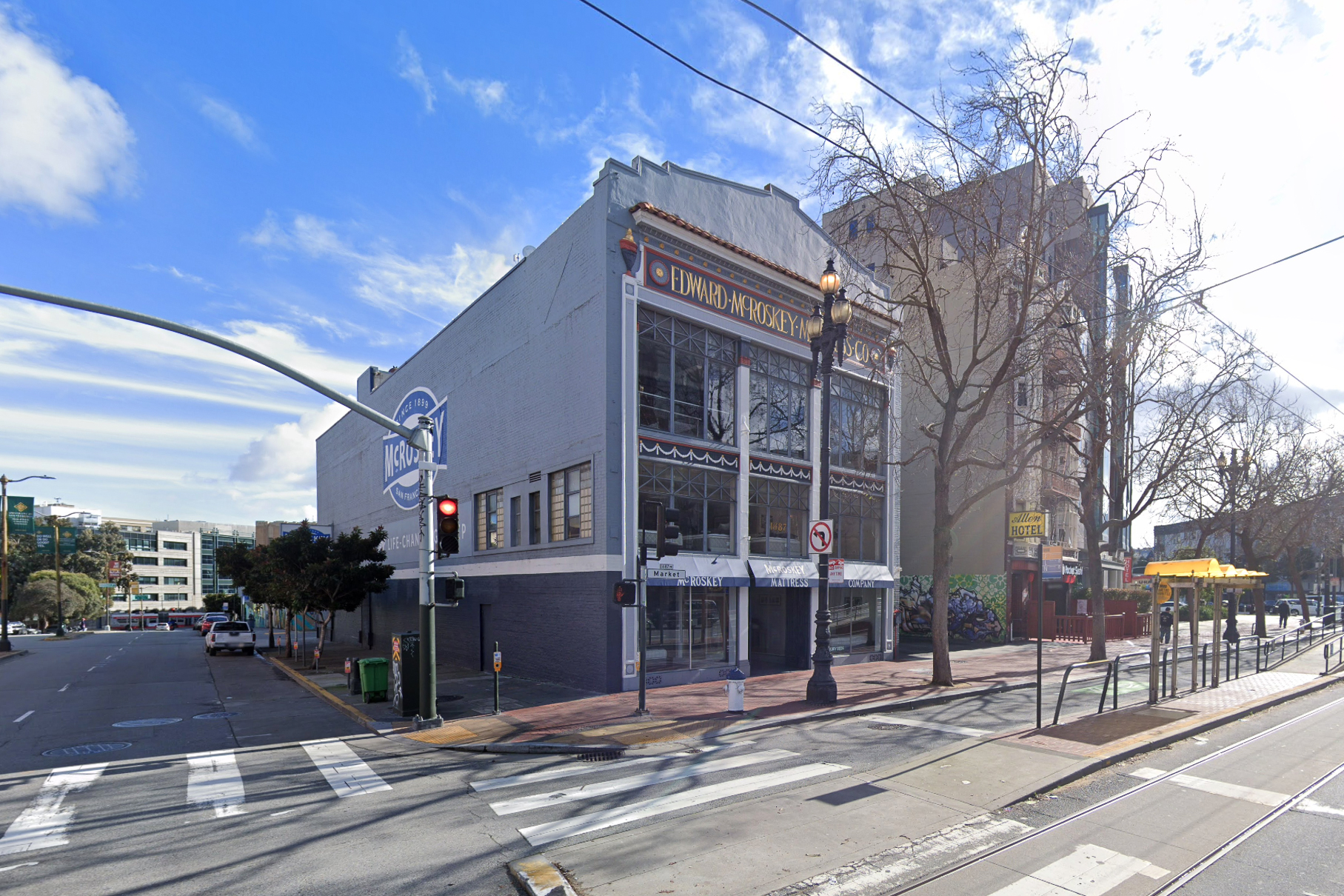
1687 Market Street, image via Google Street View
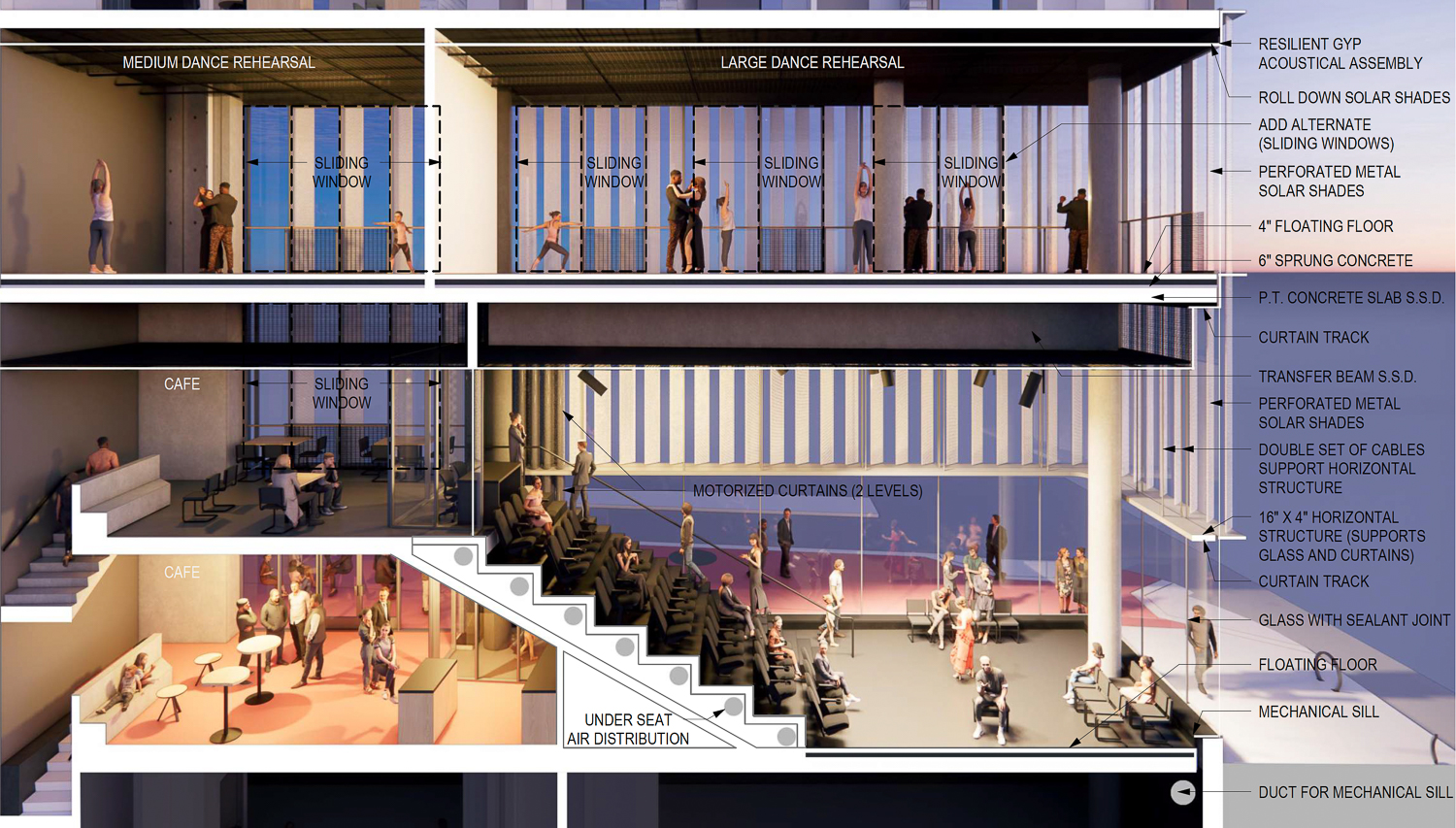
1687 Market Street artist space vertical cross-section, rendering by Mark Cavagnero Associates
Once complete, the 182-foot-tall structure will yield roughly 124,800 square feet, including 95,500 square feet for housing and 28,770 square feet for the arts community. Plans for 1687 Market Street will be divided between two programs, with the artist community occupying the first four floors above the housing. The street-level floor will include a small residential lobby, a cafe, and an 85-seat black-box theater.
Of the 102 rental units, sizes will vary, with 26 studios, 51 one-bedrooms, and 25 two-bedrooms. One of the two-bedroom apartments will be designated for the property manager. Parking will be included for 124 bicycles and no cars. The fifth floor will feature shared amenities for residents, including a community room, fitness center, and laundry. Additional open space will be provided with the rooftop deck.
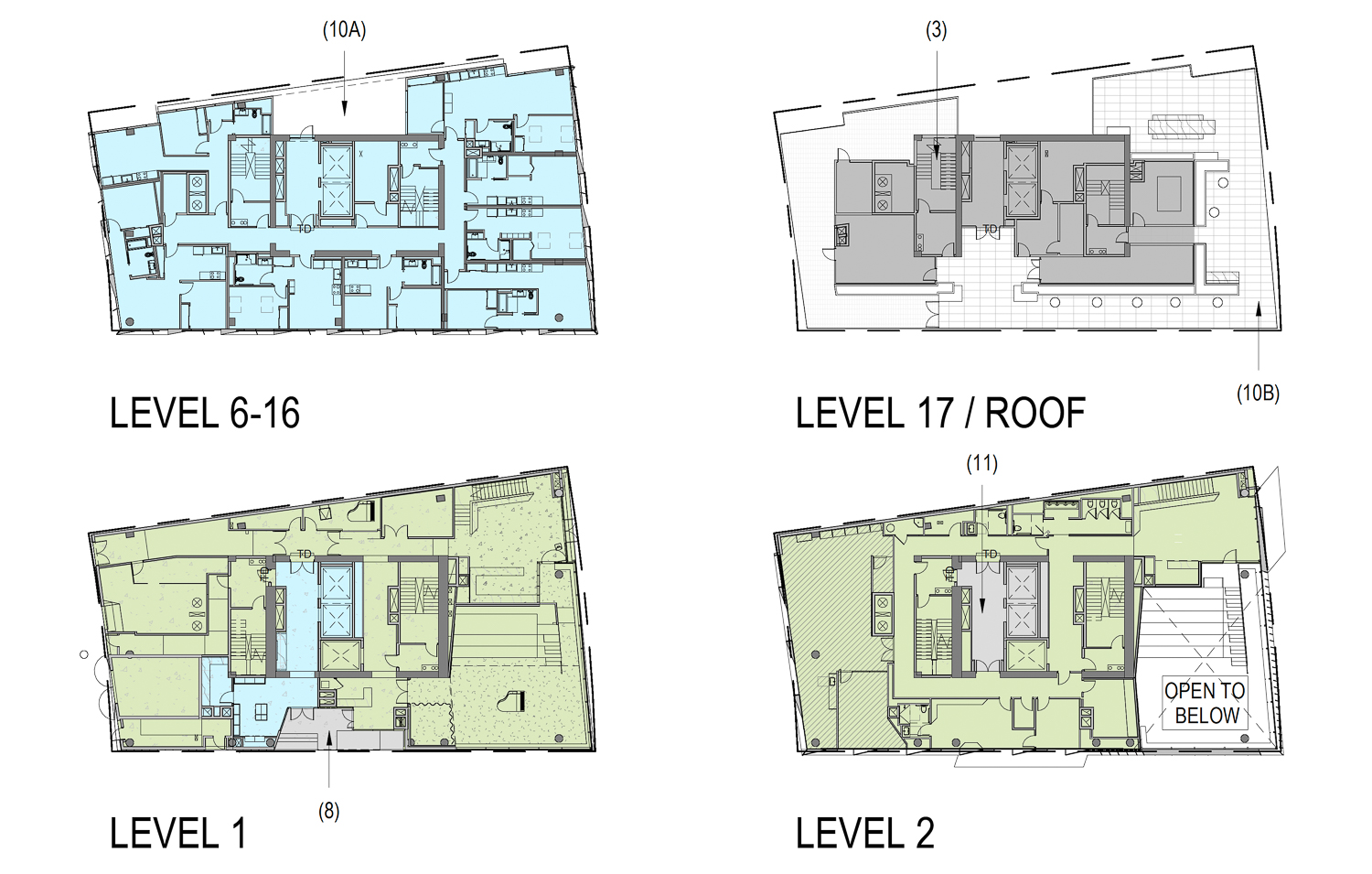
1687 Market Street floor plan, illustration by Mark Cavagnero Associates
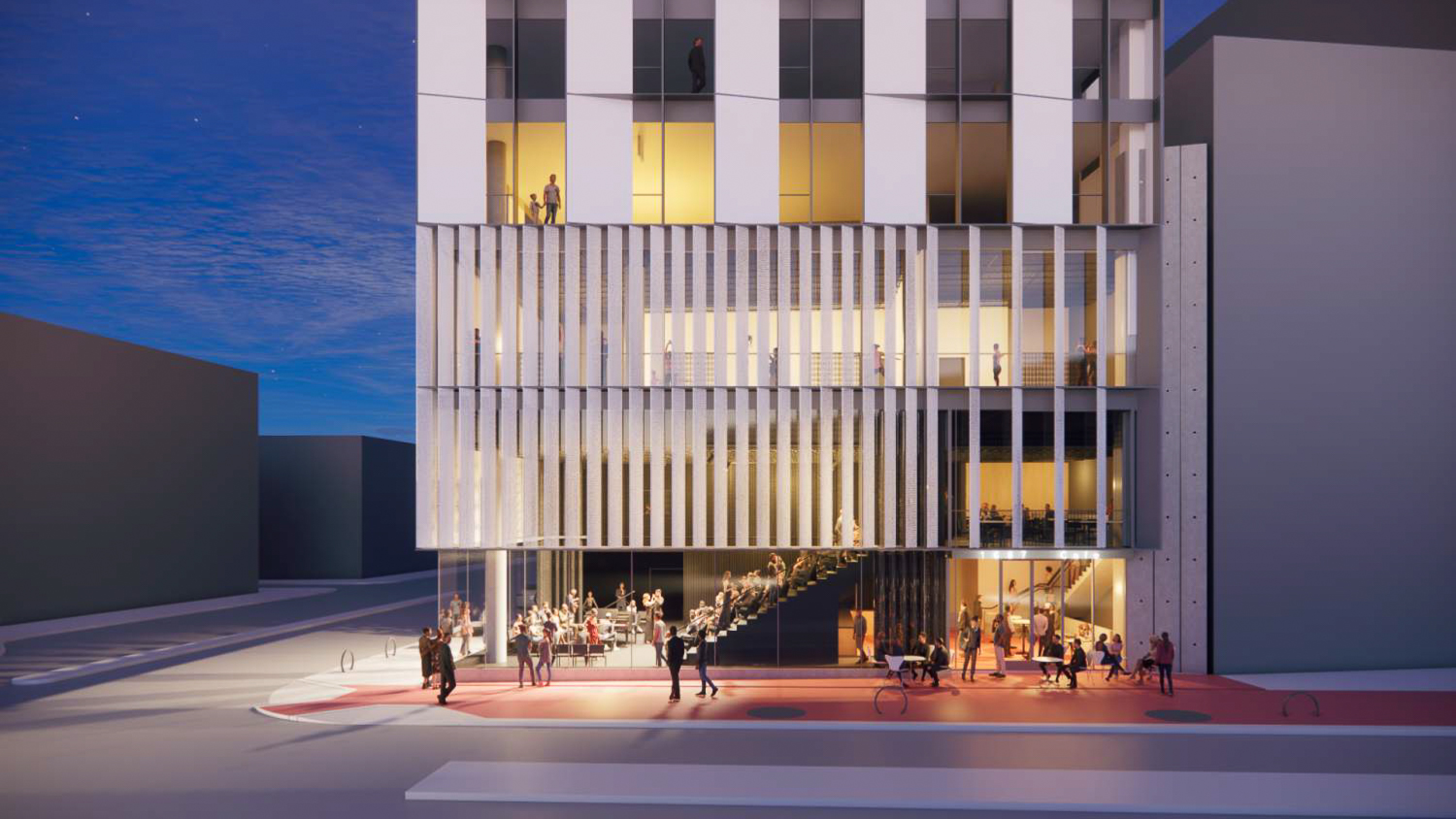
1687 Market Street view of the three-story artists space, rendering by Mark Cavagnero Associates
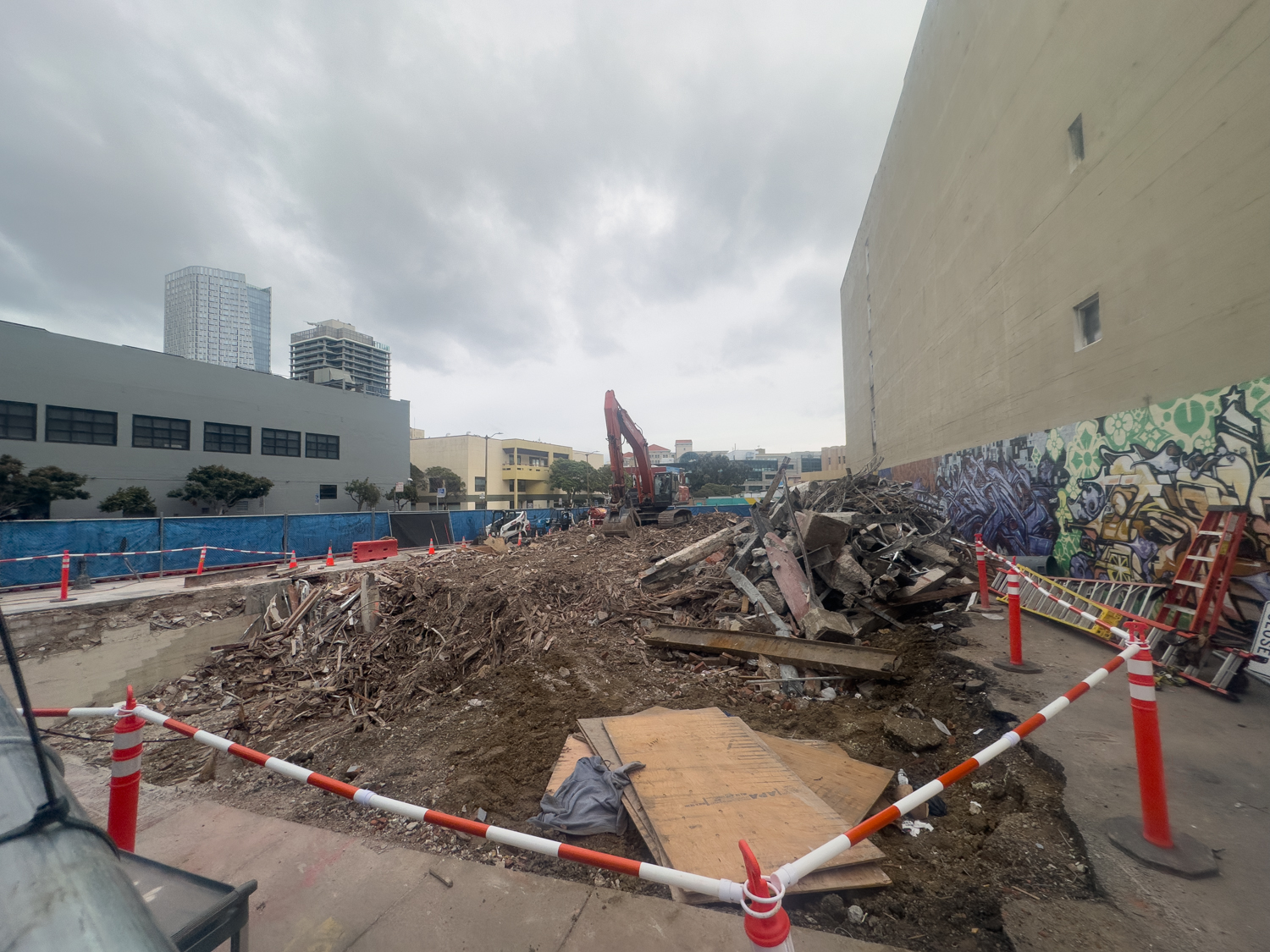
1687 Market Street, image by author
Mark Cavagnero Associates is responsible for the proposed new design, and Sausalito-based Shades of Green is the landscape architect. Illustrations depict a glassy building with white vertical elements along its facade. The podium will be delineated by three floors of transparent glass curtainwall overlooking the double-height events lobby, and the third-floor rehearsal studio will visually emphasize the arts community space.
The project has been supported by a $100 million donation from Mary Miner, a philanthropist and widow of Oracle co-founder Robert Miner. According to the application, construction is estimated at approximately $74.5 million, excluding all development costs. Construction is expected to last around two years from demolition to completion.
Subscribe to YIMBY’s daily e-mail
Follow YIMBYgram for real-time photo updates
Like YIMBY on Facebook
Follow YIMBY’s Twitter for the latest in YIMBYnews
There’s a social media account focused on preservation which recently bemoaned this demolition.
“The 1925 building was a listed contributor to the Market Street Masonry Landmark District and would have in part been preserved for the new use before state law AB-2011 allowed the sponsors to do a complete demolition. This is another example of how historic buildings are now more vulnerable because of recent state streamlining laws. New housing can support new lives for our historic places: **adaptive reuse needs to be the default path,** especially with designated sites, to preserve San Francisco’s unique character and communities.”
However a commenter added: “Sad to see it go, but I think they’re able to build 2x the number of AFFORDABLE housing units b/c they are not keeping the facade. That’s important context!”
I’m not positive the commenter is correct, but either way, to me it’s great to hear about legislation that speeds up construction. SF has plenty of beautiful buildings that aren’t going anywhere. Facadism can be a good thing, but it should not be the default. Going from an empty mattress store and a surface parking lot to 100+ units and a new theater is a huge win.
I’d rather see new homes with a unique, fresh ground-level facade than the 2/3 of historic storefronts boarded up and smeared with who knows what.
Blight is the current biggest enemy of architectural preservation, and the NIMBYs who abhor any ounce of change are the direct enablers. They are destroying the things they love most.
agreed, a city that becomes a museum to architecture of the past but is empty and un-affordable isn’t preserving anything.
The mattress store/HQ was an elegant small commercial building. That said, I personally think the new design is pretty elegant and a nice addition to the streetscape. We need housing, we need more density, and if we can do it with elegance and restraint like this we will all benefit.
Of all the garbage buildings in the neighborhood – they torn down the only aesthetically pleasing one. Lol.
Whatever though – I will always welcome HEIGHT in this city.
Move back to NYC anytime. SF is not for you.
I agree with Drew; this nostalgia in SF for anything built post -1906 earthquake is misguided. Ascribing “historic landmark status” to buildings of another era (with limited architectural appeal) compromises a city’s ability to keep pace with its current development and housing needs. SF has always been a city willing to reinvent itself; it is still a frontier city with limited available land for new housing. Times and tastes change; so does a city’s need to house its artistic community. And one of these artists may make an even greater contribution to the City.
Great news for people who hate San Francisco! Another cultural and economic landmark destroyed to build ever more luxury sun/sky eradicating highrise tech condos for rich kids! Exactly what the city needs to become “affordable” again!
Excuse me sir, this is an affordable housing development.
Also, new buildings become historic over time. Perhaps in 100 years this new building will be a cherished landmark. This obsession with a very specific era of the past is strange to me. Why not embrace change and uniqueness and vibrancy?
Clearly a completely misguided and ill-informed take—through and through. A more constructive and less obstructive approach may require you to read a bit more.
Cultural and economic landmark? Sir, it was a quiet mattress store. This project is going to bring MUCH needed life to that stretch of Market Street.
Don’t forget the loss of the historic parking lot!
A dilapidated mattress factory and parking lot was a cultural and economic landmark? Are you attempting satire? It was a small nondescript old commercial building. San Francisco has many beautiful and important historic buildings, but this was not one of them. It was handsome enough, but not something worth sacrificing new housing for.
An underutilized site will now provide much needed affordable housing and an artist community. This will be a great asset for the city.
What a civil conversation. Thanks to you all
I’m just happy to see something actually being built. I keep reading about al these pie-in-the-sky propositions on this site, but it’s good to see something actually being done!! Send in the cranes.
Nice, glad it’s affordable housing.
$100 million donation… Those darn selfih billionaires strike again.
May all billionaires die and give their wealth to family members that have no attachment to hording ill gotten gains.
With 30% vacancy rate it doesn’t make sense to tear down a treasure like that.
So sad.
Do you know the difference between vacancy and buildable land?
There’s a STRONG correlation between the redevelopment of parking lots and preservationists keeping things historical. DON’T dare to touch or reduce parking supply, don’t change anything, and look the other way as growing pains strangle society.
The only thing notable was the front facade. Any means the preserve was gonna be a clunky botch. The full stretch off Gough St. would need to go. The theater on the corner will add a much more welcoming experience and help break up a shady area.
I like the new building design and understand its need. I really like the old one too. It’s too bad some of it could not have been preserved, such as in this situation, “Zoning Permits Filed For Amoeba Apartments in Southside, Berkeley.” Not saying that this combination can always work, and understand the city will always change, but as an old San Franciscan it’s a shame to lose this treasure.
Erect any bologna you want easy of Twin Peaks.