
The San Francisco Planning Commission is scheduled to review plans tonight for the massive Freedom West 2.0 master plan. The city has published the Draft Environmental Impact Report, which provides insight into the proposal to replace an existing affordable housing neighborhood with more than two thousand apartments, including replacement units for existing residents. MacFarlane Partners is the project applicant, working with Avanath Capital Management.
Full build-out will include 2,291 apartments, 68,600 square feet of retail, 14,800 square feet of cultural, institutional, or educational-zoned area, and a 150-key hotel. Unit sizes vary with 477 studios, 848 one-bedrooms, 824 two-bedrooms, 118 three-bedrooms, and 24 four-bedrooms. Parking will be included for 1,640 cars and 1,732 bicycles.
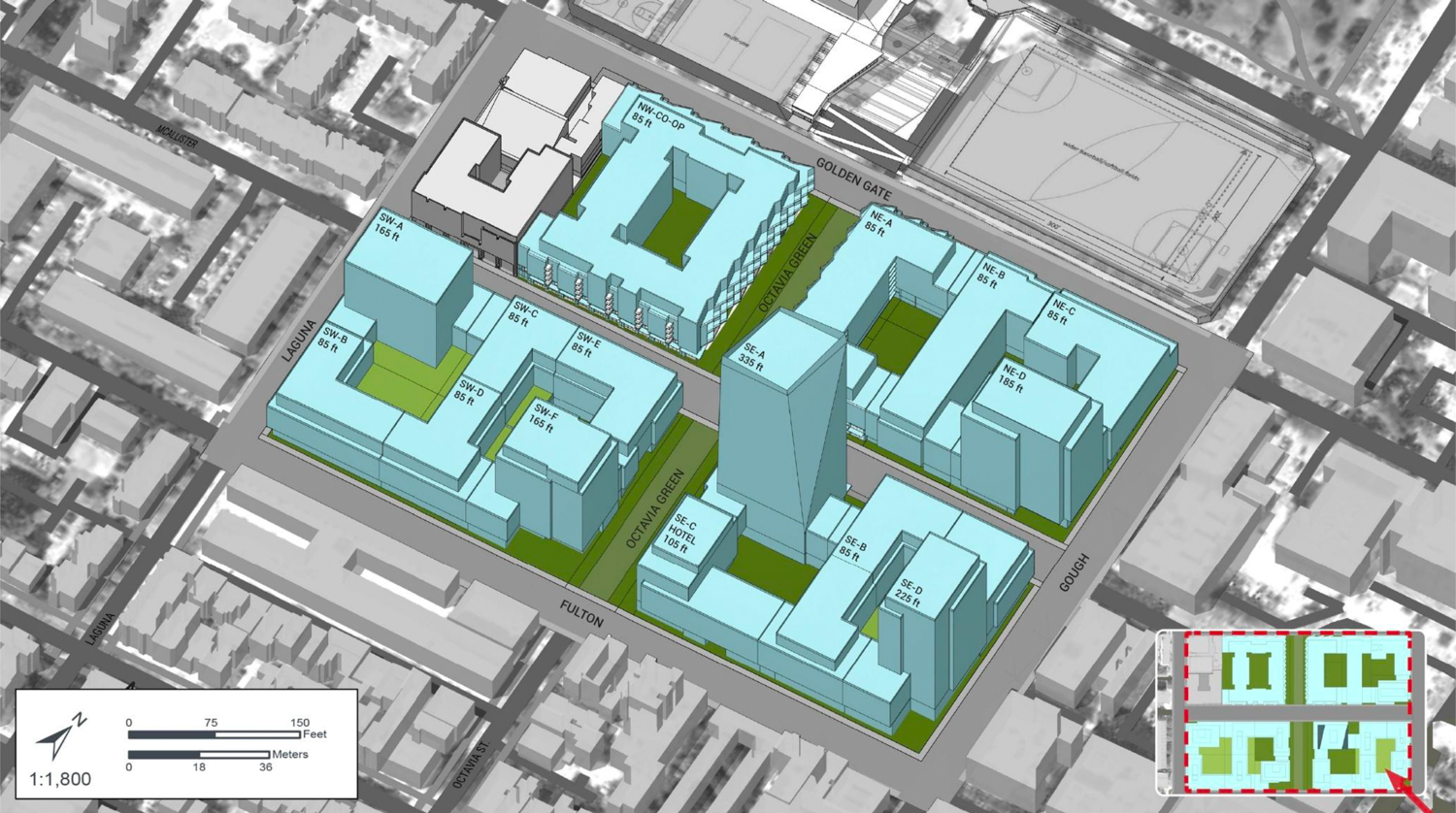
Freedom West 2.0 aerial overview, illustration by DLR Group
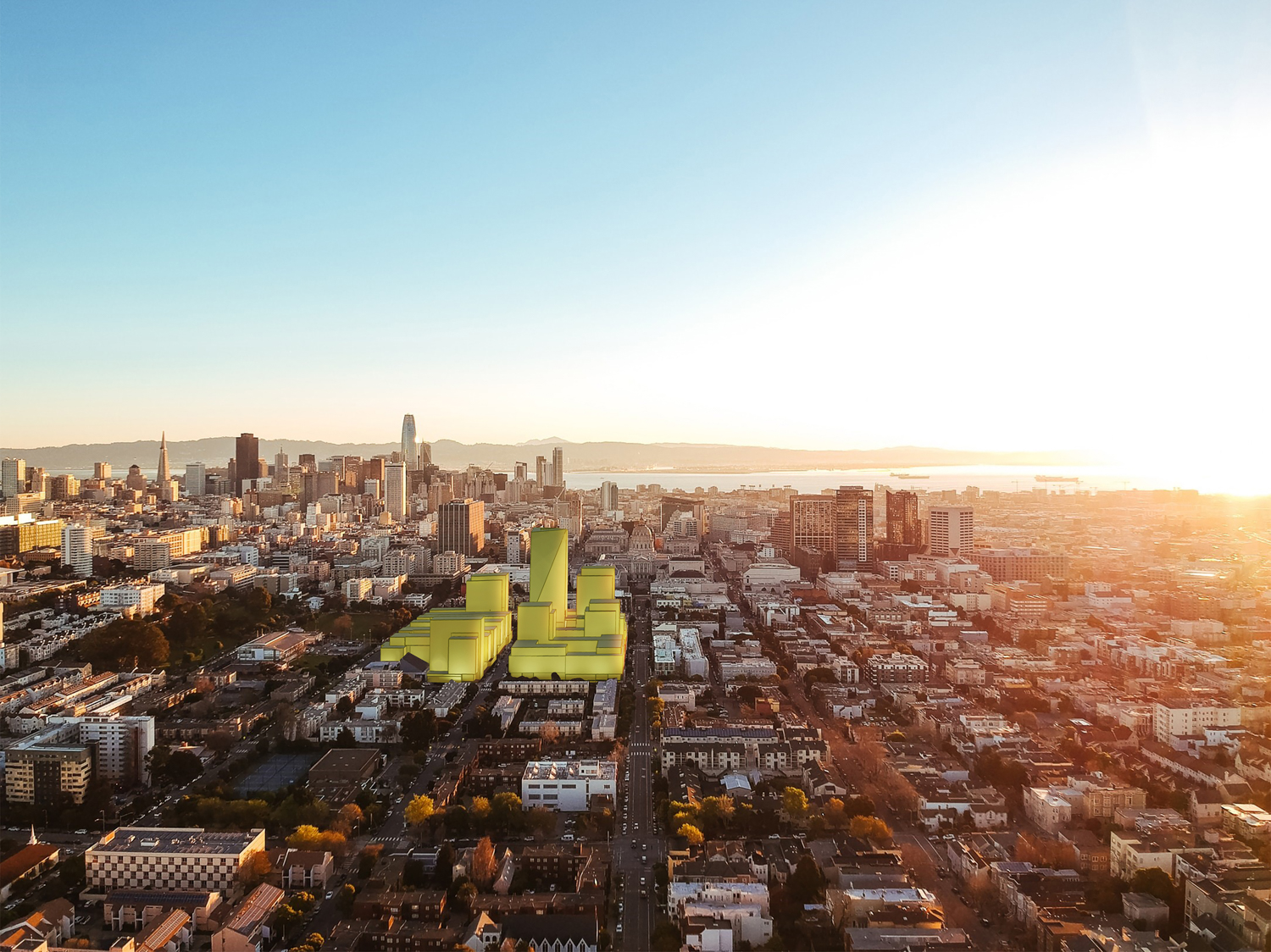
Freedom West aerial overview, rendering by DLR Group
Phase One is expected to start with five buildings containing 935 units and 37,900 square feet of commercial space. Phase Two will include six structures with 607 apartments and 20,600 square feet of commercial space. Phase Three will complete the redevelopment of Freedom West 2.0, delivering 749 apartments and a hotel across four buildings.
DLR Group is the project architect and master planner, with Kimley Horn as the civil engineer. Legacy First Partners is acting as the community representative. The plan includes 15 buildings of varying heights. Most structures are expected to rise 85 feet tall, three are between 165 and 225 feet tall, and the tallest could reach 335 feet. Initial renderings have been shared previously for 880 McAllister Street, the potential first addition to Freedom West 2.0.
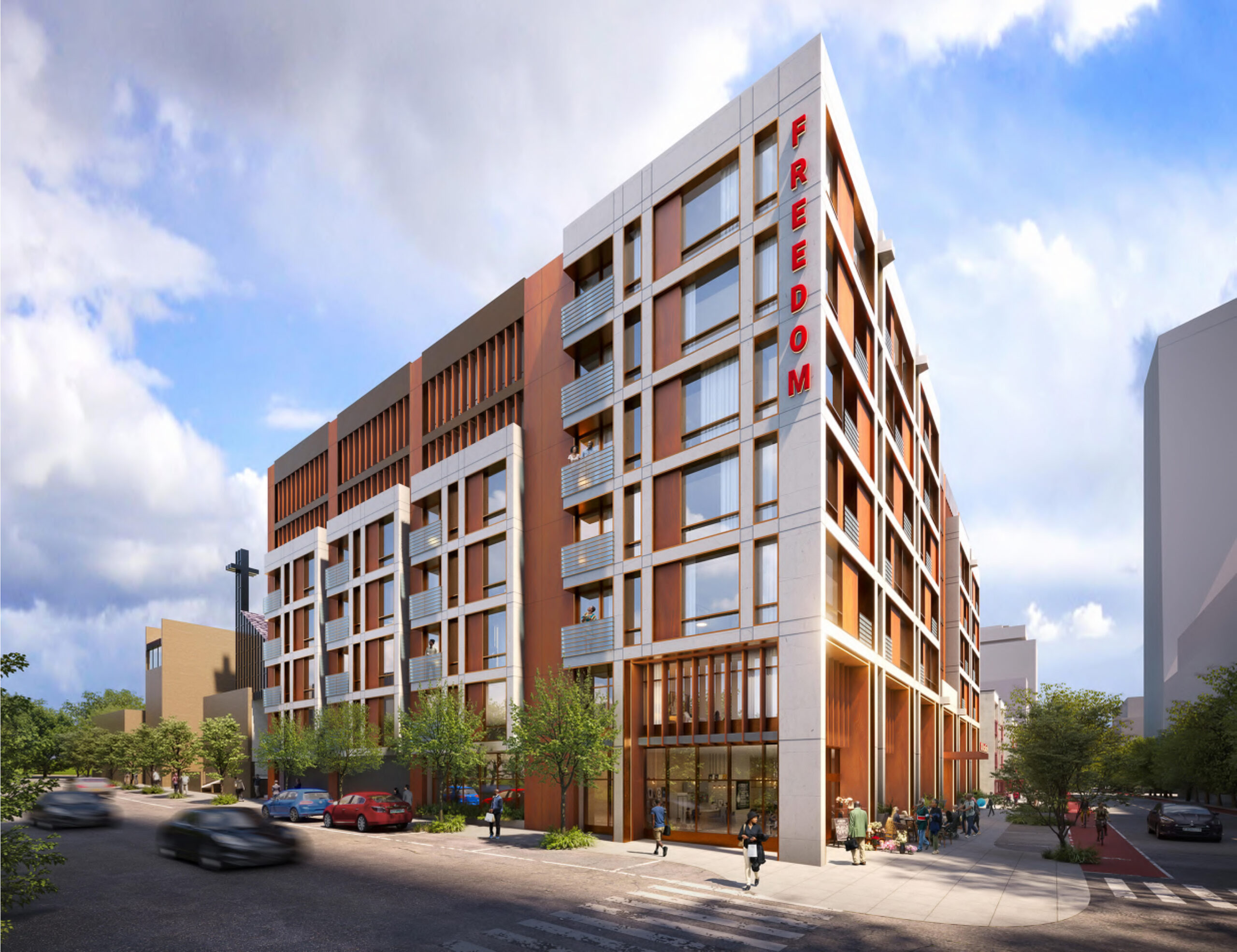
880 McAllister Street, rendering by DLR Group
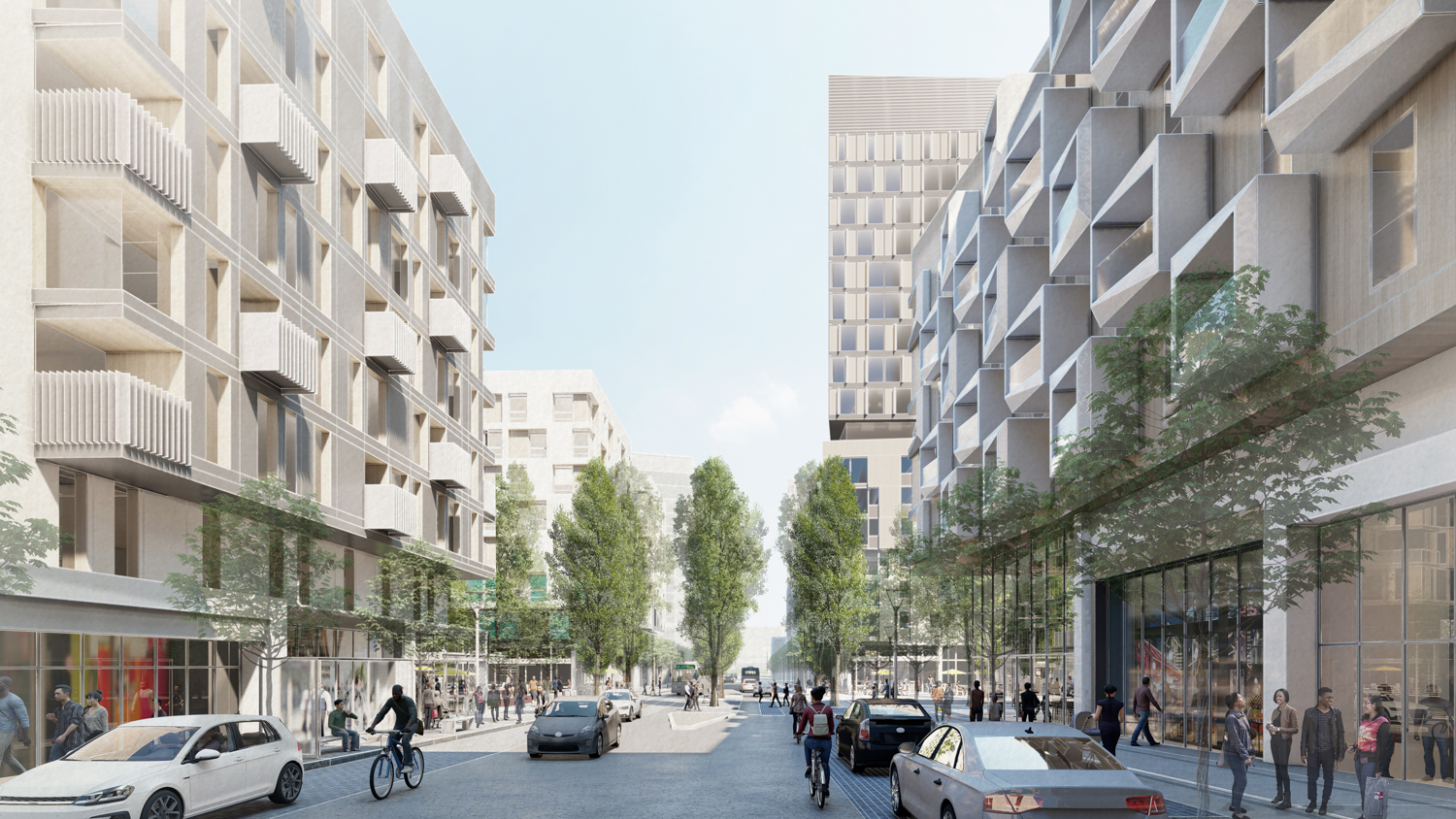
Freedom West streetscape, rendering by DLR Group
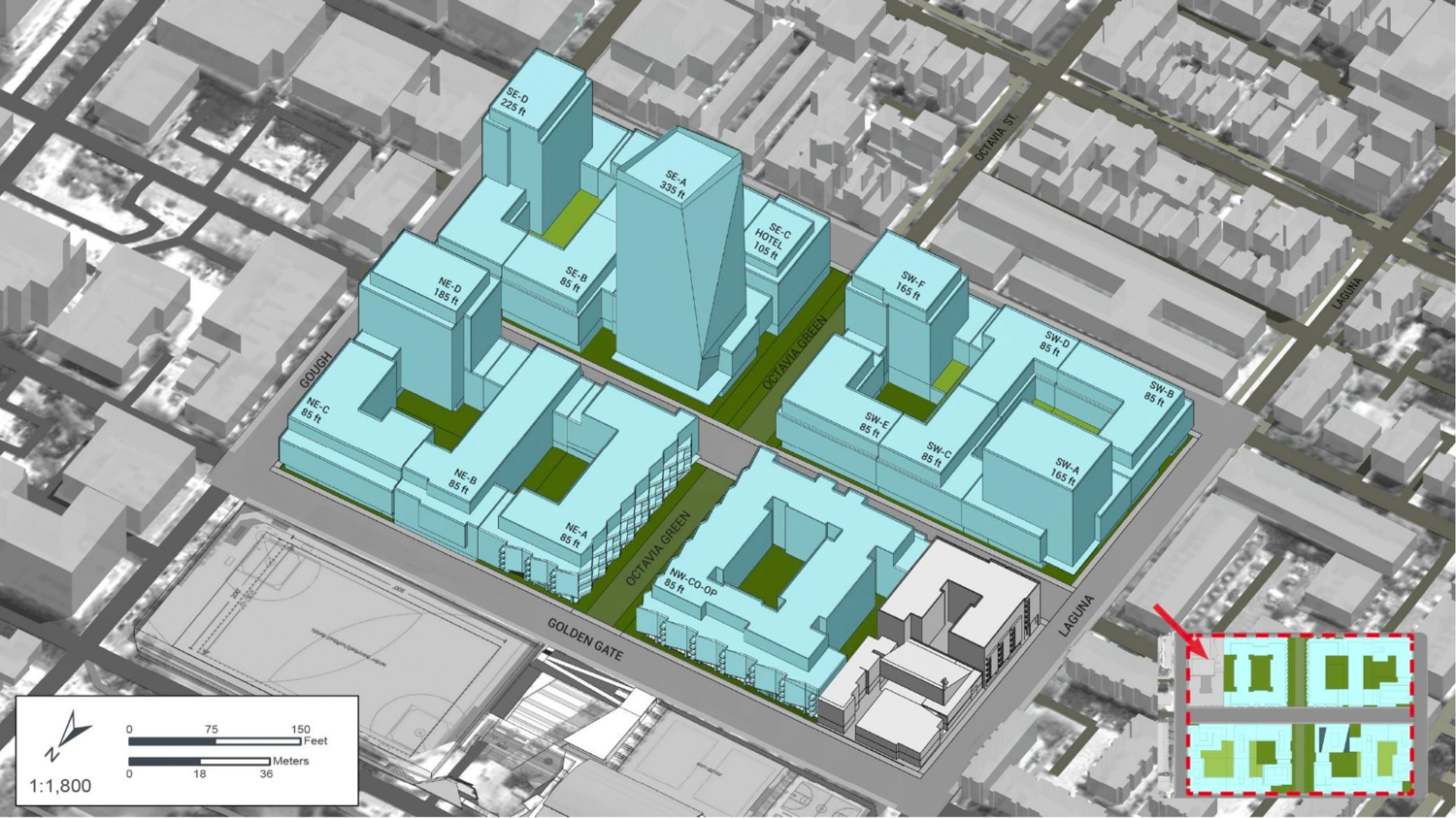
Freedom West 2.0, illustration by DLR Group
The original Freedom West project was sponsored by the Bethel African Methodist Episcopal Church and designed by Krisel Shapiro & Associates. Reverend J. Austell Hall of Bethel A.M.E. Church is credited as the key figure behind the original Freedom West Co-op. According to the historic review from the Draft EIR, Hall “saw firsthand the eroding character of the Fillmore and the dwindling of its residents, and he understood the physical and cultural damage being caused by urban renewal.” He saw a potential community-led masterplanned co-op in the neighborhood as “a solution to his community ‘s dire need for affordable housing and economic equity through home ownership.”
Financing was provided by the U.S. Department of Housing and Urban Development as part of the mid-century Urban Renewal movement. The existing Co-Op housing was constructed from 1973 to 1975. Demolition is expected for the ten apartment buildings, ten townhouse structures, and two multipurpose facilities. According to the draft EIR, the property is considered eligible for individual landmarking based on its connection with San Francisco’s mid-twentieth-century redevelopment and its association with Reverend Hall, though not because of any architectural merit. The project was explicitly inspired by the St. Francis Square co-op elsewhere in the Western Addition, which is considered a better architectural example.
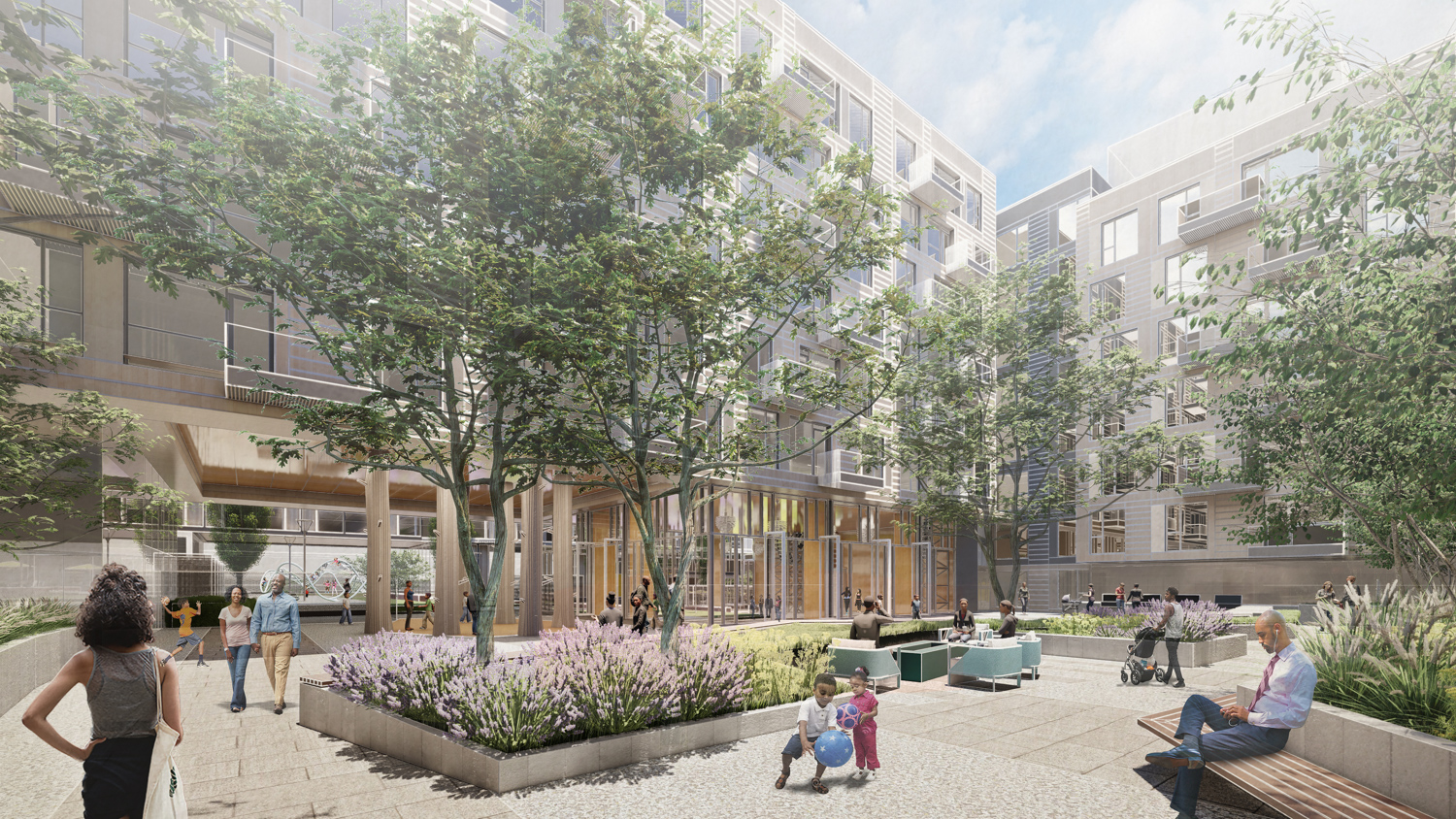
Freedom West plaza with surrounding housing, rendering by DLR Group
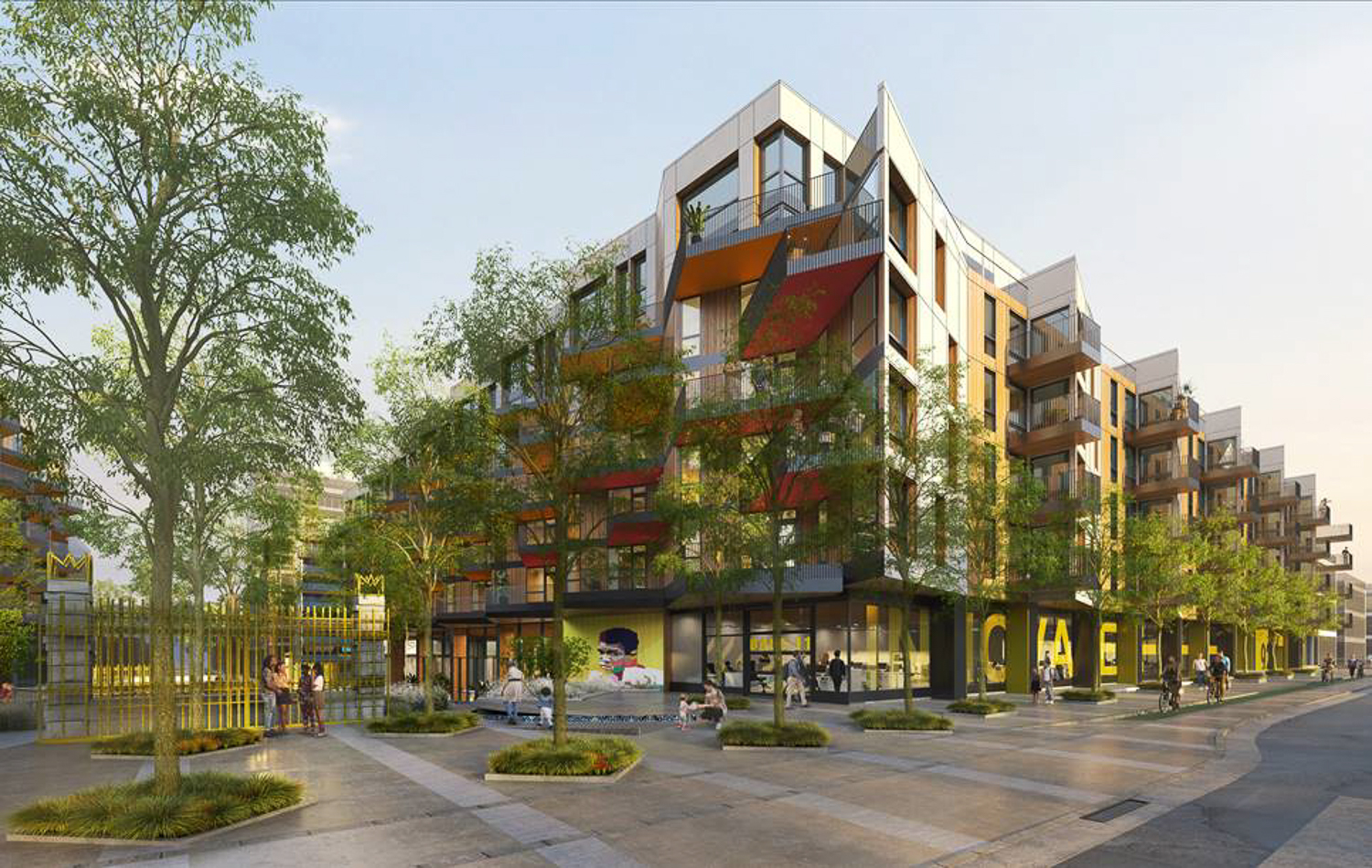
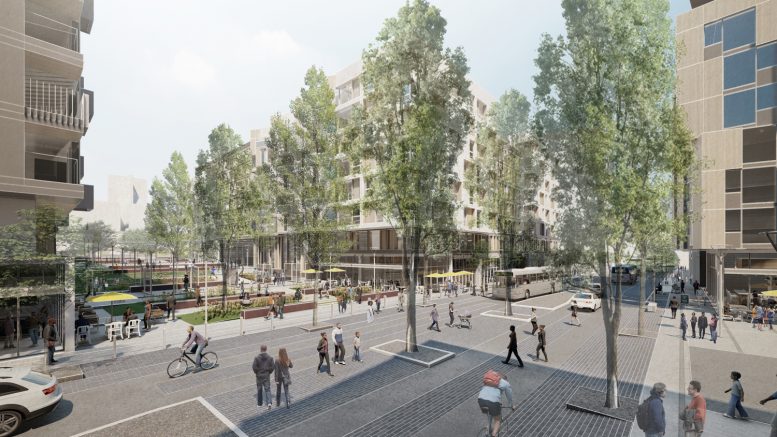
Freedom West 2.0 pedestrian view, rendering courtesy project team
The 10.37-acre project site spans four blocks in the Western Addition neighborhood, a short walk away from Van Ness Avenue and City Hall.
Construction is expected to be split into three phases. The Draft EIR estimates that construction could start in November this year, though these documents often provide an early start date. If work starts this year, then phase one would finish by late 2029. Phase Two is expected to last 41 months, from January 2030 to May 2033, and Phase 3 is expected to last from mid-2030 to 2034.
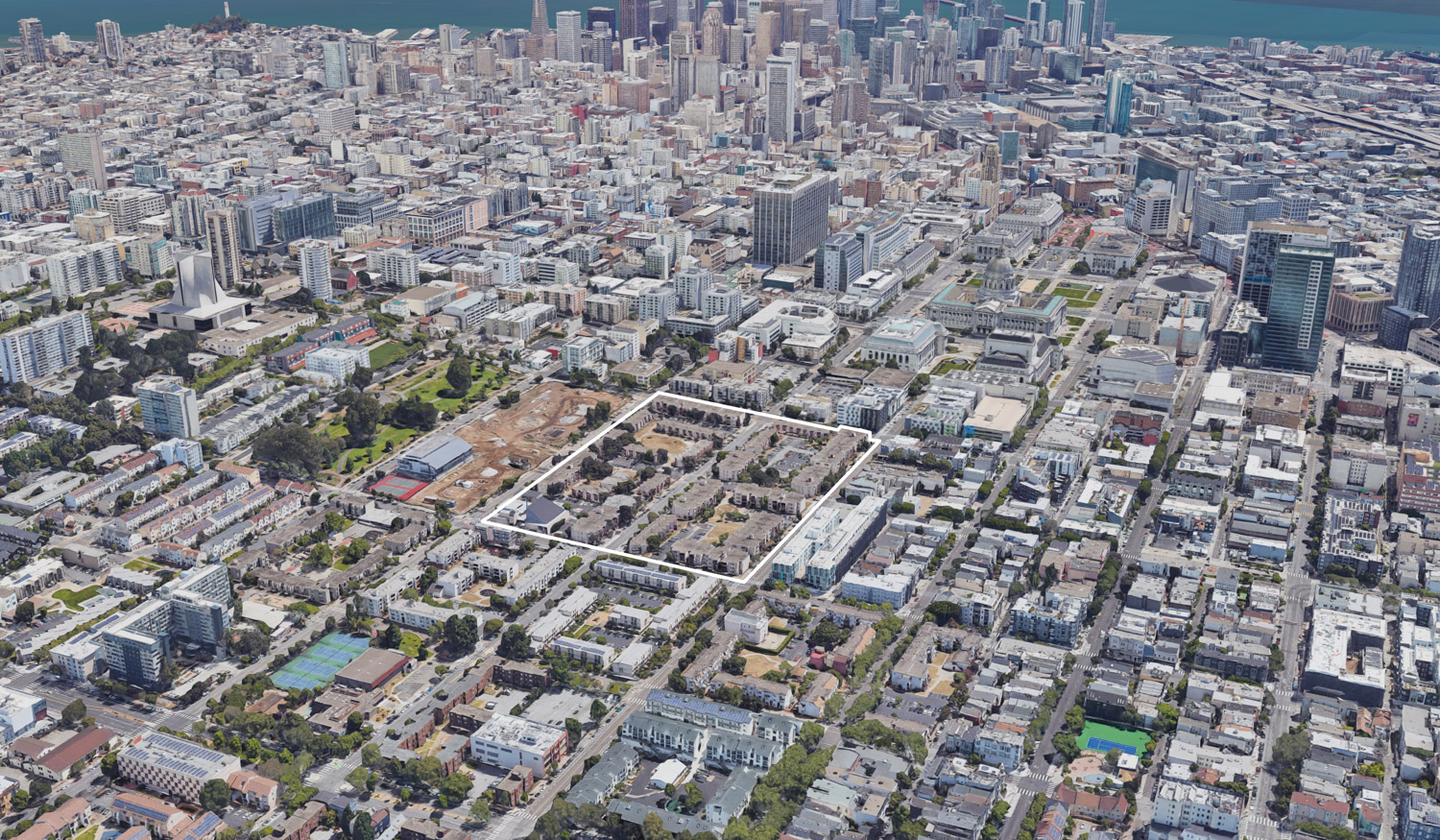
Freedom West development parcels highlighted in white, via Google Satellite
The San Francisco Planning Commission is scheduled to review plans tomorrow, Thursday, February 12th, starting around noon. The event will occur in person and can be watched online. The city will continue to accept comments to inform the Final EIR through February 27th. For more information about how to attend and participate, visit the city website here.
Subscribe to YIMBY’s daily e-mail

Follow YIMBYgram for real-time photo updates
Like YIMBY on Facebook
Follow YIMBY’s Twitter for the latest in YIMBYnews
A few comments/questions:
– Anyone know many existing residential units there are? This feels like a 5X increase in units, which is amazing.
– Are all of these 2,291 proposed apartments going to affordable? If not, what’s the mix? The article doesn’t say.
– 1,640 cars for 2,291 units sounds like a lot, considering how central this is. Or perhaps a sizable percentage are to service the hotel/retail component?
Via a SFYIMBY post in 2021: “1,790 will be market-rate housing, and 597 units will be affordable. That includes the 382 replacement condominiums for existing residents” Obv could be some small variation since but imagine it’s not too far off given the unit counts are similar since.
Curious if the new units are for rental or condo ownership, or a mix of both?
With the closure of the Webster St. Safeway, this area desperately need a full service supermarket and all the additional units just adds to that need. One should be incorporated into the design.
There’s a Trader Joe’s directly across the street at Laguna and Fulton. Also, there’s already a plan to build a new Safeway exactly where the old Safeway was located, as part of another multi-thousand unit project.
Wondering how leasing the retail space will be managed and if there will be incubator opportunity for locally owned/minority run small businesses (similar to the Food Hall at IKEA) or if it will all be market rate retail (which the area has a lot of)? Also, would be amazing if there was community meeting space and/or space specifically for childcare business included in this plan.
Most of the latter (community space, child care, etc) generally comes with larger amenity focused buildings. The point about incubator spaces and smaller commercial units would be amazing and is very much needed IMPO.
It’s important to have mixed income development here to improve outcomes for lower income students as noted in recent studies on comparison of children in entirely low income developments versus those in mixed income communities.
So exciting for this community. Here are my questions: 1. Will retail only be market rate or will there be any incubator/minority-run programming (similar to how the food hall is managed at IKEA)? It would be so amazing if some of the retail was dedicated to helping small local pop-ups get off the ground. 2. Is there any planning for childcare spaces? 3. How are you going to generate jobs with this project and engage with local agencies to fill those roles? 4. Please clarify – is this 100% affordable housing? Or a mix of affordable and market rate.
“The project was explicitly inspired by the St. Francis Square co-op elsewhere in the Western Addition, which is considered a better architectural example.”
Is this the author’s opinion? Why is that ‘considered a better architectural example’ ?
With several thousand new homes coming (Freedom West, Safeway, Divisadero), I wish McAllister could become a one-way bus lan & add the other direction on underutilized Golden Gate Ave. The quality of residential life on McAllister is marred by the increased buses altho the newer buses are quieter than in years past.
Cyclists continuously use McAllister over steeper Fulton; McAllister could the become a safer cycling route with one-way bus line.
Nice, it seems like they are threading the needle here between adding housing / revitalizing the neighborhood and avoiding displacement / gentrification. I hope that they maintain the co-op structure of the original Freedom West Homes.