

Construction is now underway for a seven-story residential infill at 159 Fell Street in San Francisco’s Civic Center neighborhood. Crews have surpassed the second floor as the building takes shape close to the busy Van Ness Avenue and Market Street intersection. Baumann Associates is responsible for the application on behalf of the property owner, SAK Design & Build.
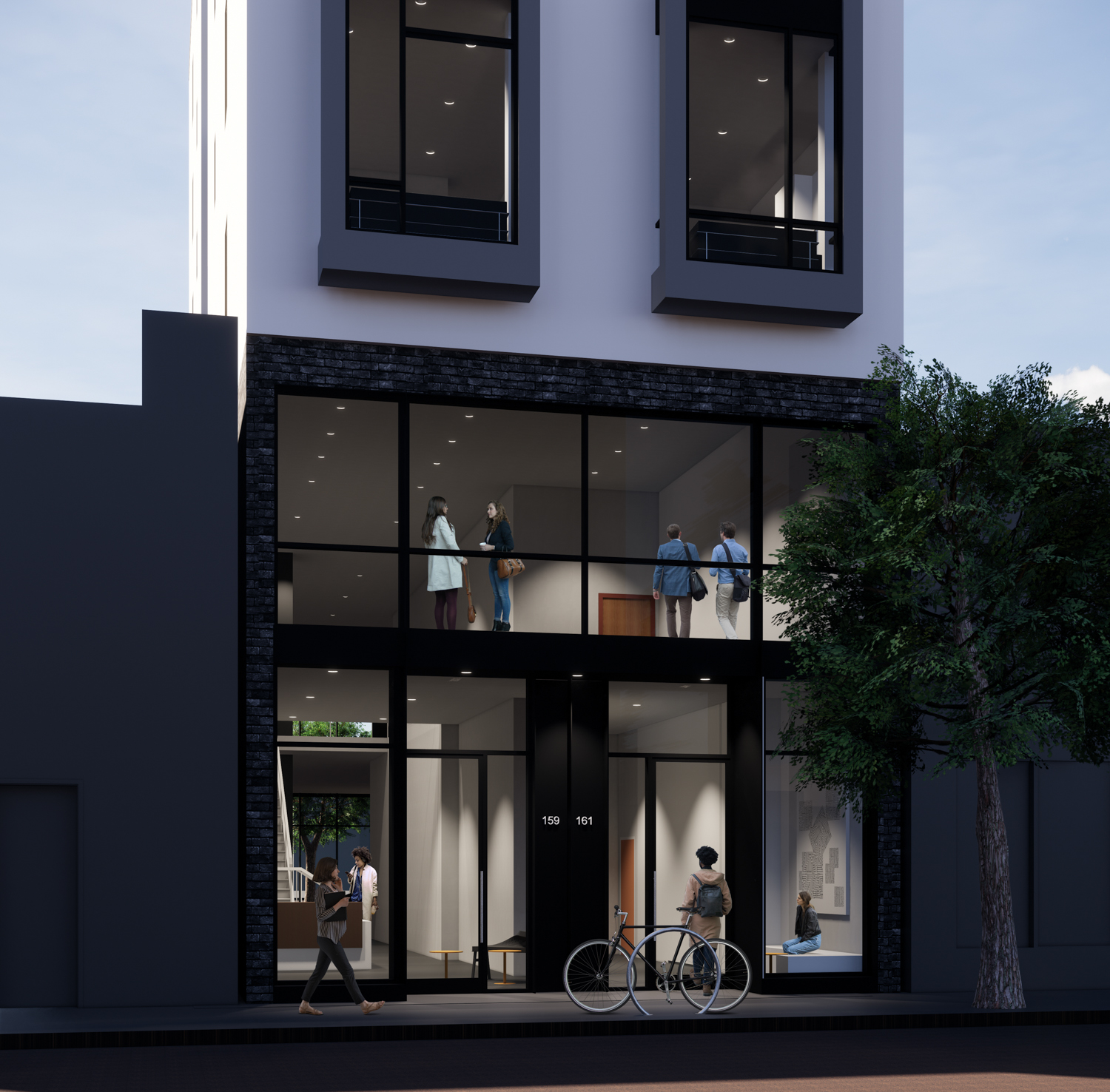
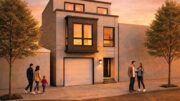
159 Fell Street pedestrian perspective, rendering by Winder Gibson Architects

159 Fell Street front view, image by author
Winder Gibson Architects is responsible for the design. The 85-foot-tall structure is expected to yield around 22,600 square feet, including 25 dwelling units and no ground-floor commercial space. Previous plans called for a small ground-floor retail space. Apartment sizes will vary with two studios, 12 one-bedrooms, and 11 two-bedrooms. Parking will be included for 27 bicycles and no vehicles.
The narrow parcel is located along Fell Street between Franklin Street and Van Ness Avenue. The property is half a block from the unfinished foundation of 30 Van Ness Avenue. Looking towards the city’s pipeline, the project is rising in the shadow of several unbuilt towers once buoyed by the Market & Octavia Area Plan Amendment, formerly known as The Hub.
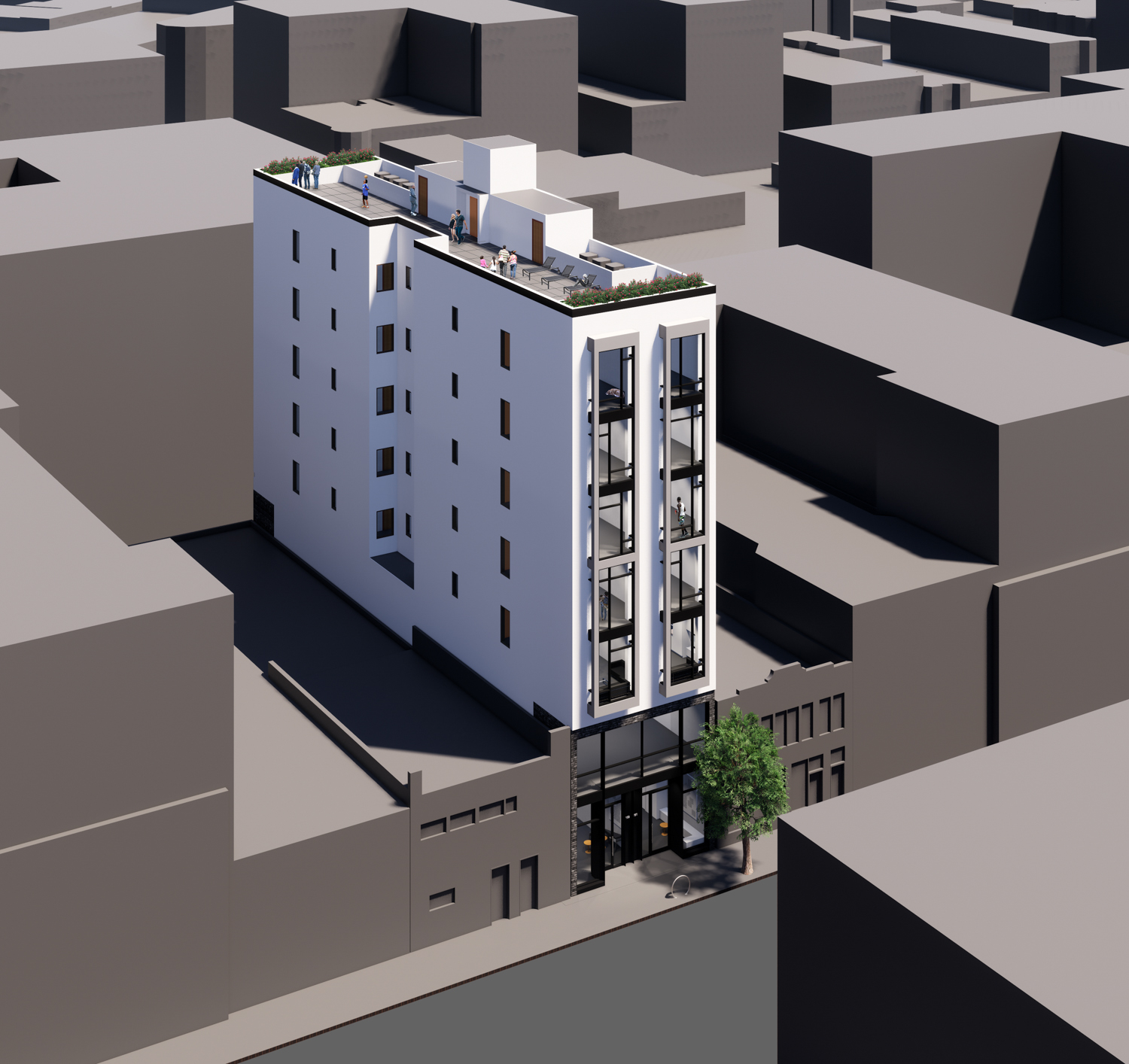
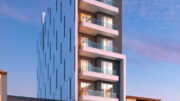
159 Fell Street aerial view, rendering by Winder Gibson Architects
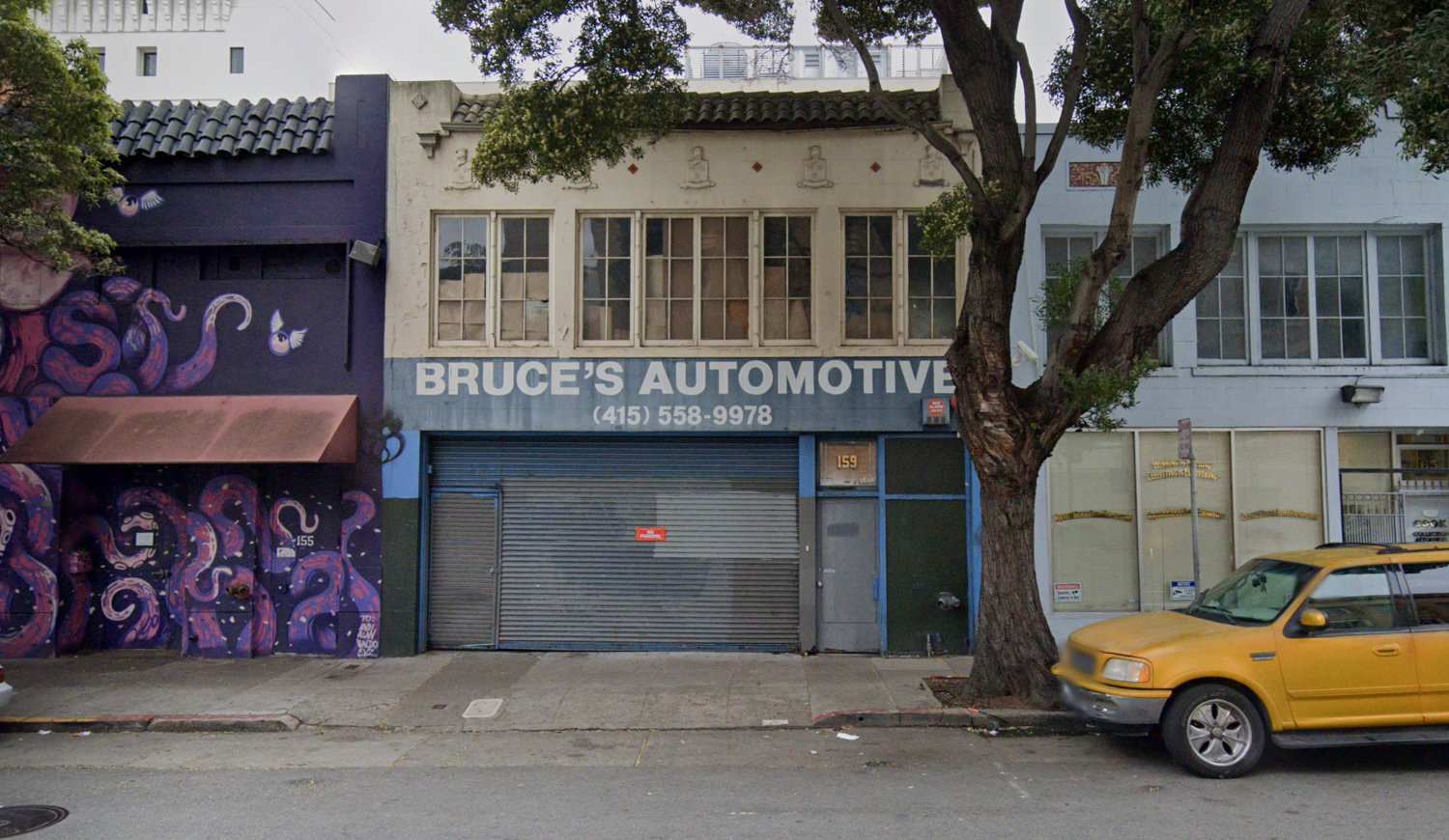
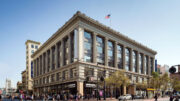
Pre-demolition image of 159 Fell Street, image via Google Street View
With construction now underway, the structure is likely to top out later this year, with occupation expected 18 months after groundbreaking.
Subscribe to YIMBY’s daily e-mail

Follow YIMBYgram for real-time photo updates
Like YIMBY on Facebook
Follow YIMBY’s Twitter for the latest in YIMBYnews
Single story commercial building > housing for 40 people. San Francisco could do this for at least 100 years straight, there are that many lots available like this.
These automotive uses are in particular trouble. Uber/Lyft. Waymo. Zoox. E-bikes. E-scooters. Electric cars as personal vehicles. MUNI (not going anywhere). The demand for a personal gas vehicle, and all of the maintenance it requires, has never been lower.
& yet there are large (& busy) one-story auto shops everywhere — several huge deep ones in NOPA. (I live Alamo Sq.). Perhaps development sites in future.
Several media outlets have covered the struggle of auto body shops over the last couple years. There was a pandemic boom in body work because of the pandemic crime spree, but also seems to be a drop off overall in bay area automotive maintenance needs. They interviewed multiple body shop owners who said they are seeing way lower business than before the pandemic and may have to close. They won’t all disappear, but if some turn into housing that seems like a win for everyone.
Indeed. Lots of big, juicy lots. On Divis alone:
– Precision Auto Repair (next to 4505 Meats)
– 1355 Fulton (recently converted to a parking garage)
– 650 Divis (will happen in this next boom)
– 999 Divis (Sung’s)
– 1660 McAlister (former Auto body shop, current church)
+ large auto shop at 1970 McAllister.
Sure. They are everywhere. There’s a monster on Stanyan, overlooking Golden Gate Park, at 616 Stanyan. Developers would love that one.
1745 Divisadero and 2035 Divisadero are two more.
To be honest, I can’t wait for them to be gone. Beyond being great opportunities for large-scale housing, they are loud, polluting, eyesores, and contribute nothing positive to the streetscape. Not just auto body / repair, but oil change, smog, gas stations…
They will be steadily phasing out in the next 50 years.
That abandoned gas station on Divis & Oak needs to go. Are there any plans for that plot yet?
Don’t you mean the former car wash? Supervisor Mahmood just posted something about progress being made on a planned project there
I hope the new residents of this building are ok with the noise from Rickshaw Stop next door.
If the past is any record, they will shut it down.
DONT SAY THAT
I live near here, was excited to see this going up, and I’m now super excited after reading 7 stories!
Curious how that is possible though? I thought 7 stories would hit the (silly) dual-staircase requirement, which doesn’t fit in a building with narrow frontage like this.
I wondered the same thing(7 stories? But the renderings make me wonder if that mezzanine floor counts as a full-floor since it’s open to the lobby entrance floor? Just wondering if there’s some trick of design that gives you a free floor?
This is great and should be legal anywhere in the city.
Silly thing to say. Can you imagine how crowded, polluted, and stressed this city would be if there was one of these on every lot? Our infrastructure barely functions as it is.
I sincerely hope this is satire. I’m guessing you’re the kind of person who hates London, Paris, Barcelona, Tokyo, etc.
Do you really think that replacing San Francisco Victorians and Craftsman bungalows with five-over-ones is going to turn us into London?
London is fine, but I would rather live in San Francisco. We are a small, regional, provincial city. We aren’t a world capital. We are not even Los Angeles, and that is fine with me.
Minimum height in San Francisco should be 7 stories.
What a dull, sterile, flavorless city you YIMBYs have been brainwashed to want.
Of course it makes sense to build a building like this in this location, but does it make sense to build it on Alamo Square? In the Presidio, on a quiet residential street in The Excelsior?
I dare you to take a drive or bike ride through the residential streets of the outer sunset or outer Richmond any day of the week after 5 pm. That will give you a taste of how dull and sterile life can be. I also grew up in newly built east coast suburbs and it was equally boring and sterile. There are plenty of reasons to argue about how dense every neighborhood should be but equating density with dull and sterile seems like an odd argument to start with.
We have the space, and the need, for about 10,000 more of these throughout the City.
Why? Leaving aside the question of destroying what makes San Francisco, San Francisco, the population of San Francisco, the state of California, and the USA as a whole is shrinking. Once the boomers pass on into the sunset, there is going to be a massive surplus of housing, especially if the Republicans stay in power and continue to cut off immigration.
Yes California is shrinking. It’s because we refuse to build housing, so prices go up and middle/working class folks are being forced out to states like Texas and Florida. I’d rather not rely on people dying to get affordable housing when the solution is right in front of us.
Yep. San Francisco at about double the population would be an absolute dream. It would be Brooklyn levels of density, basically 3-4 stories on average. The single family homes aren’t likely to be demolished for a long time, we we need lots of these 7-10 story buildings. Safer due to more foot traffic. MUNI working better due to double the population using it. Twice the property taxes collected to put into parks, schools, etc. More lighting and landscaping instead of empty lots. More successful businesses.
Scotty McWiener’s 70-IQ NIMBY arguments are nothing but good practice for new YIMBYs to use to demolish NIMBY arguments.
If Scotty were in SF in 1860, he would say that SF should never have more than 50,000 people.
What a Luddite.
This is a great point. Whenever a random bar closes due to new housing construction, people lament its loss and say the world is ending. Does anyone remember the bars from 1870, all of which are gone? I’m sure people were up in arms then, in 1920, and in 1970 about everything changing. Cities need to move forward. Single story commercial buildings and surface parking lots are a poor use of land. I don’t think the entire city of SF should be Hong Kong, but it sure would be cool if it was at least Brooklyn (twice the current density). We need to get to a city blanketed of primarily 4-10 story buildings, with ground floor retail mixed in with incredible parks.
If my IQ is 70, yours is probably around 35. I am amazed that you were able to churn out your boilerplate YIMBY propaganda without assistance from your mom.
YIMBY groupthink is simplistic and entirely unrealistic given conditions here in San Francisco. Furthermore, you guys have no nuance. I am always posting about how many projects featured here would be a vast improvement over existing conditions, including this one, but your one size fits all, upzone all of San Francisco to 10+ stories is shortsighted and dumb. It also does not acknowledge why people love San Francisco how it has always been. San Francisco is not Hong Kong; it is not Brooklyn; it is not Tampa Bay. It is San Francisco. People used to come here because they actually want to live here. The people who come here now are mostly tech bros who just want to extract whatever wealthy they can and go back to the East Coast or wherever.
Are the locals (“NIMBYs” in your reductive mindset) just supposed to just roll over and let a bunch of rich transplants do whatever they like with OUR city without a peep of opposition? You guys throw around the word NIMBY to try to cancel anyone who is not in on the groupthink. You guys are just upscale, artisanal, Millennial MAGAs.
Your characterization of locals being anti-housing couldn’t be more off the mark. San Franciscans are fed up (especially renters and young people), and have been electing pro-housing politicians left and right. A city with more housing IS what the locals want.
Of course they do. I also want to build more housing. Everyone agrees with this apart from the most hardcore NIMBYs. The very real problems I have with YIMBY are these:
1. It is absolutist and reactionary. Remove all regulations to allow developers to build whatever they want, wherever they want. Historical resources, farmland, public parks, be damned. If you object to just one badly designed, ill-thought out project, you’re canceled and called a NIMBY.
2. It relies on the private, for-profit development industry. This is nothing more than warmed-over, 1980s-style, trickle-down economics. For-profit developers are never going to voluntarily build low-cost housing. And now they are weaseling out of even providing a few inclusionary units because they “don’t pencil.” And, they’re often tearing down older, actually affordable housing to build it, leading to gentrification, which pushes local working-class people out of the city.
YIMBY policies pretty much only benefit well-to-do newcomers. That is why your “movement” is so very unpopular with many local people, especially working-class people of color. They see through YIMBY propaganda, understanding that it is nothing but a trojan horse for balls-out overdevelopment and gentrification.
Just look at Vancouver. Did replacing everything with high end highrises bring down real estate prices? YIMBY policies don’t work.
Having said that, yes, of course, build more housing. But do it in a thoughtful way. There is no need to replace every Victorian with a tech bro mansion or every older commercial building and theater with a cheap five-over-one.
I agree with small amounts of your point #1 but let’s focus on your point #2.
“For-profit developers are never going to voluntarily build low-cost housing.
The new buildings going up are not made of giant apartments with marble kitchens and $5K Wolf ranges. They are pretty basic studios and one bedrooms. They are expensive because they are new, not because they are “luxury.” In 40 years, they will be older, and less expensive as a result. So if we keep building, we build a constant pipeline of stuff that feeds the affordable housing needs. That’s how this trickles down.
“And now they are weaseling out of even providing a few inclusionary units because they “don’t pencil.”
If you force a coffee shop to sell $5 lattes for $1 each, 5% of the time, they can probably make that work. At 20%? When? At some point the math does not work for the business.
Panhandle Pro….I don’t always agree with you, but I appreciate your ability to think reasonably and logically and your basic decency. Thanks. I always enjoyed your comments on Socketsite (RIP).
I appreciate your point on how the new housing will will become cheaper as it ages. But on the flip side, I have to admit that one of my concerns about most new housing (especially the plywood five-over-ones) is that they ARE so cheaply built, and as a result, they will quickly turn into slums.
I really wish that the Depression had not happened, because in the late 1920s, developers in San Francisco were starting to build a lot of five-story-plus concrete apartment buildings all over the city. Functionally these were similar to slightly older buildings in The Tenderloin/Lower Nob Hill, but they were built on what were then suburban transit arteries like West Portal Boulevard, Judah Street, Church Street, etc. Built of high-quality, durable materials, these lovely Art Deco and Spanish Colonial Revival buildings have aged well and they remain desirable places to live. Unfortunately, they had only started to build them when the Stock Market Crash put a stop to it, and after the war, this type of higher-density development did not resume in the neighborhood commercial areas.
Anyway, that’s neither here nor there, so we’re stuck with the present. My main concern is that the for-profit real estate development industry is so focused on massive profits for investors that they will only build the cheapest, most insubstantial buildings unless it is for the very rich.
Regarding your point about inclusionary units, this is one of the only ways to ensure that some affordable housing is provided in “nice” buildings. Again, we are relying on a for-profit housing model that only serves the rich. The government needs to not let up on those requirements. If the developer is truly going to “lose” money on a deal, of course, we, the taxpayers, should subsidize the affordable units because it is in the public interest that lower-paid workers can remain in the city. I have also always believed that mixed-income communities were better than monolithic rich or poor enclaves. In our current model, the rich take over San Francisco and other desirable cities and the poor go to Stockton.
I’ve enjoyed our healthy debates as well, let’s keep it going!
– Alright, fair point on building quality. We won’t know for forty years. On one hand, I feel like general standards in engineering design / technology are going to bring the average up. On the other hand, I agree builders will do the bare minimum. One area I wish there was regulation was around sound attenuation. Our housing future is in multi family…I fully support requiring significant sound work to improve QOL. Another area I’m fine with regulation on is around forcing a percentage of units to be 3BR/4BR/5BR to house families.
You may be surprised to hear that I’m in favor of government housing…I think it’s at least worth a shot. We’ve learned a lot since the 1960’s. It needs to come with significant requirements of ongoing maintenance to avoid becoming a slum, and therefor can really only be about 20% (?) cheaper? But like, build the same building and staff it the same way, and maintain it the same way, but without the profit…how hard could it be!? (Famous last words!!)
Scotty, you spend a lot of time mansplaining housing economics on here so I’m not inclined to be kind. As it turns out, you’re completely clueless about housing economics. Vancouver is the perfect use case for how YIMBY keeps cities vital and functional. All the new apartment towers have stabilized the price of condos over the past 50 years. Not so much the story for detached single-family homes, because they’re not building a lot of those. So yes, it’s still an impossible dream for millennials to own detached SFHs there until they inherit them from their parents. But they buy condos and raise kids there, so in the past decade or so new schools have been built downtown and the infrastructure there has been getting steadily safer and livelier. Just look up Brent Toderian and learn a few things.