
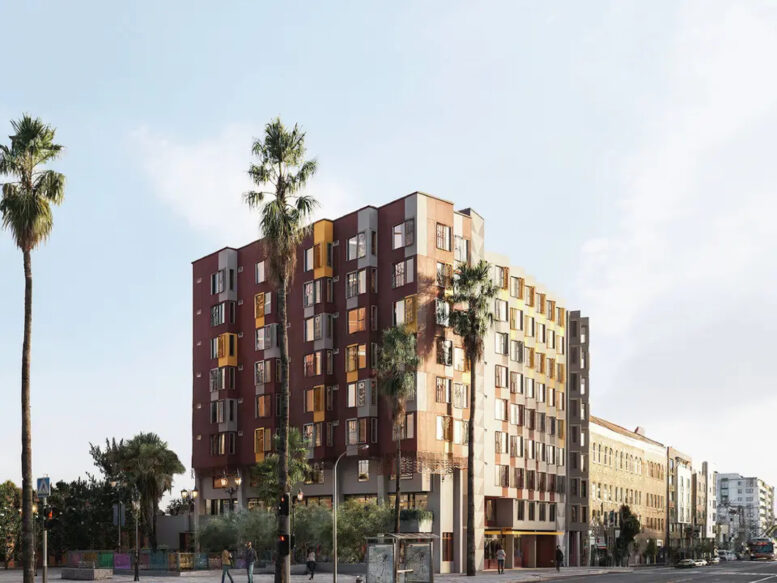
Construction has officially started for La Maravilla, a nine-story permanent supportive housing development at 2970 16th Street in San Francisco’s Mission District. The complex will eventually provide over a hundred affordable housing units, on-site services, and community-focused amenities overlooking the busy 16th Street BART Station. Mission Housing and Mission Economic Development Agency are jointly responsible for the project.
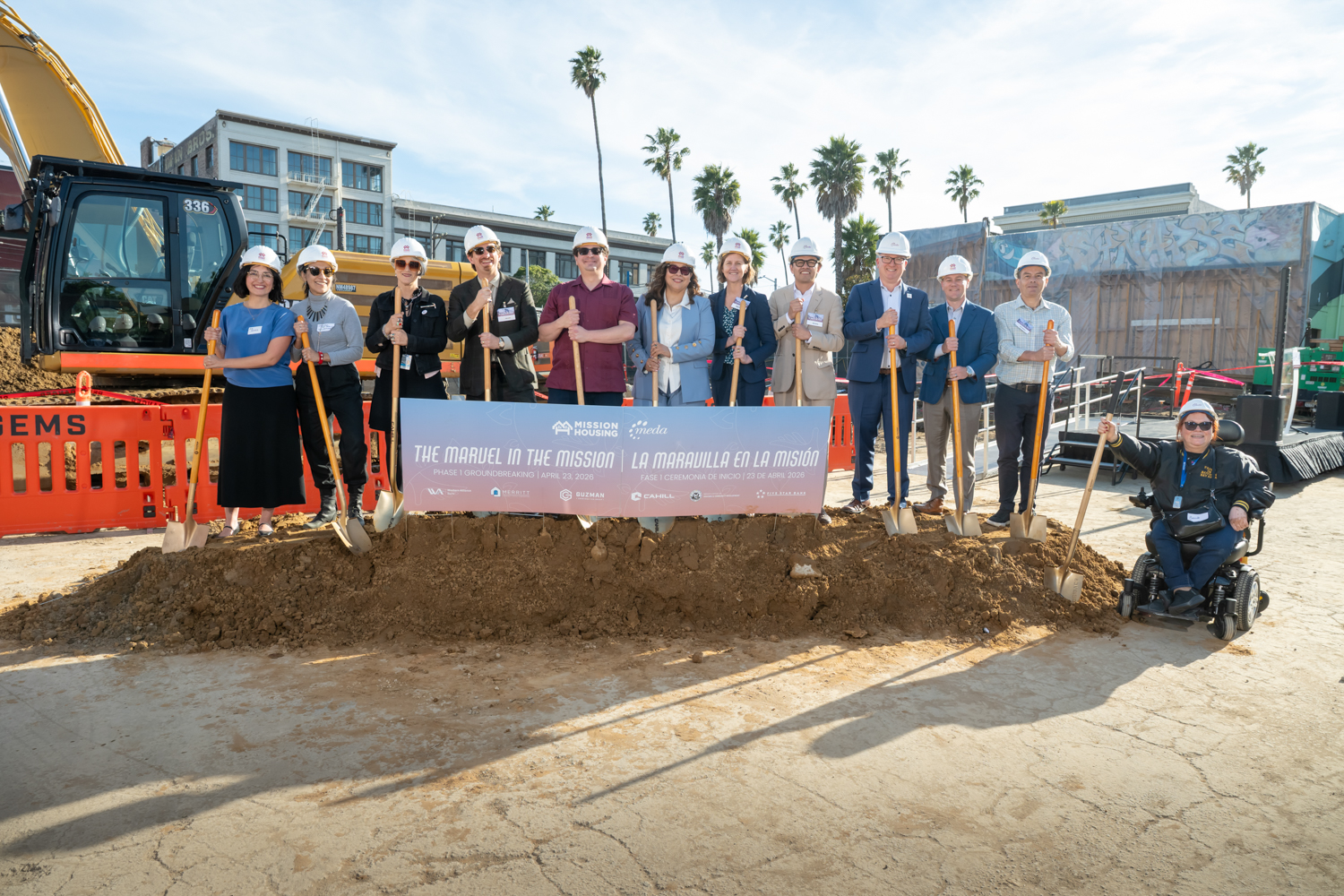
La Maravilla groundbreaking ceremony, image courtesy Mission Housing
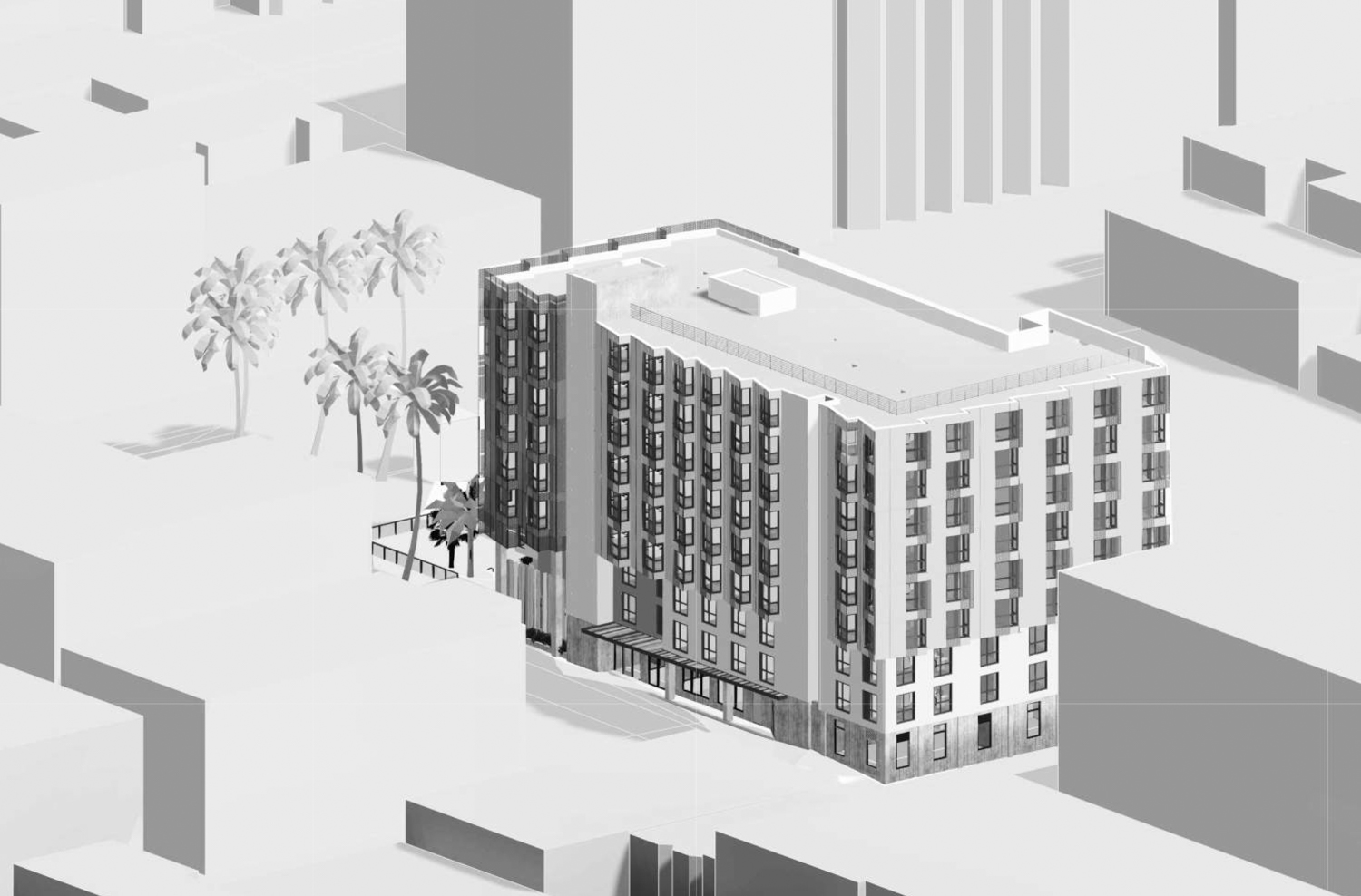
1979 Mission Street aerial overview, illustration by Herman Coliver Locus Architecture
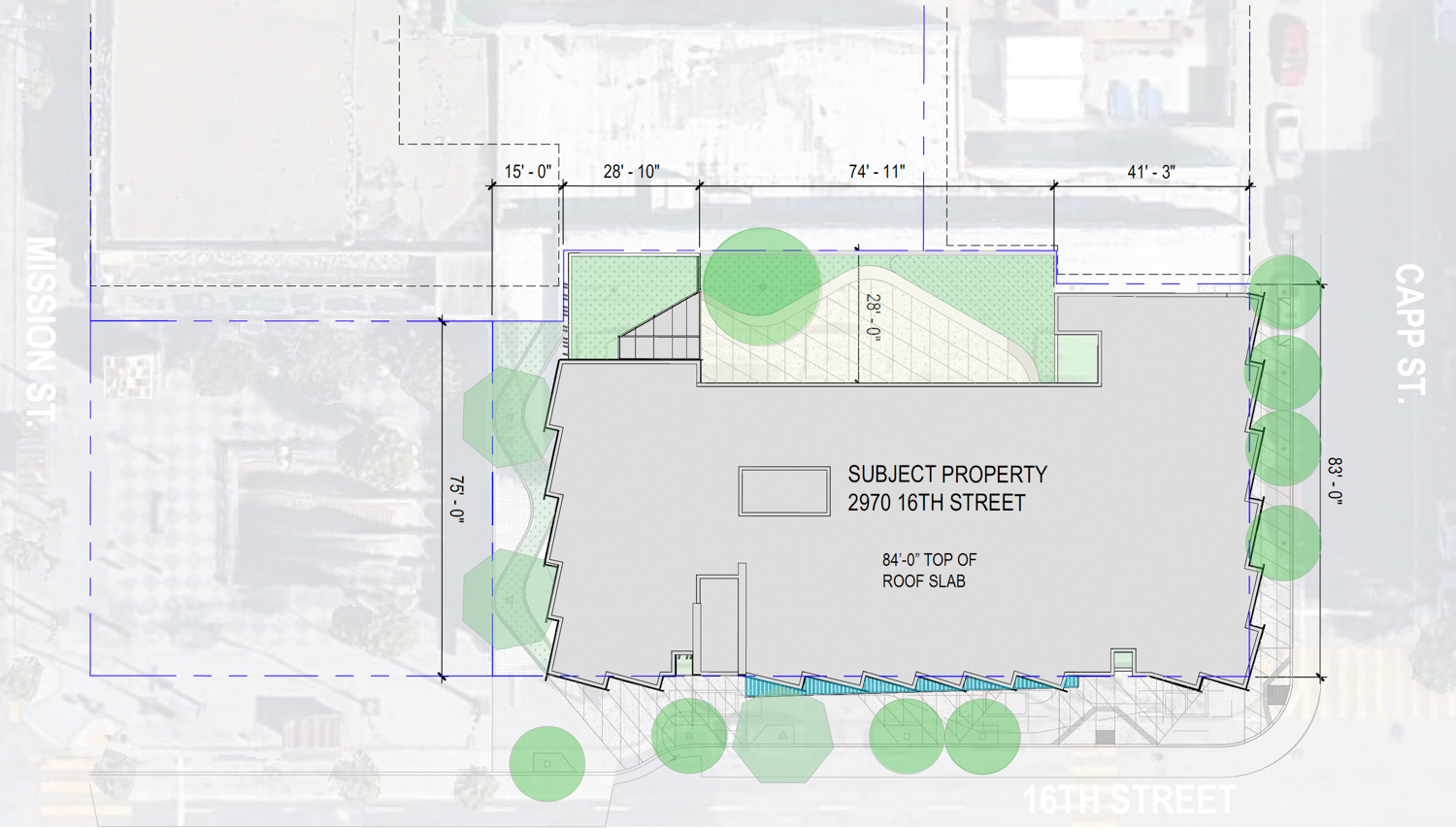
1979 Mission Street site map, illustration by Herman Coliver Locus Architecture
While the official groundbreaking ceremony was held late last week, the site has been under construction since late last year. Demolition crews have already removed the vacant commercial structures formerly occupied by Walgreens, and the surface parking lot once occupied by a 70-unit tiny homes village. Cahill and Guzman Construction Group formed a joint venture to serve as the general contractor.
Before plans for La Maravilla, or the Marvel in the Mission, were pursued, the site was expected to become a market-rate housing development pushed by Maximus Real Estate Partners. Plans were filed back in 2013 for a ten-story development with over three hundred units, retail, and on-site parking. After significant community opposition and delays, Maximus listed the property for sale in 2020, and Crescent Heights purchased the lot for $40 million before transferring ownership to the city for free. The transaction was made to satisfy off-site affordable housing requirements and secure entitlements for 10 South Van Ness Avenue.
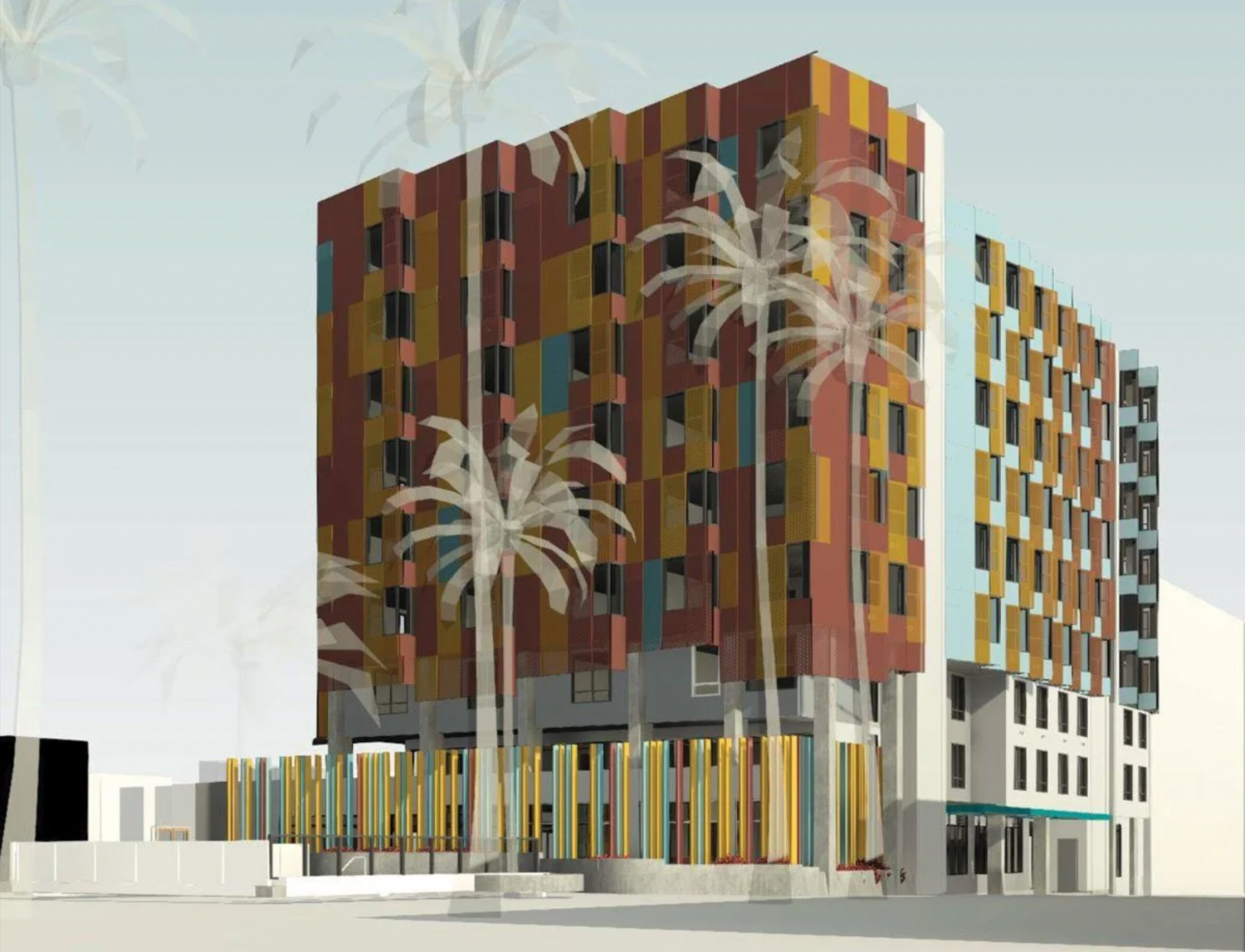
1979 Mission Street pedestrian view, illustration by Herman Coliver Locus Architecture
The nine-story La Maravilla is expected to yield just over 100,000 square feet, including around 90,000 square feet of housing and 1,500 square feet for the behavioral health services center. The common area will include offices for residential case management and a landscaped courtyard. Herman Coliver Locus Architecture and Mithun Design are jointly overseeing the design. Once complete, the building will include 136 units, of which 89 will be studios, and 47 will be one-bedrooms.
The project is the first of three phases expected for the property. The second and third phases will eventually add 134 and 112 affordable family housing units, respectively. Full build-out for the corner property will produce 382 units of affordable housing.
The 1.3-acre property is located along 16th Street between Capp Street and Mission Street. Future residents will overlook the 16th Street Mission BART Station and live just a block away from the retail-rich Valencia Street thoroughfare.
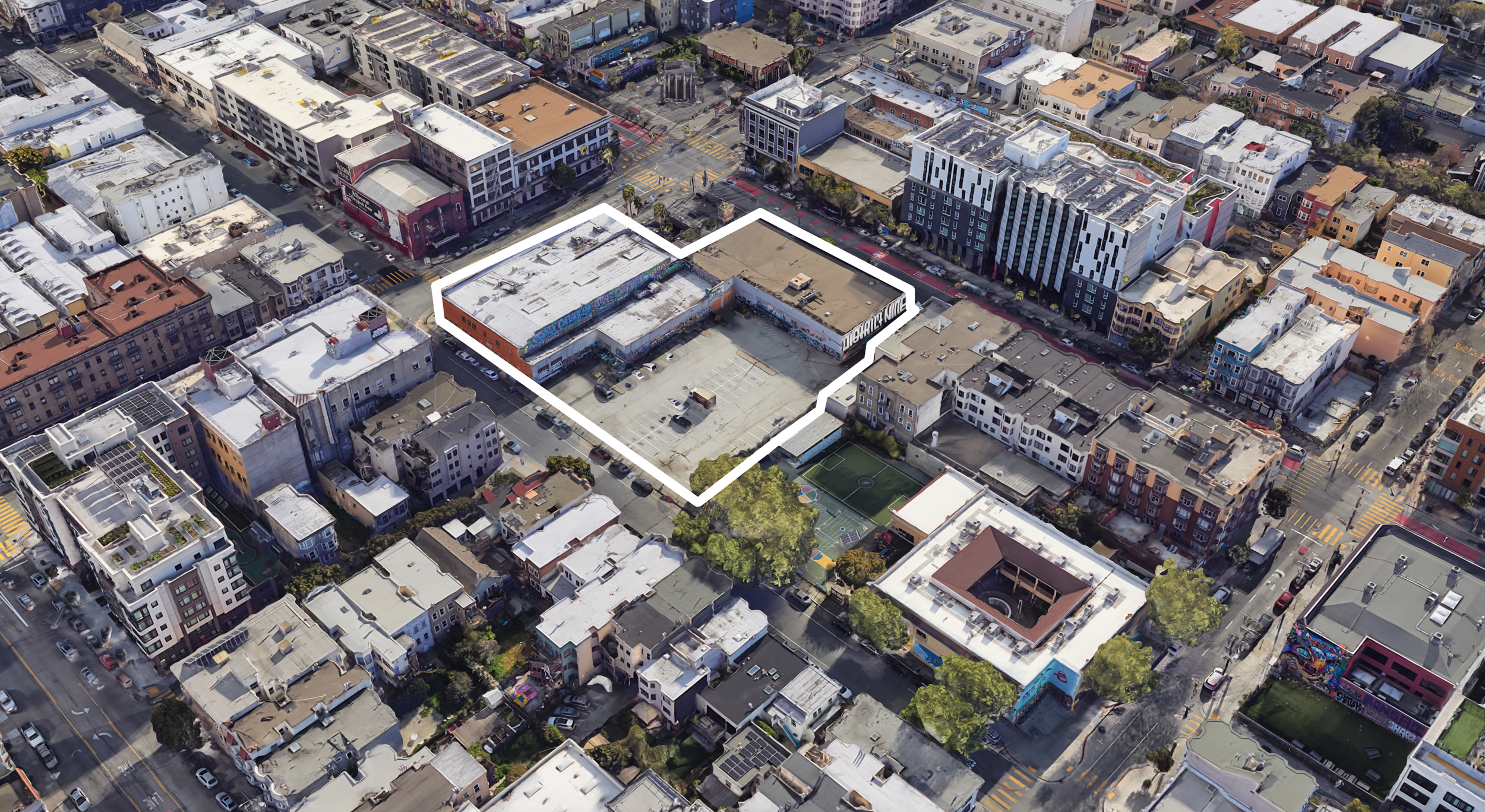
1979 Mission Street property outlined approximately according to site map, image via Google Satellite
Completion is expected by late 2027, with full occupancy as early as mid-2028. Apartments will be leased through the city’s Coordinated Entry system. Residential services will be overseen by John Stewart Company and Lutheran Social Services.
Subscribe to YIMBY’s daily e-mail

Follow YIMBYgram for real-time photo updates
Like YIMBY on Facebook
Follow YIMBY’s Twitter for the latest in YIMBYnews
Fantastic! A handsome design in the right place. I love this architect’s use of color. It would be great to see a rendering of it with afternoon light coming down 16th street. The set back from the Bart plaza with the fence and landscape area will also be a lovely.
What I don’t get about this type of housing is how would a family live in a studio or a one bedroom apartment? Are single people with no children the only ones that need affordable housing in SF?
This building is all studios and 1-bedrooms, which would serve singles and couples. But the phase 2 and phase 3 buildings of this complex will be mostly 2- and 3-bedroom apartments, so those will accommodate families. A nice mix overall.
Try reading the post more carefully next time. Also, the type of housing in most urgent need at any income level in this country and especially this city is one-bedroom and studio apartments. Fifteen percent of adults in the US now live alone, the highest proportion ever and there’s no signs of it slowing down. This particular project is focused on getting adults off the streets but some potential occupants would also be freeing up apartments and houses that families could be moving into in the future.
@Rubber Biscuit – don’t get too excited. The intended occupants aren’t the working poor; they are the hard-core street crowd who share their time between SROs and using fentanyl near the BART plaza. The building will have more on-site services for drug addiction. The building will operate under the “Housing First” model, which allows in house drug use (30% of fatal overdoses occur in such housing).
As the mayor cleans up the northern part of the city, the Mission continues to be a containment zone. I see no signs that the city intends to stop the public drug dealing that its Housing First sites encourages. This development guarantees that the problem will remain concentrated in the Mission.
that’s really unfortunate. the housing first policy does not work on these drug addicts. So much wasted money and resources that could go families instead.
The problem is not concentrated in the Mission. It’s concentrated in the Tenderloin, and to a lesser extent 6th and Mission corridor, Soma. The Mission area is third place when it comes to these issues. If you look at overdose deaths and SRO hotels, the Mission has a small percentage.
I still see this project as a step in the right direction. The SRO hotels are disgusting and inhumane. Every time we can open a new, modern place like this, and perhaps close one SRO hotel, I see that as a win.
The Mission has a significant concentration of “services” for the homeless and drug addicted (who do not want them). About 20% of the city’s fatal overdoses occur here. The Mission’s “activists” refused market-rate housing in favor of “permanent supportive” housing for the dysfunctional crowd, right next to the Marshall Elementary School. This project is going to cement the Mission’s position as one of the city’s top three containment zones. If you think this neighborhood’s problems are minor, you most likely haven’t walked through here recently.
You and Marc Solomon are constantly using Marshall ES as your anchor for NIMBY-based concern trolling. I’m in this area frequently and know families who send their kids to that school and personally I can’t think of a better way to improve conditions in this area than to build housing with access to services. Shame on you for your attempts to dehumanize people who were very likely recently working poor, if they aren’t still. It’s simply bizarre to see people opposing solutions like this that have been proven again and again to work in cities all over the world.
This is absolute and utter BS. “Cities all over the world” do not have San Francisco’s fentanyl problems because they won’t put up with it. I am not talking about people who are down on their luck; I refer to the hard-core street population of volitionally homeless and to the pushers who service them. There is nothing “dehumanizing” about expecting people to not steal, not use in public, or not defecate on the street. No one begrudges housing to the working poor. But expecting us to put up with crime-ridden and chaotic street conditions shows the city’s contempt for its residents and taxpayers.
I agree the neighborhood’s problems are significant, but it sounds like your solution is to leave people out on the street because you feel they don’t deserve a roof over their heads and access to services indoors where they can heal. Abandoning people on the street is basically what’s happening now and the result is disastrous. I’d much rather have a supportive housing and behavioral health support center next door to my kid’s school than having folks with severe mental health and addiction issues just wandering the streets and sidewalks in our neighborhood.
People who are addicted and/or severely mentally ill need a structured environment with behavioral limits and contracts. Private landlords do not accept drug use in therr buildings. Giving an addict the keys to an apartment with no preconditions just moves the problem indoors, where 30% of fatal ODs have occurred over the last several years.
San Franciscans not only have to pay to build this housing but to repair it when it is destroyed. According to the city’s data, some 40% of its “affordable” units are out of commission at any time because they are dirty, damaged, and/or need substantive repairs.
I am also at a loss as to why YIMBYs are so passionate about building subsidized housing in other people’s back yards. Possibly they’re relieved that these units are not getting built in theirs.
At least we’re not slowing down transit with more parking spaces like with the market-rate plans. But if you’ve got a big plot in walking distance from BART it ought to be at least double the height.
So in exchange for permanently wrecking the neighborhood, eliminating the sun, light, and views of thousands of San Franciscans forever, increasing the already terrible traffic and parking burden on neighbors, a “hundred” people will be gifted “below market” condos. Because they are much more important than the people who actually live there now. (Thanks to disaster highrises like this, we’re finally giving up, and leaving the Mission.)
Huh? This building is immediately next door to BART. And it’s serving very low-income folks who are much less likely to own cars, so resources are being put toward much-needed affordable housing rather than expensive parking spaces that will sit empty. And I’m not sure what people who live there now you’re talking about- this is currently a one-story commercial property, so this building will displace no one.
But yeah, if you don’t like apartment buildings, leaving the city and moving to the suburbs might be the right decision for you.
it is such a shame that this doesn’t interface with the BART plaza better. the original market-rate plan anticipated shops and restaurants spilling onto the plaza, making it much more inviting. With this orientation, the plaza is going to continue to be a blight
My biggest issue as well. Better integration with the plaza itself would be ideal… but I fear the plan you see above takes into account the ‘loitering’ that persists in front of entrances like those at The Phoenix across the street and other BMR buildings like this. May the idea is that this will deter people from collecting, using, selling and doo-dooing around the plaza?
This is permanent supportive housing, a substance and psych residential treatment facility,situated between the fentanyl mercado and Marshall Elementary school that serves low income, immigrant, undocumented and homeless kids of color.
The community demanded affordable housing for homeless families between the BART station and Marshall. Our neighborhood needs more high functioning neighbors, not mire of the toughest cases. This would not be tolerated by a predominantly white or Chinese American school.
unfortunately, the neighbors rejected high functioning neighbors (the original plan was market rate + inclusionary zoning)
STFU, Marc. You are not a parent and you’re not even affiliated with the district. Plenty of well-to-do families send their kids to Marshall and it’s none of your damn business what their demographics are. And you may think you’re being persuasive claiming that this project is only for people with the most desperate circumstances and therefore not ‘what the neighborhood needs,’ but given roughly half of the housing is for families (who hopefully will send their kids to Marshall!) it’s clear to the rest of us that you’re just doing your usual NIMBY gaslighting.
Why is this building so short? this should be tall and twice as many units and mix it up with Market rate.
This is the best comment so far. No reason why this shouldn’t be 24 stories like the MacArthur BART project. 8 stories for the very low income, 8 stories for mid-income, 8 stories for market rate.